
Your child can type. But can they actually use a computer?
Here’s the truth: most Indian students today can swipe a phone but can’t operate basic productivity software. They know Instagram but not Google Sheets. They can message on WhatsApp but struggle with email attachments. This isn’t their fault. It’s ours.
The gap between phone skills and real digital literacy skills for students is massive. And it’s costing them. When they enter college or the job market, they discover that smartphone skills don’t translate to workplace competence. The employers want something different. They want students who understand computers, not just apps.
Let’s be honest: essential digital skills India demands go far beyond what schools are teaching. The National Education Policy talks about it. The Digital India initiative pushes it. But implementation? Still patchy. Still slow.
That’s why parents, teachers, and edupreneurs need to step in now. 2026 won’t wait.
Key Takeaways
- Computer literacy for students means five connected skills: touch typing, office software, safe internet research, basic troubleshooting and file management, and video collaboration.
- Many students can swipe and message on a phone but struggle with email attachments, spreadsheets and documents.
- Coding and AI are valuable specialisations, but these fundamentals come first.
- School computer labs often give each child little hands-on time, so small-group practice at home or a POD speeds up learning.
- Real progress needs regular practice on a proper computer, not just theory or phone apps.
The Five Digital Literacy Skills Every Indian Student Needs Right Now
Most people don’t realise that computer literacy for students isn’t one skill. It’s five interconnected abilities that employers actually care about.
- Touch typing and keyboard mastery. Not hunt-and-peck. Real typing. 40+ words per minute minimum. This saves hours every week. We’ve got free typing practice tools that work, but consistency matters more than tools.
- Office productivity software. Word, Excel, PowerPoint. Google Docs, Sheets, Slides. These aren’t optional. Every college assignment, every job application, every business proposal uses these. Students who master them finish work in half the time.
- Internet research and digital safety. Finding information online isn’t the same as finding good information. Students need to spot fake sources, understand privacy settings, and protect their data. The internet is dangerous when you don’t know the rules.
- Basic troubleshooting and file management. Where’s my document? Why won’t this print? How do I back up my work? These aren’t IT problems. They’re life skills. Students who can’t answer these questions waste enormous time asking for help.
- Video communication and online collaboration. Post-pandemic, this is non-negotiable. Zoom, Google Meet, shared documents, online presentations. The ability to work with others remotely is now baseline.
Notice what’s missing? Coding. AI. Blockchain. Those are specializations, not foundations. Get the fundamentals right first. Everything else builds on that.
Why Your Current Approach Isn’t Working
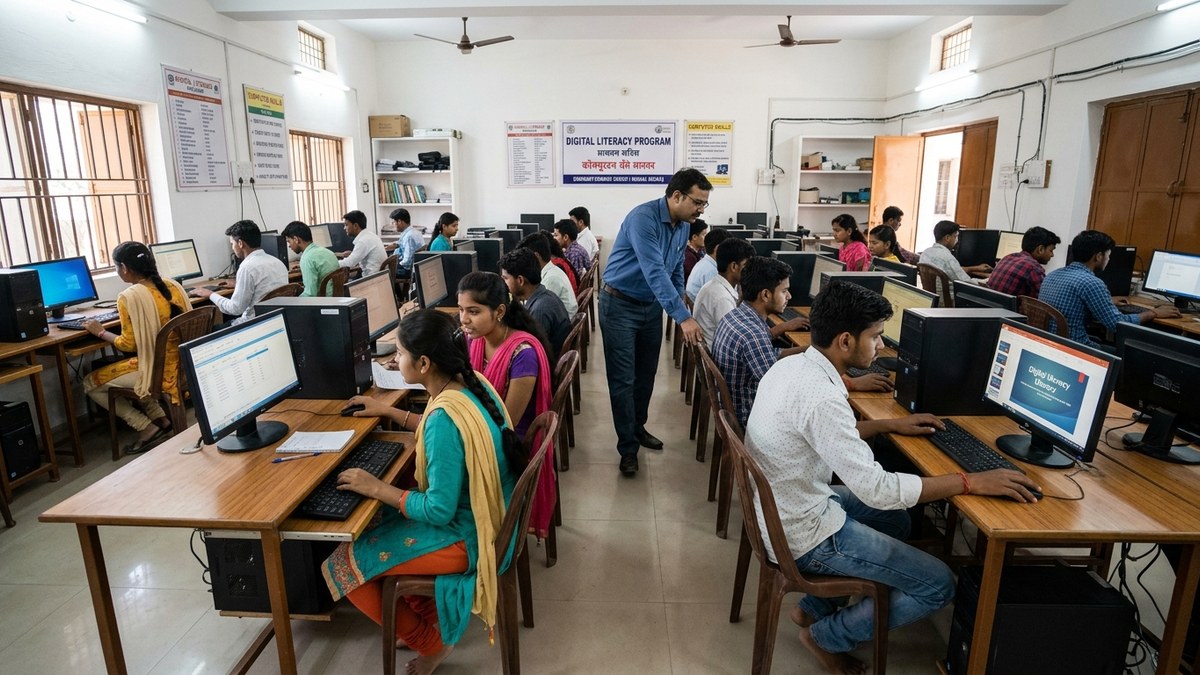
Schools teach computer classes. But they’re outdated. Curriculum lags reality by three years minimum. Plus, one teacher trying to train 40 students on shared computers means most kids get 15 minutes of hands-on time per week. That’s not enough.
Online courses? They work for motivated learners. But most Indian students aren’t self-directed yet. They need structure. They need someone watching. They need a Point of Digital Learning.
That’s where smart classroom India guide thinking comes in. Small groups. Trained educators. Real computers. Real practice. This is what works.
Home tutoring for digital skills changes the game. One-on-one or small batch. The student’s own pace. Immediate feedback. No waiting for the computer lab booking. No distractions.
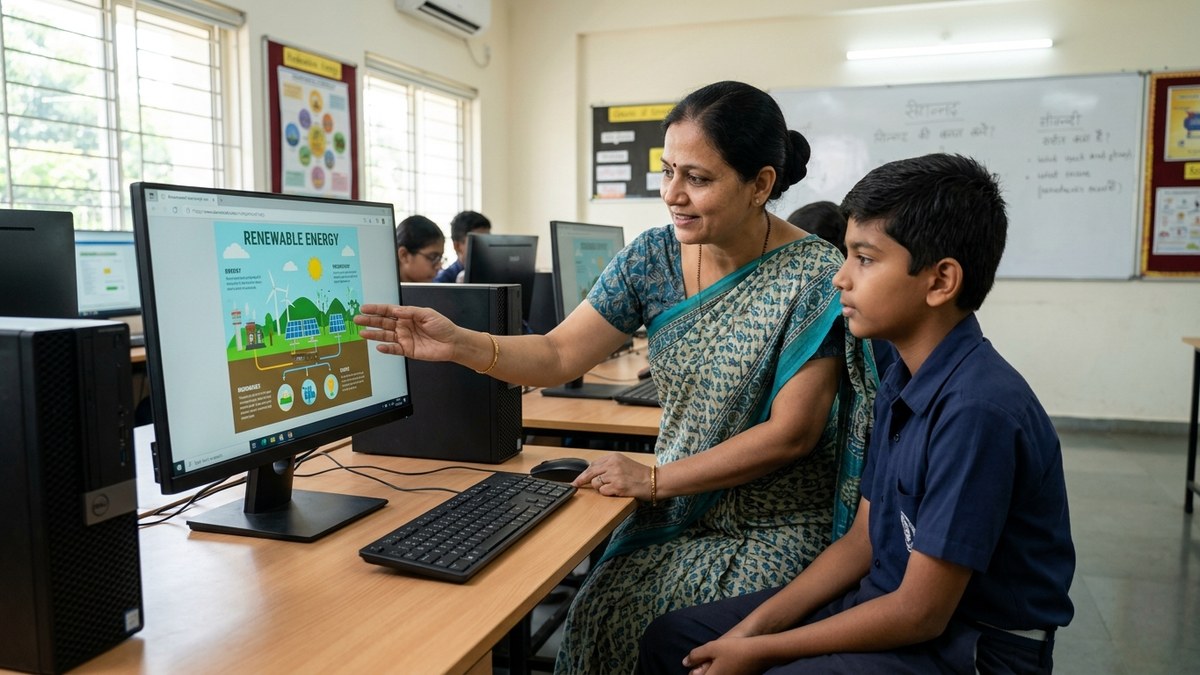
The research backs this. Check the digital literacy research if you want citations. Personalized instruction beats batch learning every time for skill acquisition.
The Equipment Question Nobody Talks About
Here’s what stops most families: they don’t have a computer at home. Phones yes. Laptops? Too expensive. Too fragile. Too complicated for parents to support.
But learning digital literacy without a computer is like learning swimming without water. Impossible.
This is why APNA PC exists. Rs.30,000 for a complete bundle. Mini PC with i3 7th Gen processor, 8GB RAM, 128GB SSD. Monitor, keyboard, mouse, webcam, headset. Installation included. Three-year warranty. Education software pre-loaded.
That’s not expensive. That’s practical. That’s what every Indian household learning digital literacy should have. No more waiting for computer lab slots. No more borrowing devices. Your own setup. Your own pace.
APNA PC turns any room into a Point of Digital Learning. A trained educator can set up shop. Teach students. Build a tutoring business. The equipment doesn’t break. The warranty covers it. The software is designed for learning, not gaming.
What Parents Should Do Today
Stop assuming your child will pick this up naturally. They won’t. Digital literacy skills for students require deliberate teaching.
First: assess where they are. Can they type properly? Do they know how to use Word or Google Docs? Can they troubleshoot a simple problem? Be honest about gaps.
Second: set up the infrastructure. Either get a computer at home or find a local Point of Digital Learning where a trained educator teaches these skills. APNA PC makes this affordable.
Third: commit to consistency. Not one-off lessons. Weekly sessions. Minimum 8-12 weeks. Skills build through repetition.
Fourth: practice outside lessons. The educator teaches. The student practices at home. This is how competence develops.
Most people don’t realise that digital literacy skills are now as important as reading and math. Your child’s future depends on this.
Explore APNA PC today and set up your home learning space. Your child’s career will thank you.
Frequently Asked Questions About Computer literacy for students
What computer skills should every student learn?
Every student should learn touch typing, word processing, spreadsheets and presentations, safe internet research, file management and video calls. These are used in college assignments, job applications and most workplaces. They form the base for advanced skills like coding.
Why are phone skills not enough for students?
Phones are built for apps and messaging, not for long documents, spreadsheets or managing files. College and workplace tasks happen mostly on computers. Students who only use phones often struggle when they first face these tasks.
How can parents teach computer skills at home?
Give your child regular, set time on a family computer for real tasks like typing a school project, making a simple spreadsheet or emailing an assignment. Free typing tools and Google Docs or Word make good practice. Small, frequent tasks build confidence.
Should students learn coding before basic computer skills?
Basic computer skills should come first, because coding depends on comfort with typing, files and software. Once the basics are steady, coding becomes much easier to learn. Both are useful, but the order matters.
How can students stay safe while researching online?
Teach students to check the source, prefer official sites like NCERT or government portals, and be wary of pages without clear authors. They should never share passwords or personal details. Parents can keep the computer in a shared family space.
NEP 2020 lists digital literacy among the essential skills every student should develop, alongside computational thinking introduced in the middle school years.