
Your classroom is stuck in 2005. Here’s how to fix it without breaking the bank.
A teacher in rural Maharashtra walks into her classroom. Chalk dust. Wooden benches. A blackboard that’s seen better days. Her students scroll through TikTok at home but sit passively in class. Sound familiar? This isn’t a failure of teachers. It’s a failure of infrastructure. A smart classroom setup isn’t a luxury anymore. It’s the baseline.
Let’s be honest: most Indian school owners think this kind of setup costs lakhs. They imagine elaborate installations, imported equipment, and IT teams on standby. That’s outdated thinking. Today, you can build a functional digital classroom for your school or Point of Digital Learning (POD) for under Rs.35,000. Yes, really.
Here’s the truth: the barrier isn’t technology. It’s information. Schools don’t fail because teachers don’t want to innovate. They fail because nobody explained what actually works, what it costs, and how to start tomorrow.
What Goes Into a Smart Classroom Setup?
The equipment list doesn’t need to be complicated. Strip away the jargon and you need five things:
- A mini PC or laptop – The brain of your setup. It runs your content, connects to the internet, and manages everything else.
- A display screen or projector – Where students actually see the content. A 43-inch monitor works better than a projector in Indian classrooms (no glare issues, better visibility).
- Audio equipment – Headsets and speakers. A classroom where students can’t hear clearly is a classroom where learning stops.
- Input devices – Keyboard, mouse, and ideally a webcam for recording or live sessions.
- Education software – This is where most schools stumble. You need content management, student tracking, and interactive tools. Not expensive enterprise software. Simple, purpose-built tools.
That’s it. This is standard information technology, not rocket science. Everything else is optional complexity.
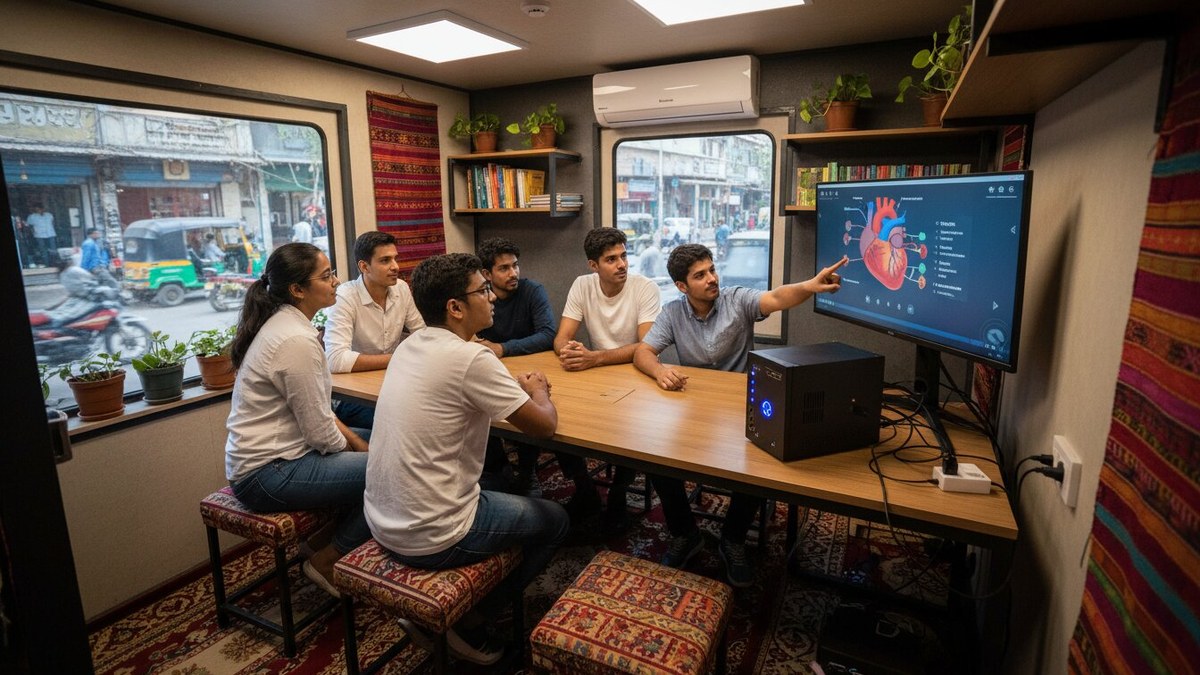
Most people don’t realise that smart classroom setup cost in India has crashed because of competition. Three years ago, a basic setup cost Rs.60,000-80,000. Today? You can get a complete bundle for Rs.30,000 with APNA PC. Mini PC (i3 7th Gen, 8GB RAM, 128GB SSD), monitor, keyboard, mouse, webcam, headset, education software, 3-year warranty, and installation included. No hidden costs.
The Real Costs You Should Know About
Let’s break down the numbers honestly:
- Hardware (one-time): Rs.25,000-35,000 for a complete setup with warranty and installation.
- Internet: Rs.500-1,500 per month. Non-negotiable. If you’re running a POD or school without reliable internet, stop reading and fix this first.
- Software: Rs.0-5,000 per year depending on what you choose. Many education platforms offer free tiers for Indian educators.
- Maintenance: Rs.2,000-5,000 per year for repairs and updates.
Total first-year cost for a single classroom: Rs.35,000-50,000. Spread that across 40 students and you’re looking at Rs.875-1,250 per student per year. A single tuition class recovers this in one month.
Compare that to a school that doesn’t upgrade. They lose students to online learning platforms. They lose teacher quality because good educators want modern tools. They lose relevance. The cost of not upgrading is higher than the cost of upgrading.
What Actually Changes When You Install a Smart Classroom?
This is where most articles get fluffy. Let’s be specific about what this setup actually enables:
- Live interaction: Use tools like live quizzes with Kahoot to check understanding in real-time. No more passive note-taking.
- Recorded lessons: A student misses class? They watch the recording. A concept needs reinforcement? Play it back. Your teaching scales beyond the classroom.
- Data on what works: You see which students struggled with which concepts. You stop guessing and start teaching based on evidence.
- Reduced teacher burnout: Grading, attendance, and progress tracking automate. Teachers focus on actual teaching, not paperwork.
- Student engagement: Yes, this matters. A 14-year-old paying attention to a screen with interactive content learns more than a 14-year-old copying from a blackboard.
These aren’t theoretical benefits. Schools across India running PODs with these setups report 15-25% improvement in learning outcomes within six months. Not because the technology is magic. Because it forces you to be intentional about teaching.

The Difference Between a Smart Classroom and a Waste of Money
Here’s where most schools go wrong: they install equipment and expect magic. They don’t train teachers. They don’t have content ready. They don’t have a plan for what the technology actually does.
This setup works when three things align:
- The right equipment: Not the most expensive. The right fit for your students and space.
- Teacher training: Your educator needs to know how to use it. This takes two days, not two weeks. Most teachers figure it out immediately once they see the possibilities.
- Clear purpose: You’re not using it for every lesson. You’re using it for concepts that benefit from visual explanation, for assessments, for recording, for interaction. Be intentional.
A school that installs a Rs.50,000 setup and then shows YouTube videos on it has wasted Rs.50,000. A school that uses it to record lessons, track student progress, and run microschool vs traditional school hybrid models recovers that investment in months.
The difference isn’t the technology. It’s the thinking behind it.
Why Now?
Government initiatives like MeitY Digital India are pushing digital infrastructure into rural areas. Internet penetration is at 45% and climbing. The talent pool of young educators who grew up with technology is expanding. The cost of hardware has hit a floor. The conditions are finally right.
If you’re running a school or POD in India in 2026 without a smart classroom setup, you’re not saving money. You’re losing it. You’re losing students to online platforms. You’re losing teachers to schools that offer better tools. You’re losing relevance.
The question isn’t whether to upgrade. It’s whether to upgrade this year or next year. And if you wait until next year, someone else in your area won’t.
Start with one classroom. Get the APNA PC bundle. Rs.30,000. Train your best teacher. Run it for a month. Measure the results. Then scale.
Explore APNA PC and start building your digital classroom today.