
Your Child Is Already Behind. Here’s Why.
A student walks into a classroom in 2026 without basic computer skills. They can’t open an email attachment. They’ve never used a spreadsheet. They don’t know what a PDF is. This isn’t a scene from a forgotten village. This is happening in tier-1 cities across India right now.
The gap between digital literacy in India and what employers actually need has become a chasm. While some students are building websites and editing videos, millions are still struggling to navigate a keyboard. The worst part? Schools aren’t fixing this fast enough.
Let’s be honest: traditional education hasn’t caught up. Digital literacy in India remains patchy, inconsistent, and frankly, inadequate for what comes next. Parents know it. Teachers feel it. Students sense it.
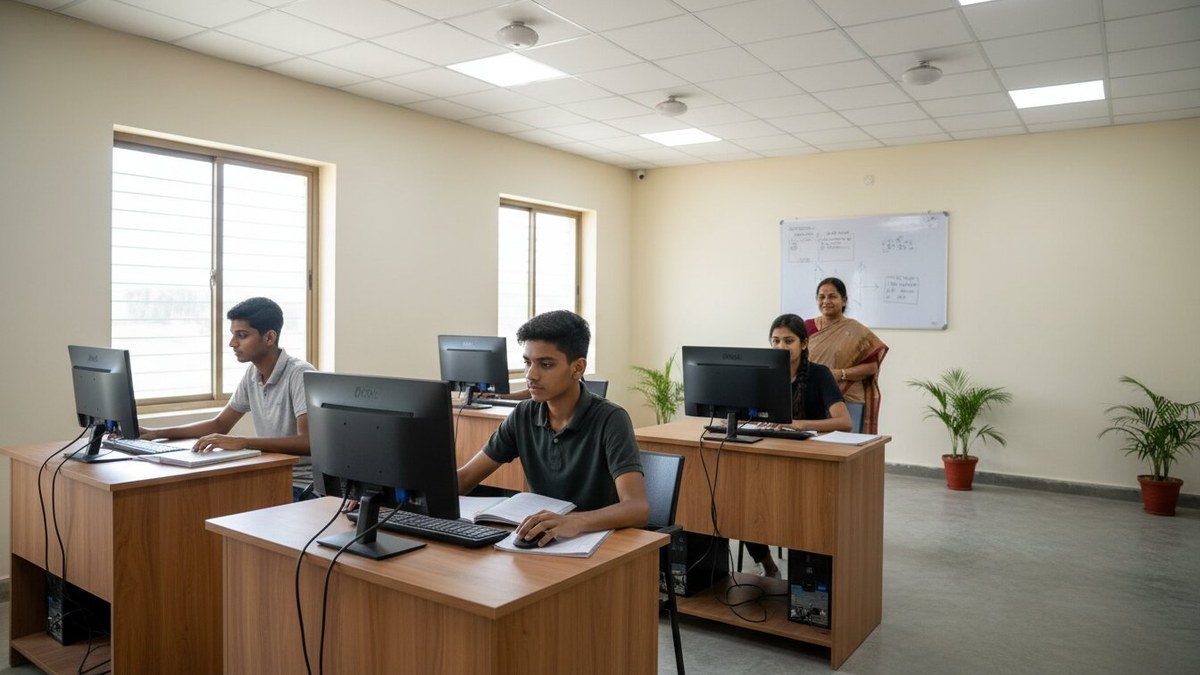
What Digital Literacy in India Actually Means (And Why Your Child Needs It)
Most people don’t realise that digital literacy isn’t just about using a computer. It’s about solving problems with technology. It’s about finding information online without getting scammed. It’s about creating, not just consuming.
Your child needs to:
- Use productivity tools like Google Docs, Sheets, and Slides without panicking
- Understand basic cybersecurity and online safety
- Create presentations, infographics, and simple videos
- Navigate online learning platforms smoothly
- Type faster than they write by hand
- Understand how to evaluate information credibility online
These aren’t luxury skills anymore. They’re baseline requirements. A student without these abilities in 2026 is like a student without reading skills in 1990.
The Digital India programme has pushed connectivity into rural areas, which is brilliant. But connectivity alone doesn’t create competence. A child with internet access but no keyboard skills is like someone handed a car without a driving license.
The Real Barrier to Digital Literacy in India: It’s Not Interest, It’s Access
Here’s the truth: most Indian families don’t have a dedicated computer at home. Smartphones, yes. But a proper desktop or laptop with a full keyboard, monitor, and stability? Not common.
This creates a two-tier system. Wealthy families invest in computers and coaching. Everyone else watches from the sidelines. Their children use shared phones for WhatsApp but never touch a keyboard. They fall behind silently, and by the time they realise it matters, the gap is huge.
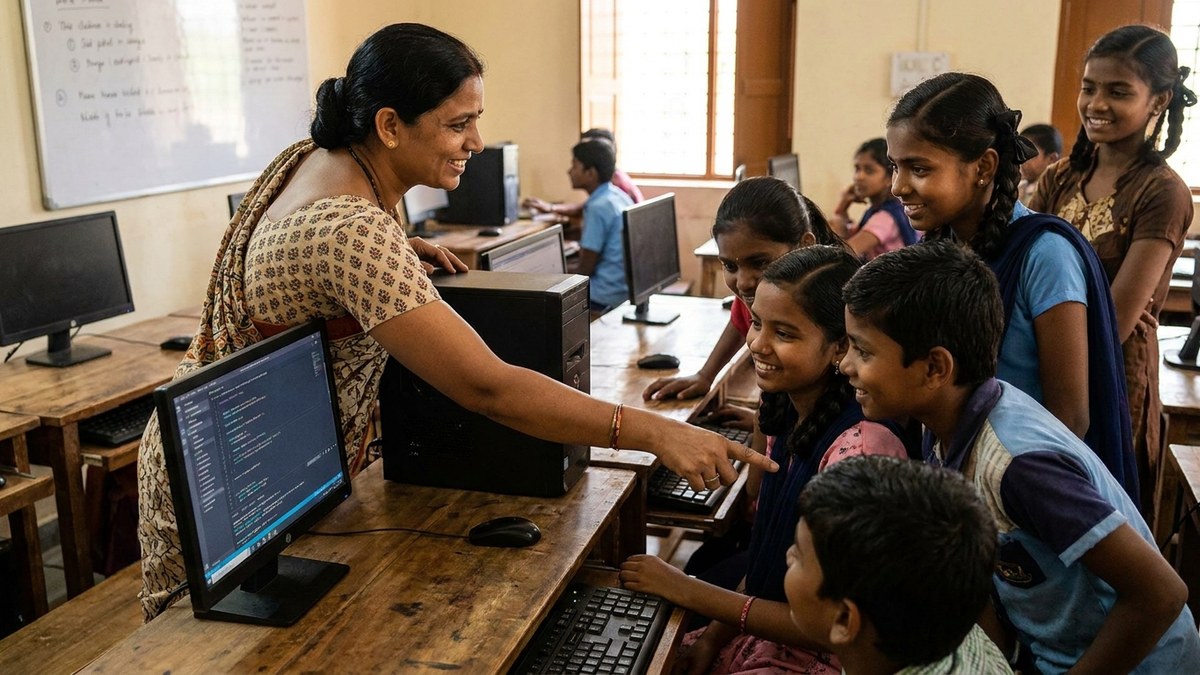
Teachers want to teach digital skills. They really do. But how do you teach spreadsheets when half your class has never touched a mouse? How do you assign online projects when students don’t have reliable home access?
This is where Points of Digital Learning (POD) become crucial. A POD is a community learning centre run by a trained educator right in your neighbourhood. It’s not fancy. It doesn’t need to be. It just needs reliable computers, good internet, and someone who knows how to teach.
You can access free digital skills courses through platforms designed for Indian learners, but without the hardware, they’re just videos gathering dust.
What Changes When Students Actually Have Access
When a student gets proper access to computers and structured online learning tools, everything shifts. Confidence blooms. They start seeing technology as a tool they control, not something that controls them.
Suddenly, they can:
- Complete online assignments faster and better
- Research projects independently
- Apply for internships that require basic computer skills
- Compete for better opportunities after school
- Help their parents with digital tasks at home
Teachers notice the difference immediately. Students who learn digital skills become better learners overall. They’re more organised. They can collaborate on shared documents. They understand how to present ideas professionally.
Most importantly, they stop feeling left behind.
The Solution That Actually Works
Setting up a POD requires three things: trained educators, reliable internet, and affordable hardware. The first two are manageable. The third has always been the sticking point.
This is why APNA PC exists. It’s a complete bundle designed specifically for Indian educators and learning centres. For Rs.30,000, you get a Mini PC (i3 7th Gen, 8GB RAM, 128GB SSD), a monitor, keyboard, mouse, webcam, headset, education software, 3-year warranty, and professional installation.
That’s not expensive. That’s practical. One APNA PC can serve 15-20 students in a POD over three years. The maths works.
Teachers can use it to demonstrate concepts. Students can practice digital skills. The community gets access to technology without the corporate price tag.
Start Now, Not Later
Digital literacy in India isn’t a future problem anymore. It’s a now problem. Every month a student waits is a month they’re not building these skills. Every semester they’re not learning spreadsheets is a semester their peers are getting ahead.
Parents: push your child’s school to prioritise digital skills. Tuition teachers: consider adding online learning tools to your curriculum. You can even create worksheets with Canva to make lessons more engaging.
Educators: if you’re thinking about starting a POD or upgrading your current setup, the infrastructure exists now. APNA PC makes it affordable. The question isn’t whether you can do this. It’s whether you can afford not to.
Ready to bridge the digital skills gap in your community? Explore APNA PC and start your Point of Digital Learning today.