
Is Homeschooling in India Legal? The Straight Answer
Here’s the truth: homeschooling in India is legal, but it’s not officially recognized as a formal alternative to traditional schooling. Your child can learn at home. You won’t go to jail. But the government doesn’t have a dedicated homeschooling framework that lets your kid skip school registration entirely. This confusion stops thousands of Indian parents from even considering what could be the right choice for their family.
Let’s be honest. Most people don’t realize that the reality of homeschooling in India sits in a gray zone. There’s no law that says “you must send your child to a registered school.” But there’s also no law that says “you can homeschool freely.” What does exist is the Right to Free and Compulsory Education Act, 2009, which requires children aged 6-14 to receive education. It doesn’t specify where.
What the Law Actually Says About Homeschooling in India
The RTE Act mandates education, not schooling. This is the critical distinction most parents miss. Your child must receive education. They don’t have to sit in a classroom with 40 other kids. State governments have different interpretations, which means homeschooling laws in India vary by region. Kerala has clearer guidelines than Maharashtra. Gujarat differs from Tamil Nadu. You need to check your specific state’s education department rules.
What you need to do:
- Register your child with your local education authority (even if homeschooling)
- Ensure your child takes board exams or equivalent assessments when required
- Maintain records of curriculum and progress
- Follow your state’s specific guidelines on external examinations
Most states allow homeschooled children to appear for board exams as private candidates. This is your exit route. Your child learns at home, takes the exam outside, gets the certificate. Simple.
The challenge isn’t legality. It’s structure. You need to know what you’re doing. Random YouTube videos and WhatsApp groups won’t cut it. You need a real plan. That’s where homeschool curriculum choices matter intensely. Are you following CBSE? ICSE? State board? A custom mix? This decision shapes everything.

Homeschool Curriculum Choices That Actually Work
Here’s where most homeschooling attempts fail. Parents get excited about freedom, then realize they have no idea what to teach or how to teach it. Homeschool curriculum choices in India range from structured board programs to unschooling to hybrid models. Pick wrong and your kid falls behind. Pick right and they thrive.
Your realistic options:
- Board-aligned (CBSE/ICSE): Follow the official curriculum. Your child takes the board exam. Widely recognized. Requires discipline and self-study.
- International curricula (IB, Cambridge): More flexible. Accepted globally. Expensive. Requires trained guidance.
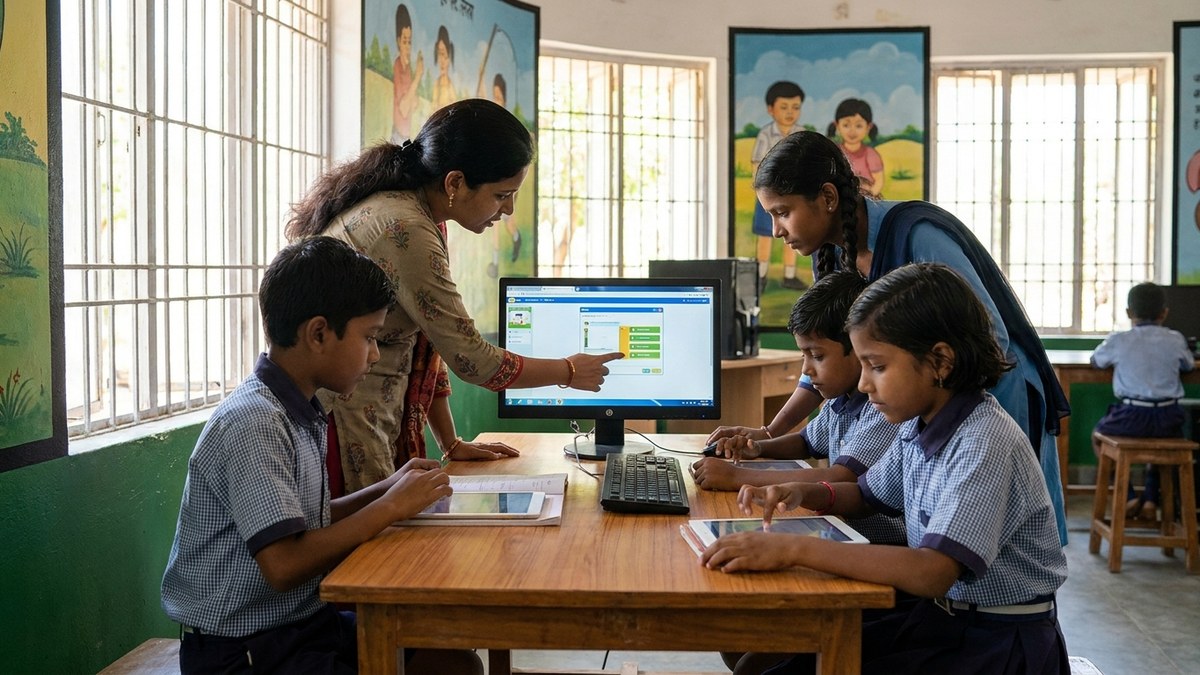
- Hybrid/POD model: Your child learns partly at home, partly at a Point of Digital Learning center with a trained educator. Best of both worlds. Structured yet flexible.
- Unschooling: Child-led learning. Sounds great. Often results in gaps. Not recommended unless you’re deeply committed and knowledgeable.
Most Indian parents succeed with the hybrid approach. Why? Because it combines home flexibility with expert guidance. A trained educator ensures curriculum continuity. Your child gets structure without the rigid school environment.
To make this work, you need the right tools. A decent PC for accessing digital resources, online classes, and educational software isn’t optional anymore. This is where APNA PC changes the equation. Rs.30,000 gets you a complete bundle: education software, 3-year warranty, installation, Mini PC with i3 7th Gen processor, 8GB RAM, 128GB SSD, monitor, keyboard, mouse, webcam, and headset. One investment. Everything you need to run a homeschool or Point of Digital Learning center properly.
The Real Challenges of Homeschooling at Home
Don’t romanticize this. Homeschooling is harder than traditional schooling for most families. You’re the curriculum designer, teacher, and administrator. Your child loses peer interaction unless you actively create it. Your home becomes the classroom, which blurs boundaries.
The homeschooling movement works when parents are intentional. Not just about avoiding school. About building something better. When you’re choosing homeschooling programs, look for frameworks that provide structure, not just ideology.
Check TeachToEarn’s guide on choosing homeschooling programs to understand what separates quality programs from mediocre ones. Also, if you’re managing multiple students, systems like our Telegram bot for homework reminders actually reduce admin burden significantly.
Your Next Steps
Homeschooling in India is legal. Feasible. But requires clarity on three fronts: legal compliance in your state, curriculum structure, and learning infrastructure. Don’t wing it. Document everything. Follow your state guidelines. Choose a curriculum that matches your child’s learning style and your capacity.
If you’re serious about homeschooling or running a Point of Digital Learning center, invest in proper infrastructure. APNA PC isn’t just a computer. It’s the foundation for reliable, professional digital learning. Visit our APNA PC page to explore the bundle and see if it fits your setup.
Homeschooling in India works. But only when you work it properly.