

Every parent and student in India knows the pressure of board exams and competitive entrance tests. The difference between average and exceptional results often comes down to one factor: study habits Indian students develop early. Research shows that students who follow structured, evidence-based learning routines consistently outperform their peers. This guide reveals proven exam preparation tips that transform how students learn and retain information.
Key Takeaways
- Structured study habits, not just intelligence, separate top scorers from average students in board and competitive exams.
- Active recall and spaced repetition improve long-term retention far more than passive re-reading.
- Starting revision 3-4 months before exams allows for multiple review cycles instead of last-minute cramming.
- A distraction-free study space and the Pomodoro technique (25-minute focus blocks) help sustain concentration.
Why Study Habits Matter for Indian Students
Study habits Indian students adopt during school years determine their academic trajectory. A student’s success depends not just on intelligence but on discipline and consistency. The CBSE official guidelines emphasize the importance of structured learning approaches for board exam preparation.
When students establish effective learning strategies, they experience better focus, improved retention, and reduced exam anxiety. Study habits Indian students practice should align with their learning style, whether visual, auditory, or kinesthetic.
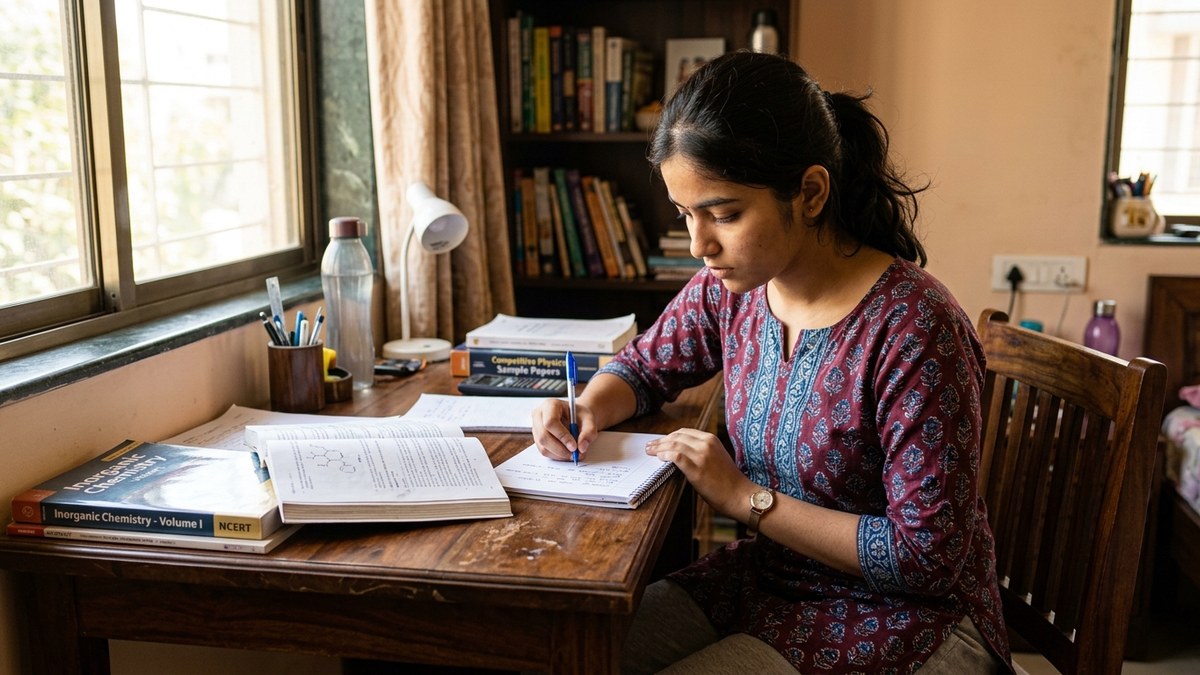
Top Study Habits Indian Students Should Develop
1. Create a Dedicated Study Space
A distraction-free environment is crucial for effective learning strategies. Your study space should have proper lighting, comfortable seating, and all necessary materials within reach. This consistency trains your brain to enter “learning mode” automatically.
2. Follow the Pomodoro Technique
Study for 25 minutes with full concentration, then take a 5-minute break. After four cycles, take a longer 15-30 minute break. This technique helps maintain focus and prevents burnout during long study sessions.
3. Use Active Recall and Spaced Repetition
Instead of passive reading, test yourself regularly on learned material. Space your revision sessions across days and weeks. These effective learning strategies improve long-term retention significantly. This isn’t just anecdotal: psychologist Hermann Ebbinghaus’s classic “forgetting curve” research showed that learners forget more than half of new material within a day without review, which is exactly why spaced-out revision consistently beats one long cramming session.
4. Take Organized Notes
Develop a note-taking system that works for you. Whether using the Cornell method or mind maps, organized notes become valuable revision resources. Study habits Indian students follow should include regular note review and summarization.
5. Join Study Groups
Peer learning groups help students explain concepts to each other, reinforcing understanding. Discussing topics with classmates reveals knowledge gaps and builds confidence.

Effective Learning Strategies for Different Subjects
Mathematics and Science
Practice problems daily rather than cramming before exams. Solve previous years’ question papers to understand exam patterns. Study habits Indian students develop in STEM subjects require consistent problem-solving practice.
Languages and Social Studies
Read comprehensively and create summary sheets. Use timelines and concept maps to organize information. These effective learning strategies help retain historical events and literary concepts.
Use Gamification
Gamification in education makes learning engaging through quizzes, flashcard apps, and competitive study challenges. This approach transforms study routines Indian students find monotonous into enjoyable learning experiences.
Building Consistent Study Habits Indian Students Can Sustain
Consistency matters more than intensity. Study for 2 hours daily with full focus rather than 8 hours with constant distractions. Track your study progress using a planner or app. Set realistic daily targets aligned with your exam schedule.
Exam preparation experts emphasize starting early rather than last-minute cramming. Begin revision at least 3-4 months before board exams. This timeline allows for comprehensive coverage and multiple revision cycles using effective learning strategies.
Maintain a healthy lifestyle alongside academics. Sleep 7-8 hours nightly, exercise regularly, and eat nutritious meals. Physical wellness directly impacts focus, memory, and exam performance.
Overcoming Common Study Challenges
Procrastination is the biggest enemy of study habits Indian students struggle with. Combat it by breaking tasks into smaller chunks and setting deadlines. Use accountability partners to stay motivated.
If you lose focus easily, identify your distractions and eliminate them. Put phones in another room, use website blockers, and inform family members about your study schedule. Environmental control proves highly effective for building good habits.
When topics seem difficult, seek help immediately. Ask teachers, join tutoring sessions, or find online resources. Effective learning strategies include knowing when to ask for support rather than struggling silently.
Technology Tools for Modern Study Habits
Apps like Anki for flashcards, Notion for organization, and Khan Academy for concept clarity support exam preparation. However, use technology purposefully, not as distraction. Study habits Indian students develop should balance digital and traditional learning methods.
Online practice tests simulate exam conditions and build confidence. Many platforms offer free resources aligned with CBSE and competitive exam syllabi.
Frequently Asked Questions
What are the best study habits for Indian students preparing for board exams?
The most effective habits are a dedicated study space, timed focus sessions like the Pomodoro Technique, active recall instead of passive reading, spaced repetition, and starting revision several months ahead rather than cramming.
How many hours should a student study daily for CBSE exams?
Consistency matters more than total hours. Two focused, distraction-free hours daily generally produce better results than eight unfocused hours. Build up study time gradually as exams approach, alongside adequate sleep and breaks.
Does active recall really work better than reading notes repeatedly?
Yes. Testing yourself on material forces your brain to retrieve information, which strengthens memory far more than simply re-reading notes. Combined with spaced repetition, it is one of the most well-supported study techniques.
When should students start revising for board exams?
Ideally 3-4 months before the exam. This gives enough time for multiple revision cycles, practicing previous years’ question papers, and addressing weak topics without last-minute pressure.
How can parents support better study habits at home?
Parents can set up a quiet, well-lit study space, minimize household distractions during study hours, encourage a fixed daily routine, and use tools like APNA PC to create a structured home learning environment.
Transform Your Learning with APNA PC
Parents and educators can now create structured learning environments at home using APNA PC. This complete Rs.30,000 bundle enables you to establish a Point of Digital Learning (POD) where students develop excellent study habits Indian students need for success. Whether you’re an educator starting a home-based learning center or a parent seeking structured support, APNA PC provides everything needed.
Ready to revolutionize how students study and learn? Build a smart study POD with APNA PC today. Visit TeachToEarn to start your POD journey and empower the next generation with proven study habits and effective learning strategies.