
Your Child’s Exam Strategy Is Probably Wrong
Most Indian students prepare for exams the same way their parents did 20 years ago. They memorize. They cram the night before. They hope the question paper matches their notes. Then they’re shocked when marks don’t reflect the effort.
The problem isn’t effort. It’s strategy. Exam preparation strategies India has evolved, but most families haven’t caught up. Board exam tips CBSE circulate online, yet students ignore them. Why? Because nobody explains why these strategies work or how to actually implement them.
Let’s fix that.

Key Takeaways
- Exam results depend more on strategy than effort or hours – clarity over volume, purposeful practice, real feedback loops and consistency are the four pillars.
- Mapping the official syllabus, chapter weightage and marking scheme first prevents exam-day surprises.
- Study in 45-minute focused blocks with real breaks, and self-test with past papers and mock tests rather than waiting for a teacher’s test.
- When an answer is wrong, diagnose why – concept gap, careless error or calculation mistake – because each needs a different fix.
The Four Pillars of Real Exam Preparation
Stop treating exam prep as a solo grind. The best study plan for Indian students rests on four pillars that actually work.
- Clarity over volume. Understanding five concepts deeply beats memorizing fifty superficially. Your child should be able to explain concepts to a 10-year-old, not just recite definitions.
- Practice with purpose. Solving 500 problems randomly wastes time. Solving 50 problems while tracking which types cause mistakes? That’s precision. That’s what improves scores.
- Feedback loops that matter. Students need to know what they got wrong and why, not just a score. A teacher or tutor reviewing mistakes transforms wasted effort into learning.
- Consistency beats intensity. Studying six hours on Sunday then nothing for a week fails. One hour daily for 180 days compounds into mastery. Proven study habits that boost scores all emphasize this relentless regularity.
These four pillars work for CBSE, ICSE, state boards, competitive exams, everything. They work because they’re based on how human brains actually learn, not how textbook publishers think learning happens.
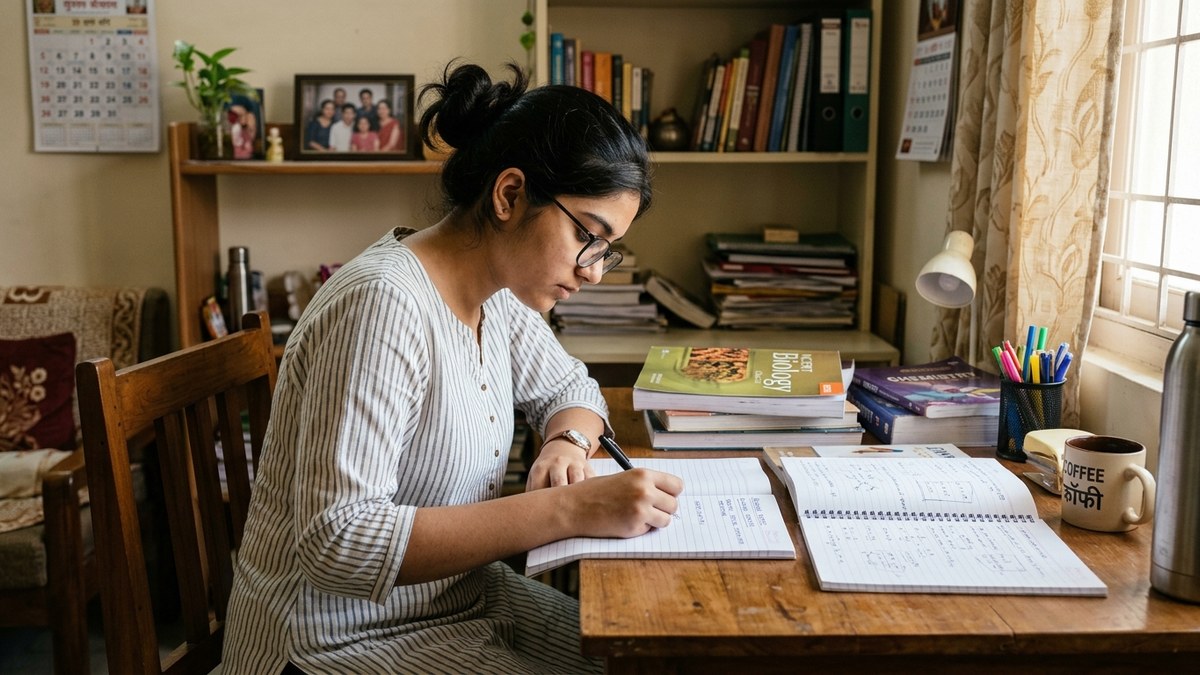
Stop Treating Technology Like A Distraction
Indian parents worry about screens. They should worry about strategy instead. Technology isn’t the problem. Bad technology use is.
A student scrolling Instagram while “studying” wastes time. A student using a proper learning platform with structured content, tracked progress, and instant feedback? That student learns faster and remembers longer. The difference is the tool and the system around it.
This is why many serious educators now use digital platforms for exam prep. Not because screens are trendy. Because they work. Gamification makes learning fun while keeping students accountable. Progress dashboards show parents exactly where their child stands. Adaptive systems adjust difficulty based on performance.
For tuition educators and homemaker-edupreneurs running PODs (Points of Digital Learning), this matters even more. You can’t manage 20 students’ progress manually. You can with the right system.
The Real Exam Preparation Strategies India Needs Now
Here’s what actually moves the needle in 2026:
- Map the exam. Get the official CBSE exam resources or your board’s syllabus. Know the weightage of chapters. Know the question types. Know the marking scheme. Most students skip this and wonder why they’re surprised on exam day.
- Create a realistic calendar. Count backwards from exam date. Allocate time per chapter based on difficulty and weightage, not just how much you like the topic. Build in revision weeks. This is your study plan for Indian students, customized for your situation.
- Study in blocks, not marathons. 45 minutes of focused study beats 3 hours of distracted studying. After 45 minutes, take a real break. Walk. Drink water. Then go again.
- Test yourself constantly. Don’t wait for your teacher’s test. Use previous year papers. Use mock tests. Use chapter-wise quizzes. Every test reveals gaps before the real exam exposes them.
- Fix mistakes immediately. When you get a question wrong, don’t just note the answer. Understand why you were wrong. Was it a concept gap? A careless error? A calculation mistake? Different problems need different fixes.
- Teach someone else. If your child can explain a concept to a friend, a parent, or even a younger sibling, they’ve truly understood it. This catches holes in understanding that reading alone misses.
These aren’t revolutionary. They’re not new. They work because they align with how learning actually happens.
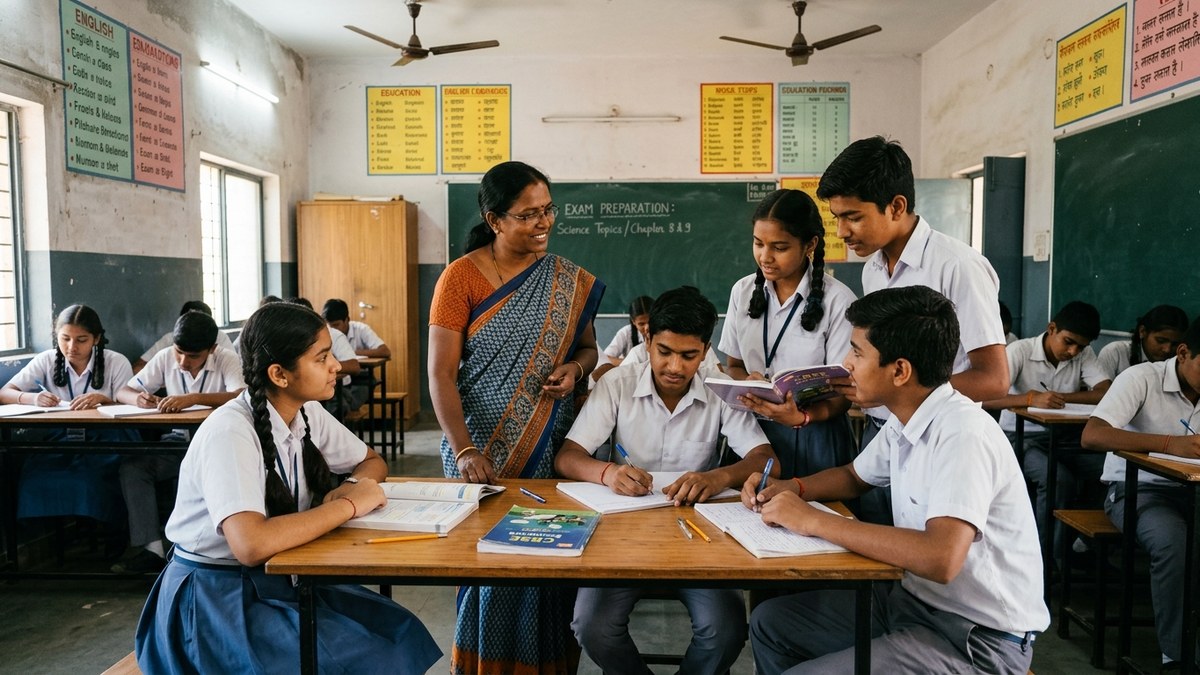
Why Teachers and Tutors Need Better Tools
Parents often ask tutors: “Is my child actually learning?” Tutors often can’t answer with data. They have gut feelings.
That’s not good enough anymore. Exam preparation strategies India that work require visibility. Teachers need to track which concepts each student has mastered. Parents need to see progress, not just hear “beta padh raha hai.” Students need to understand their own learning patterns.
This is where infrastructure matters. A tuition educator managing 15-20 students can’t do this with a notebook and WhatsApp. A homemaker-edupreneurs running a POD definitely can’t. You need a system that does the heavy lifting: tracking, reporting, adapting content based on performance, and giving you time to actually teach.
APNA PC is built exactly for this. Rs.30,000 complete bundle includes education software plus a Mini PC (i3 7th Gen, 8GB RAM, 128GB SSD), monitor, keyboard, mouse, webcam, headset, plus 3-year warranty and installation. No hidden costs. No “you need more stuff later.” Everything a POD needs to run proper digital learning infrastructure.
With APNA PC running your learning management system, you can actually implement these strategies at scale. Track student progress. Identify weak areas. Adjust teaching accordingly. Show parents real data. That’s how you get results.
The Bottom Line
Exam preparation strategies India in 2026 aren’t about studying harder. They’re about studying smarter with better systems, better feedback, and better tools. Students who understand concepts deeply, practice with purpose, and get real feedback will outperform those who simply grind.
Teachers and tutors who embrace this approach will build reputations that attract more students. Parents who implement this will see their children’s confidence and marks improve together.
The question isn’t whether these strategies work. They do. The question is whether you’ll implement them.
If you’re a tuition educator or homemaker-edupreneurs looking to scale your POD with proper technology infrastructure, start your learning POD today and get the right tools to support these strategies.
For more on how learning actually works, check out global examination standards and practices and CBSE official exam resources.
Frequently Asked Questions About Exam Preparation Strategies
What are the four pillars of effective exam preparation?
Clarity over volume (understand a few concepts deeply), practice with purpose (track which question types cause mistakes), feedback loops (know why an answer was wrong), and consistency (a steady daily hour beats occasional long sessions).
How should a student build an exam study plan?
Count backwards from the exam date and allocate time per chapter by difficulty and weightage – not by preference – with dedicated revision weeks built in.
How long should each study session be?
About 45 minutes of focused study followed by a real break (walk, water), then another block. This beats three hours of distracted studying.
What should a student do after getting a practice question wrong?
Identify the cause – a concept gap, a careless error or a calculation mistake – and fix that specific problem, rather than just noting the correct answer.
Do digital tools actually help exam preparation?
Yes, when used with structure. Platforms with tracked progress, adaptive difficulty and instant feedback help students, and let a POD educator manage 15-20 students’ progress, which is impractical on paper.