
You Don’t Need a Building to Start a Microschool in India
Here’s the truth: Thousands of Indian parents are trapped between two bad options. Government schools are overcrowded. Private schools drain family budgets. Most people don’t realise there’s a third path: running a microschool from home in India.
A microschool from home India isn’t a tuition centre pretending to be something bigger. It’s a real learning community. Small groups. Personalised attention. Real results. And you can launch one from your living room.
Let’s be honest. The edupreneurs winning right now aren’t waiting for perfect conditions. Homemakers are building income streams. Tuition teachers are scaling beyond one-on-one classes. Parents are creating the schools they wish existed. The barrier isn’t permission or credentials. It’s clarity on how to actually start.
Key Takeaways
- A home microschool is a small, mixed-age learning group of roughly six to fifteen children run from a spare room, not a registered school building.
- The four non-negotiables are a safe dedicated space, a clear curriculum plan, one reliable computer for lessons and records, and honest communication with parents.
- Parents join based on trust and visible results, so start with a few families in your own neighbourhood.
- Realistic early revenue is a few thousand rupees per child per month, which covers costs and a modest income within the first year.
What Makes a Home Microschool Different
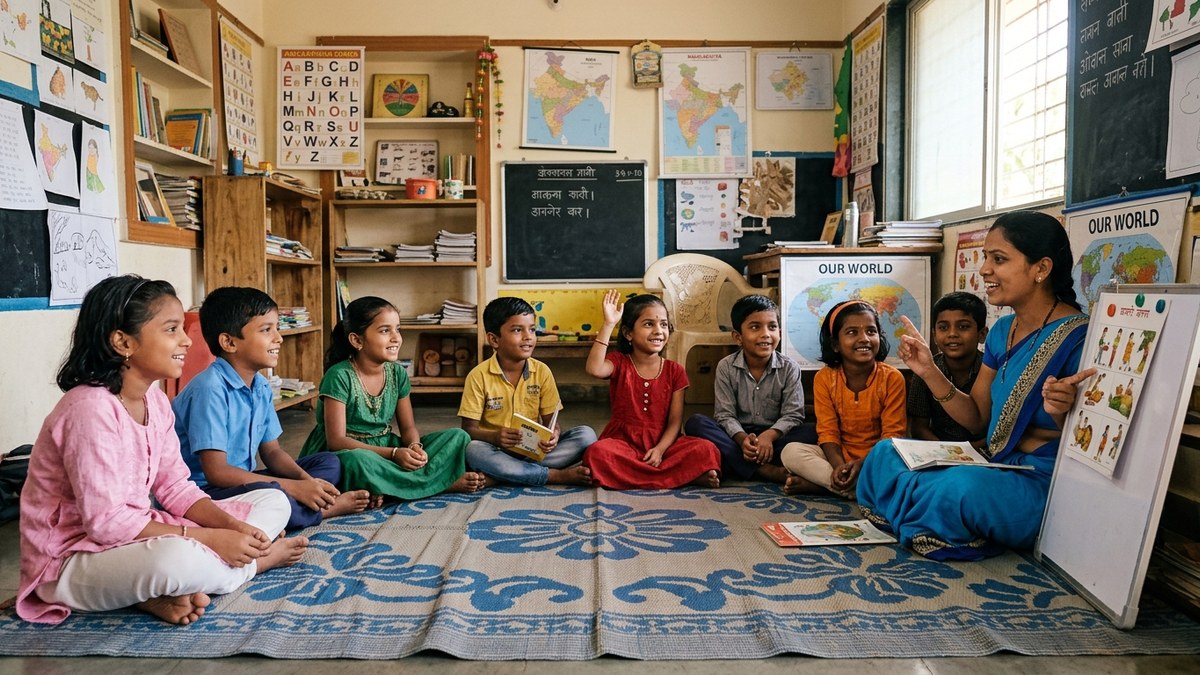
A home microschool India operation is lean. Typically 8-15 students per batch. One or two educators. Focus on actual learning outcomes, not just syllabus completion. You’re not competing with big schools on infrastructure. You’re winning on flexibility and results.
This is a Point of Digital Learning (POD). A home or community learning centre run by trained educators using structured curriculum and digital tools. The POD model works because it combines personal touch with professional systems.
The economics are clear. Your overhead is minimal. Your margins are real. Parents pay 40-60% less than private schools because you’re not maintaining empty classrooms or bloated admin staff. Everyone wins.
The Four Non-Negotiables to Start
- Curriculum clarity. Which age group? Which subjects? Which learning outcomes? Vague thinking kills microschools. Specific thinking builds them. Align with CBSE, ICSE, or state boards. Or create a hybrid. Just decide.
- Physical space. Your home needs dedicated learning areas. Not your bedroom. Not the kitchen. A separate room signals professionalism to parents and creates learning psychology for students. Minimum 200 square feet works.
- Digital infrastructure. This is non-negotiable now. Students expect it. Parents demand it. You need a system that handles attendance, assignments, progress tracking, and parent communication. APNA PC is built exactly for this. Rs.30,000 gets you the complete bundle: education software, Mini PC (i3 7th Gen, 8GB RAM, 128GB SSD), monitor, keyboard, mouse, webcam, headset, plus 3-year warranty and installation. One investment. Professional setup. Done.
- Legal foundation. Register as a sole proprietor or partnership. Get your UDYAM registration. Check local regulations. Most areas allow home-based learning centres. Compliance removes stress later.
Your first batch doesn’t need 15 students. Start with 5-8. Build reputation. Scale gradually. This isn’t a sprint.
How to Actually Attract Parents
Parents aren’t looking for another tuition centre. They’re looking for educators who care about their child’s actual development. Show them that.
Document everything. Share student progress. Record small wins. When a struggling math student finally solves problems independently, that’s your marketing. Word spreads fast in communities when results are real.
Use your network. Start with friends and neighbours. Ask for referrals. Build a waiting list before you launch. This isn’t about advertising budgets. It’s about trust.
Check out the home tutoring business guide for deeper strategies on parent outreach and retention.
The Technology That Doesn’t Feel Like Technology
Most educators fear tech. Stop. You don’t need to be a programmer. You need tools that work. APNA PC handles the heavy lifting. Your education software tracks everything. Students see their progress. Parents get real-time updates. You spend time teaching, not managing spreadsheets.
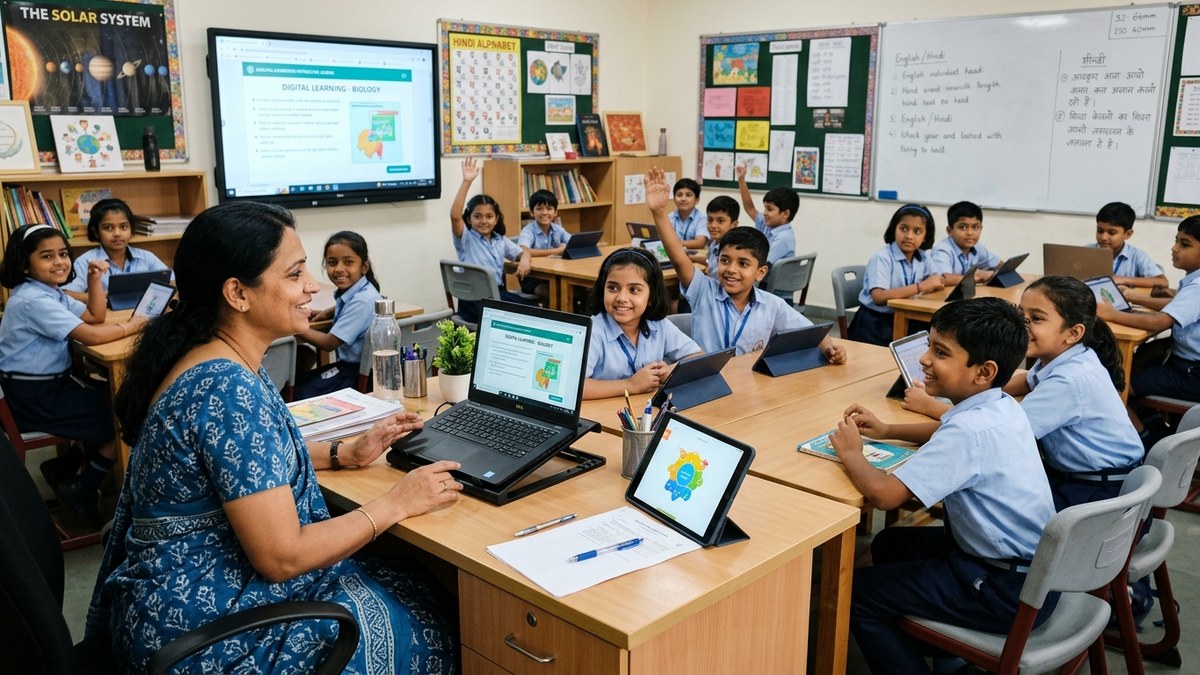
Integrate with platforms like DIKSHA digital learning platform for supplementary content. Access resources from India Ministry of Education. Build a hybrid model that combines offline excellence with digital reach.
For a complete setup reference, explore our smart classroom setup guide.
Revenue Reality Check
Let’s do the math. Eight students. Average fees Rs.3,000-5,000 per month depending on your location and curriculum. That’s Rs.24,000-40,000 monthly revenue. Subtract rent (if any), utilities, and software. Your net margin sits at 60-70%. This is real income. Not get-rich-quick. Sustainable.
Scale to two batches. Your revenue doubles. Your overhead barely moves. This is the microschool advantage.
The Real Barrier Isn’t Resources. It’s Confidence.
You have everything you need. Space in your home. Knowledge in your mind. Access to curriculum frameworks. Parents waiting for alternatives. What’s missing is the decision to start.
Most people don’t realise that starting small is actually the advantage. You learn fast. You adapt quickly. You build genuine relationships with students and families. By the time you think about scaling, you’ve already solved the hard problems.
Your microschool from home India isn’t a side hustle. It’s a real business. It’s real education. It’s real impact on student lives.
Ready to build? Start your learning POD today. Get clarity on your model. Set up your space. Invest in tools like APNA PC. Launch within 30 days.
The schools your community needs aren’t coming from outside. They’re coming from people like you who decide to start.
Frequently Asked Questions About Start a microschool from home in India
Is it legal to run a microschool from home in India?
Small home tutoring and supplementary learning groups operate widely without a formal school licence, similar to coaching classes. If you plan to replace formal schooling entirely or grow large, take local legal advice on registration and safety rules.
How many students do I need to make a home microschool work?
Most home microschools become financially stable at six to ten children. That size keeps teaching personal while covering rent, electricity, materials, and a basic salary.
What subjects should a home microschool teach?
Start with the core school subjects the local parents worry about most, usually maths, English, and science, plus reading and digital skills. You can add activities like art or coding as the group settles.
How much money do I need to start a microschool at home?
Beyond a room you already have, the main costs are a computer, basic furniture, and learning materials. Many educators start for under fifty thousand rupees and reinvest fees from there.
Do I need to be a trained teacher to start a microschool?
Formal training helps but is not required. Clear subject knowledge, patience, a good daily plan, and steady parent communication matter more in a small group setting.
India’s National Education Policy 2020 explicitly supports flexible, community-based learning models and multi-age grouping, which is the foundation a home microschool is built on.