AI is Already in Indian Classrooms. Your Students Just Don’t Know It Yet.
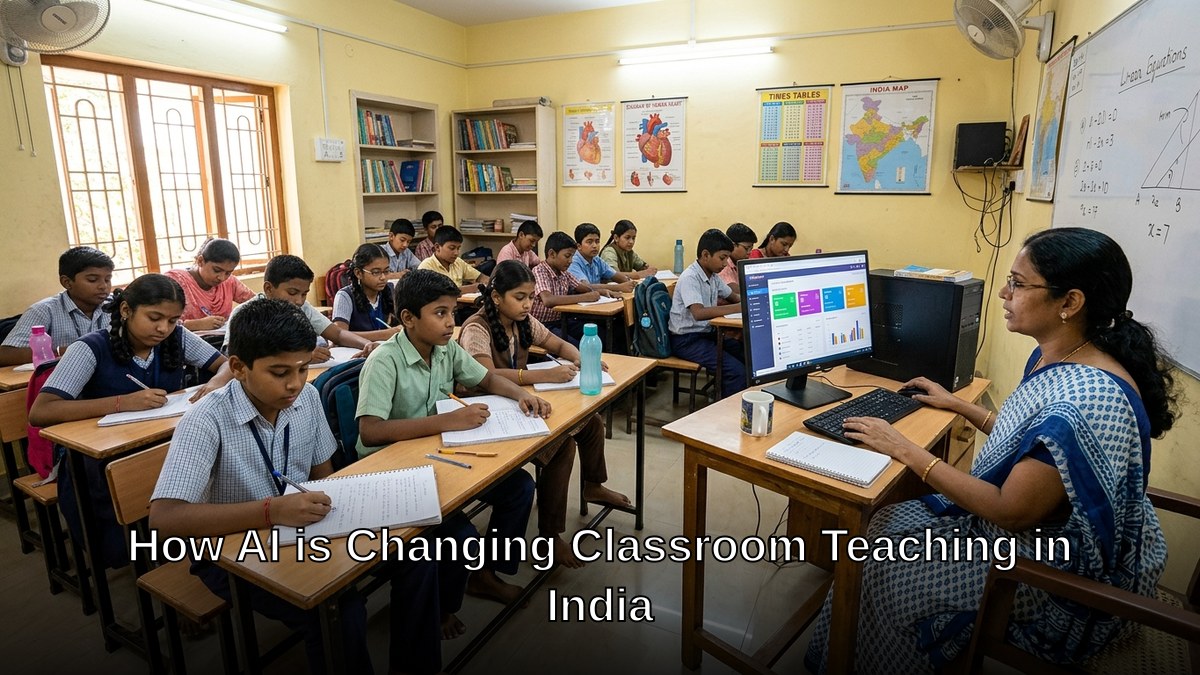
Here’s the truth: AI classroom teaching in India isn’t coming. It’s here. Your child’s tuition teacher might not call it AI. The government school down the road might not advertise it. But smart classroom technology is reshaping how millions of Indian students learn, and if you’re running a tuition centre, teaching from home, or thinking about starting a microschool from home, you need to understand what’s actually changing.
Let’s be honest: most people don’t realise that AI in Indian schools isn’t just about robots or fancy algorithms. It’s about making teaching smarter, faster, and actually affordable for families earning Rs.20,000 to Rs.80,000 monthly. And that’s where the real disruption is happening.
Key Takeaways
- AI classroom teaching in India is already in use, mostly for personalized learning paths, automated attendance and progress tracking, adaptive video lessons, multilingual doubt-solving chatbots, and data on which topics students are struggling with.
- It is less about robots and more about making teaching faster and affordable for middle-income families.
- The technology frees teachers from repetitive tracking work so they can spend more time explaining and mentoring.
- The real barrier is hardware, not awareness. Most tuition centres run on old laptops and many home tutors have only a phone.
- A reliable computer with a webcam and stable internet is the entry ticket, and it lets one educator run a Point of Digital Learning that serves many more students.
What AI in Indian Schools Actually Looks Like Right Now
Forget the Silicon Valley fantasy. AI classroom teaching in India means:
- Personalized learning paths. One student gets algebra problems at their level. Another gets harder ones. The software adjusts in real-time based on performance.
- Automated attendance and progress tracking. Teachers spend less time on paperwork, more time teaching.
- Video-based learning that adapts. If a student struggles with fractions, the system recommends targeted videos and practice sets automatically.
- Instant doubt resolution through chatbots that work in Hindi, Tamil, Telugu, Marathi, and Bengali. Not perfect, but fast.
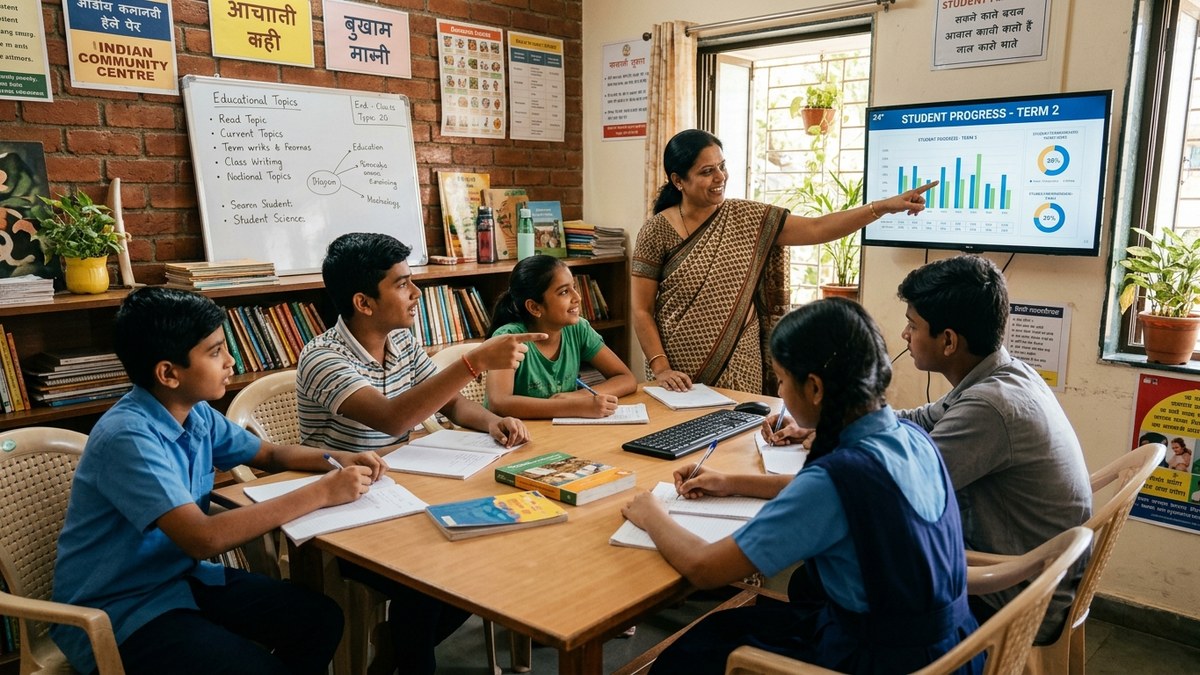
- Data-driven insights. You see exactly which topics are causing problems for which students before exams arrive.
This isn’t theoretical. Thousands of tuition centres across India are already using this. Private schools in metros have been doing this for three years. And now, even community learning centres in Tier 2 and Tier 3 cities are catching up.
The question isn’t whether AI will change Indian education. The question is: will you be ready when it does?
Why Traditional Teaching Methods Are Losing Ground
Most people don’t realise how much time teachers waste on repetitive tasks. A tuition teacher with 50 students spends 10-15 hours monthly just tracking who studied what, who scored how much, and who needs extra help. That’s time stolen from actual teaching.
AI in Indian schools eliminates that theft. The software handles tracking. The teacher focuses on explaining, clarifying, and mentoring. Students get attention when they actually need it, not when the teacher has time.
Here’s what happens without smart classroom technology: weak students fall further behind because teachers can’t personalize at scale. Strong students get bored because they’re forced to move at the class pace. Parents panic and hire more tutors, spending Rs.5,000-10,000 monthly extra. Everyone loses.
With AI classroom teaching, that spiral stops. The system identifies struggling students immediately. Teachers intervene early. Parents see real progress data, not vague feedback. And the cost per student actually drops because efficiency increases.
The Real Barrier Isn’t Technology. It’s Hardware.
Most Indian educators know AI tools exist. They’ve heard about adaptive learning platforms. They understand the benefits. But they don’t have the hardware to implement it.
A proper setup for smart classroom technology requires a Mini PC with decent specs, a monitor, a webcam, and stable internet. Most tuition centres run on laptops that are 5-8 years old. Most home-based tutors have nothing but a smartphone. That’s the actual problem.
This is where APNA PC changes the game. At Rs.30,000, you get a complete bundle: Mini PC with i3 7th Gen processor, 8GB RAM, 128GB SSD, monitor, keyboard, mouse, webcam, and headset. Plus 3 years warranty and installation. That’s not just a computer. That’s the entry ticket to AI classroom teaching in India.
You can set up a Point of Digital Learning (POD) in your home or community centre with this single investment. Run education software. Stream lessons. Record sessions. Track student progress. All on one reliable machine that won’t crash during exams.
What This Means for Your Teaching Business
If you’re a tuition teacher, this is your competitive edge. Schools with AI classroom teaching can charge 20-30% premium and still fill seats because parents see results. They see data. They see their child’s progress tracked scientifically, not guessed.
If you’re a homemaker thinking about earning, this is your entry point. You don’t need a fancy tuition centre. You don’t need decades of experience. You need the right tools and training. APNA PC plus education software plus training gets you there.
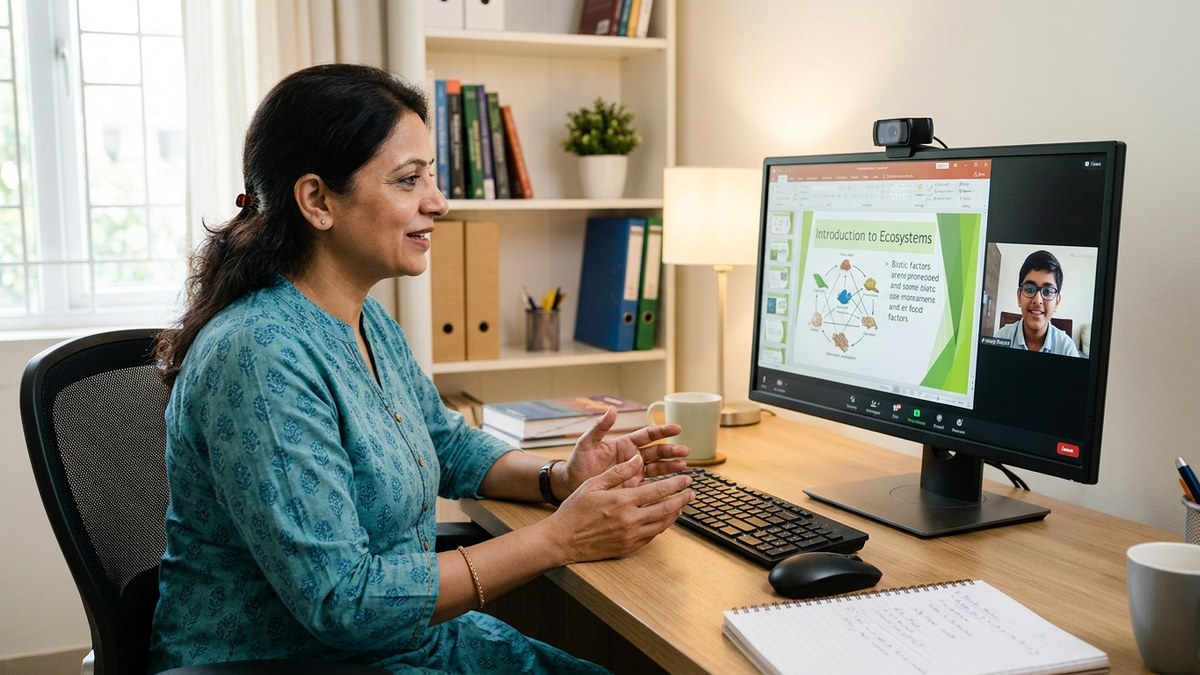
If you’re a senior citizen with time and knowledge, this is your second career. Teaching online or running a community POD doesn’t require physical energy. It requires clarity, patience, and good technology. All available now.
If you’re an edupreneur, this is your scaling opportunity. Instead of hiring more teachers, you hire better technology. One trained educator with APNA PC can serve 80-100 students monthly. That’s revenue you couldn’t generate before.
Check out free AI tools for teachers to see what’s available right now at zero cost. Then think about what paid tools could add.
The Government is Moving Too
The Ministry of Education has announced plans to integrate AI and smart classroom technology into government schools by 2025. That’s not a suggestion. That’s the direction. Private institutions that adopt early will have a 3-5 year head start.
For context on India’s education landscape, read about Education in India to understand the scale of opportunity.
Start Now. Not Later.
The barrier to entry has never been lower. APNA PC costs less than two months of tuition fees for most students. It comes with everything you need. It’s reliable. It’s designed for Indian conditions (power fluctuations, internet inconsistency, heat).
The question isn’t whether you can afford to adopt AI classroom teaching in India. The question is whether you can afford not to.
Your competitors are already moving. Parents are already looking for smarter learning options. Students are already expecting better than rote memorization. The only question is whether you’ll lead or follow.
Ready to build your AI-powered learning centre? Start your Point of Digital Learning (POD) today and join thousands of Indian educators transforming how students learn.
Frequently Asked Questions About AI classroom teaching in India
What does AI classroom teaching in India actually look like?
In practice it means adaptive practice sets that adjust to each student’s level, automated attendance and progress tracking, video lessons that respond to weak spots, and chatbots that answer routine doubts in Indian languages. It also gives teachers early data on which students need help before exams.
Do I need expensive technology to use AI teaching tools?
No. Many useful AI tools for teachers are free. The bigger cost is a reliable computer that can run them, along with a webcam and stable internet. Most centres struggle not because tools are costly but because their hardware is too old to run them well.
Can a home tutor use AI classroom tools?
Yes. A home tutor with a decent computer, education software and internet can run adaptive practice, record lessons and track each student’s progress. This is the basis of a Point of Digital Learning, where one trained educator supports many students from home or a community space.
Does AI replace the teacher?
No. AI handles repetitive work like tracking, marking and routine doubts, but students still need a human to explain difficult ideas, motivate them and guide the bigger picture. The teacher’s role shifts towards mentoring rather than paperwork.
Is AI in education only for city schools?
It started in metro private schools but is spreading to tuition centres and community learning centres in Tier 2 and Tier 3 towns. The main thing holding smaller centres back is hardware, so an affordable, reliable computer setup is what closes the gap.
India’s National Education Policy 2020 explicitly calls for integrating technology and artificial intelligence into teaching, learning and assessment across the school system.