
The Real Reason You Haven’t Started Teaching Coding Classes Yet
You think you need a fancy office, expensive equipment, and a computer science degree. You don’t. Here’s the truth: thousands of Indian homemakers, retired professionals, and tuition teachers are already running profitable coding classes from their homes right now. The barrier isn’t knowledge or credentials. It’s the belief that you need something you don’t.
Let’s be honest. Coding classes for students in India are in massive demand. Parents know their kids need these skills. Schools aren’t teaching it properly. The market is wide open. And you can start teaching coding at home with far less than you think.
Most people don’t realise that computer programming for kids doesn’t require a physics lab or a corporate training centre. It requires three things: clarity on what you’re teaching, a simple system to deliver it, and reliable equipment. That’s it.
Key Takeaways
- You can start coding classes from home without an office, expensive gear or a computer science degree; homemakers, retired professionals and tuition teachers already do this.
- The real requirements are a computer that runs Scratch and Python without freezing, internet that stays up, a quiet corner, basic peripherals, and a proven curriculum.
- The POD model is the fastest route to income: you teach from home or a small community space, charge per student per month, and keep the money with no franchise fees.
- A simple first month works well: set up and test in week one, build beginner lesson plans in week two, tell your network in week three, and onboard three to five students in week four.
- Start with visual block coding like Scratch for ages eight to fourteen before moving to text languages, and scale to more batches only after your delivery is solid.
What You Actually Need to Start
Stop overthinking this. You need a computer that works, internet that doesn’t cut out every five minutes, and a structured curriculum. Everything else is optional.
- A reliable PC or laptop: Not a gaming rig. Not a MacBook Pro. Something that runs Python, Scratch, or web development tools without freezing. An i3 processor with 8GB RAM handles everything beginners need.
- Internet connection: Minimum 4Mbps. Test it before your first class.
- A quiet corner: Not a separate room necessarily. A corner with a door that closes works. Your students need to hear you without background noise.
- Basic peripherals: A webcam, headset, and mouse. These cost less than a week’s groceries.
- Curriculum: Don’t create from scratch. Use proven platforms like Scratch, Code.org, or Python Turtle graphics for beginners.
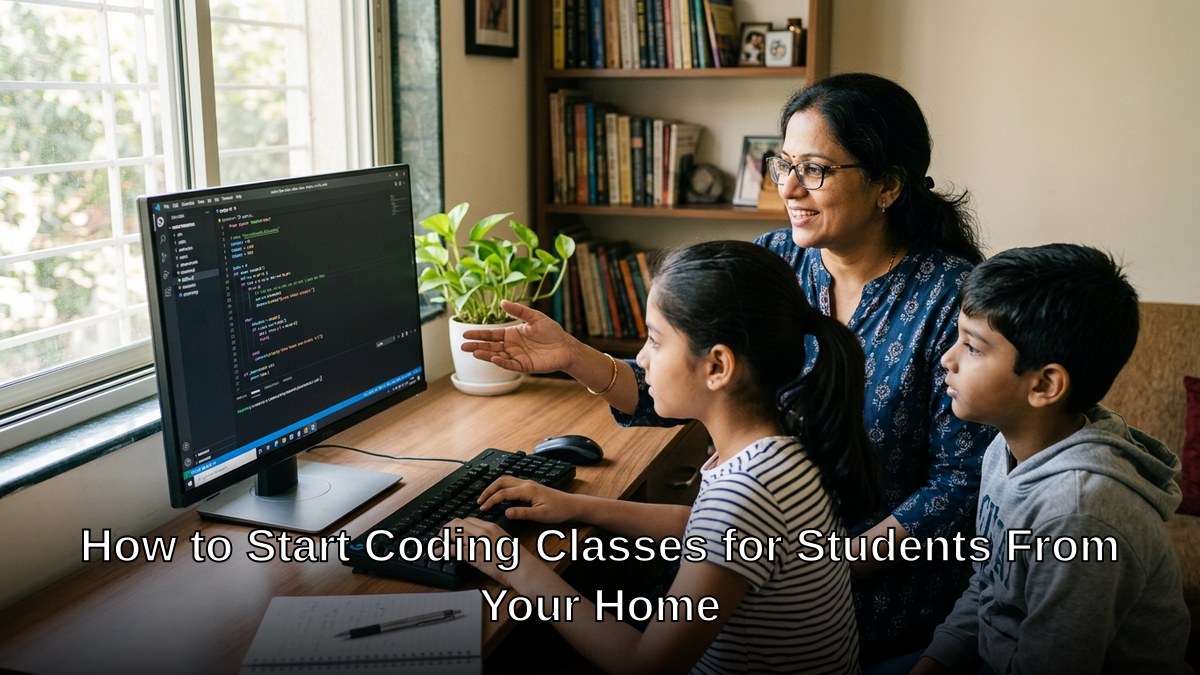
When you’re starting out, the APNA PC bundle changes the game. Rs.30,000 gets you a complete system: Mini PC (i3 7th Gen, 8GB RAM, 128GB SSD), monitor, keyboard, mouse, webcam, headset, plus 3 years warranty and installation. This isn’t a side investment. This is your business foundation. One month of classes pays for it.
The POD Model: Your Fastest Route to Income
POD stands for Point of Digital Learning. This is your home or community learning centre run by you, a trained educator. No franchise fees. No corporate overhead. Just you, your setup, and students.
Here’s how it works: You teach coding classes from your home or rent a small community space. You charge per student per month. You keep the money. That’s the entire business model.
The POD approach is perfect for:
- Homemakers looking to earn without leaving home
- Senior citizens wanting meaningful work
- Existing tuition teachers adding a new subject
- Edupreneurs building a scalable learning business
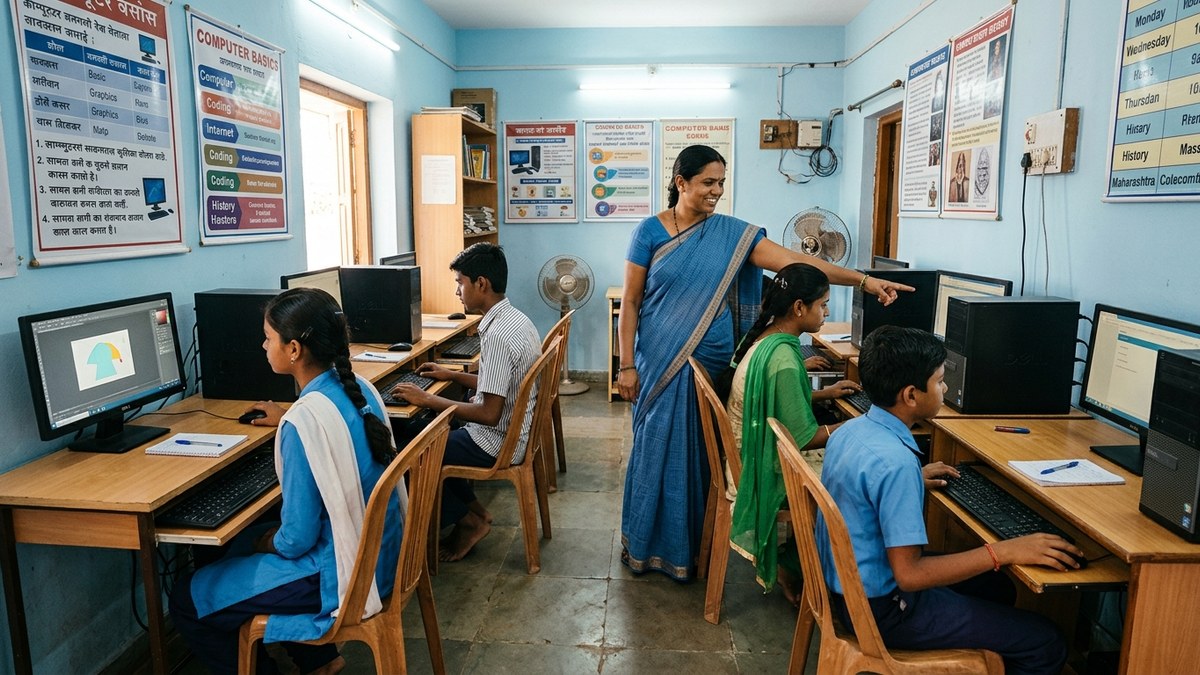
When you teach coding to kids from home, you’re not competing with big institutes. You’re offering convenience, personal attention, and flexible timing. Parents choose you because you’re local, affordable, and you actually know your students.
Your First Month: The Action Plan
Week 1: Set up your space and equipment. Test your internet. Install Scratch and Python. Take a free online course on teaching basics if you need confidence.
Week 2: Create simple lesson plans for absolute beginners. Start with visual programming (Scratch) before jumping to text-based languages. Most kids aged 8-14 love Scratch because they see results immediately.
Week 3: Tell everyone you know. Post on WhatsApp groups. Tell neighbours. Visit local schools with a simple flyer. Parents of school kids are your audience. According to student learning fundamentals, word-of-mouth referrals work best for education services.
Week 4: Onboard your first batch. Start with 3-5 students maximum. You want to perfect your delivery before scaling.
Pricing: Rs.1,500 to Rs.3,000 per student per month for 2-3 classes weekly is standard in most Indian cities. Some teachers charge Rs.500-1,000 per class. Find what works in your area.
The Objections You’ll Face (And How to Handle Them)
“I don’t know how to code.” You don’t need to be an expert. You need to be one lesson ahead of your students. Learn as you teach. Your willingness to learn matters more than your current knowledge.
“Parents won’t trust me.” They will if you show results. Share what students build. Let kids demo their projects to parents. Testimonials from satisfied parents are your best marketing.
“I need certification.” Helpful but not essential. Your track record matters more. That said, free certifications from platforms like Google, Microsoft, and India’s Ministry of Education add credibility.
“Equipment is too expensive.” Not with APNA PC. You get everything needed for Rs.30,000. One student for two months pays for your entire setup. After that, it’s pure profit.
Scale When You’re Ready
Start with one batch of 5 students. Once you’ve perfected your system, add another batch. Many teachers run 3-4 batches weekly, earning Rs.30,000-50,000 monthly from home.
Some teachers eventually open community learning centres or partner with schools. But that comes later. First, prove the model works with one batch.
If you’re already running a tuition business, this is a natural add-on. Start a home tuition business from scratch with coding as your differentiator. You’ll charge more for coding than for maths or English.
Your Next Step
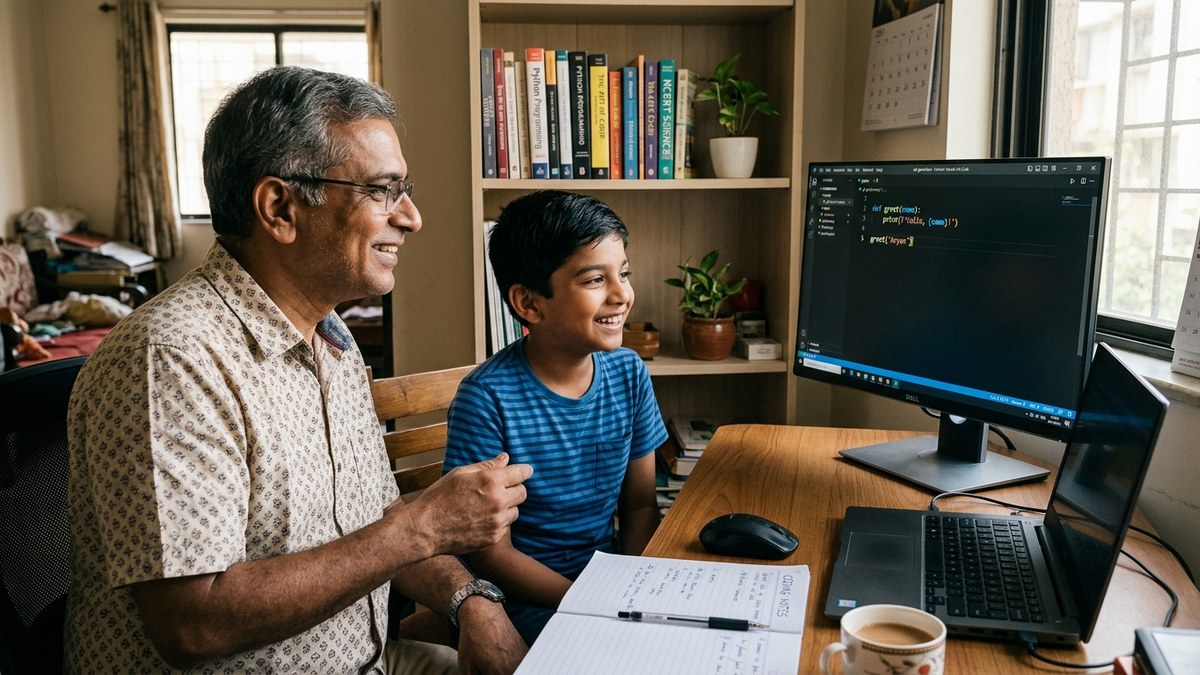
Stop waiting for the perfect moment. The perfect moment is now. Your first step is simple: set up your learning space and get the right equipment. The APNA PC bundle removes every excuse about hardware. Then, get trained on how to structure your POD properly.
Start your POD today and begin earning from teaching coding classes to students in your community. You’ll be shocked how fast this grows.
Frequently Asked Questions About Start coding classes from home
What equipment do I need to start coding classes from home?
A reliable computer that runs Scratch, Python and web tools without freezing, internet of at least a few Mbps, and a webcam, headset and mouse. A quiet corner where students can hear you clearly completes the setup. You do not need a gaming machine or a separate room.
Can I teach coding if I do not know how to code?
Yes, if you stay one lesson ahead of your students and use structured platforms like Scratch, Code.org or Python Turtle. Your willingness to learn and your ability to keep students consistent matter more than being an expert. Many teachers learn alongside their first batch.
How much should I charge for home coding classes in India?
In most cities, a monthly fee in the low thousands per student for two to three classes a week is standard, and some teachers charge per class instead. Check what tutors in your area charge and price for value, since coding usually commands more than maths or English tuition.
How do I find students for coding classes?
Tell everyone you know, post in local WhatsApp groups, talk to neighbours, and visit nearby schools with a simple flyer. Parents of school-age children are your audience. Let early students demo their projects to parents, since visible results and referrals are the strongest marketing for education services.
Why is a computer better than a phone for learning to code?
Writing, running and fixing real programs needs a keyboard and a full screen, and most project tools do not work on phones. A phone is fine for the first few lessons and puzzles, but students hit a wall quickly. A shared home computer lets them build and test actual projects.
India’s National Education Policy 2020 recommends introducing coding and computational thinking from the middle-school years, which is driving demand for local, affordable coding teaching.