Your Child Education Does Not Need a Classroom
Homeschooling in India is no longer fringe. It is becoming the choice of parents who refuse to accept mediocre education. Whether you are frustrated with rigid curricula, overcrowded classrooms, or the pressure-cooker culture of traditional schooling, homeschooling offers a real alternative. But here is what most people do not realise: homeschooling in India requires more than just good intentions. It needs structure, the right tools, and honest commitment from parents.
This guide cuts through the noise and gives you what you actually need to know about homeschooling in India.
Key Takeaways
- Homeschooling in India is legal and growing, but it needs structure, the right tools and a real commitment from parents, not just frustration with school.
- Children can be homeschooled and later appear for board exams through NIOS, the National Institute of Open Schooling.
- Parents choose homeschooling for a personalised pace, a curriculum matching their values, and freedom from exam pressure and peer stress.
- A daily routine, a dedicated study space and a home computer for lessons, research and NIOS work are the practical backbone.
- Honest self assessment matters: homeschooling asks for years of parent time and planning, so weigh it before switching.
Why Parents Are Choosing Homeschooling in India
Let us be honest: the Indian education system works for some children. For others, it is a poor fit. Traditional school education prioritises rote learning, standardised tests, and one-size-fits-all pacing. Homeschooling in India flips this. You control the curriculum. You adapt to your child learning speed. You can focus on critical thinking instead of memorisation.
But the decision to homeschool is not romantic. Here are the real reasons parents switch:
- Personalised learning pace tailored to your child needs
- Freedom to choose curriculum aligned with your values
- More family time and flexible scheduling
- Focus on practical skills alongside academics
- Protection from toxic peer pressure and competitive stress
- Ability to incorporate real-world projects and experiential learning
The Ministry of Education recognises homeschooling through various frameworks. Check the India Ministry of Education website for the latest regulations in your state.
The Real Challenges of Homeschooling in India
Here is the truth: homeschooling is harder than it looks. You become the teacher, curriculum designer, and administrator. That is exhausting. Most parents underestimate the workload.
Here are the actual obstacles you will face:
- Designing a curriculum that is rigorous and age-appropriate
- Finding quality homeschooling tools and resources
- Managing your own time while teaching
- Ensuring your child gets peer interaction and social development
- Accessing laboratory facilities for science subjects
- Navigating board exams if you choose that path later
- Dealing with social stigma from family and relatives
The good news? Most of these challenges have solutions. Technology is one of them.
Essential Tools for Homeschooling in India
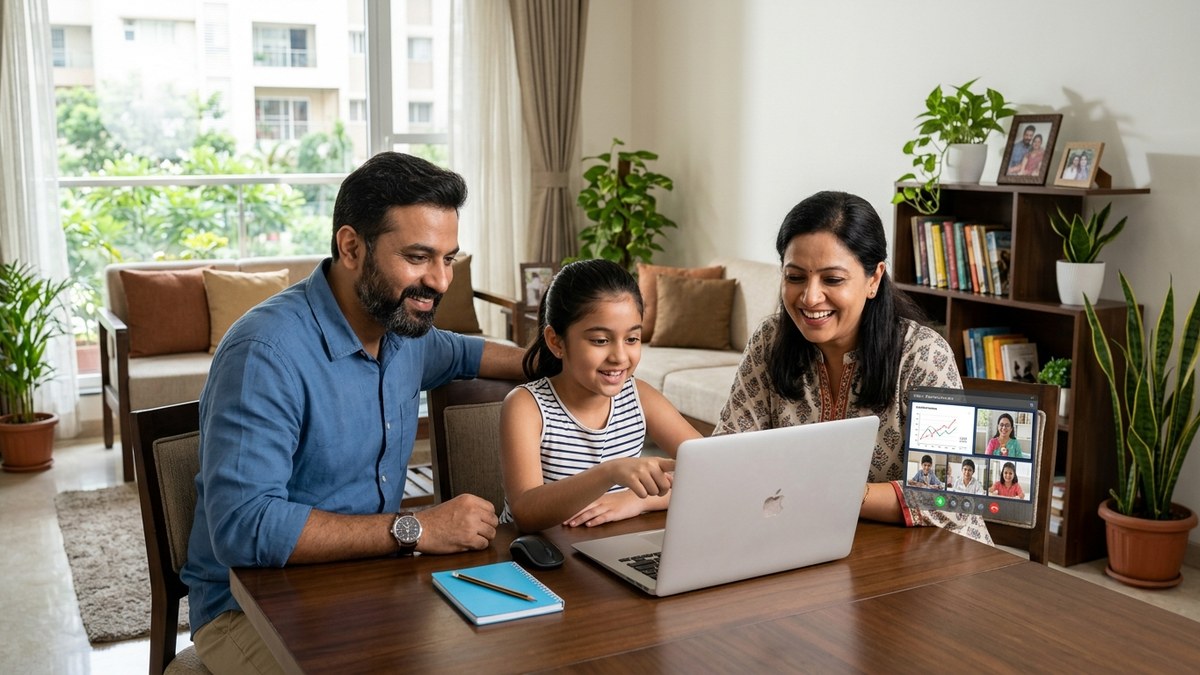
You cannot run a serious homeschool without proper homeschooling tools. A notebook and textbook will not cut it anymore. Your child needs exposure to digital learning. They need to develop the essential digital skills students need for higher education and careers.
Start with these basics:
- A reliable computer or laptop for online classes and research
- Educational software that covers your curriculum
- High-speed internet connection
- Video conferencing tools for live interaction
- Digital library access for home education resources
- Learning management systems to track progress
Most parents waste money buying expensive laptops they do not need. Here is what actually matters: stable performance, decent screen size, and longevity.
What Is a Point of Digital Learning (POD)?
Most people do not realise there is a middle ground between traditional school and solo homeschooling. A Point of Digital Learning (POD) is a community learning centre run by a trained educator. Your child attends a few days a week, gets peer interaction, access to proper facilities, and expert guidance. You maintain flexibility. You retain control over home education.
PODs are becoming popular in India because they solve the isolation problem without forcing kids back into rigid classrooms. If homeschooling feels too isolating, a POD is worth exploring.
Building Your Homeschool Setup
Start small. You do not need an elaborate home classroom. You need a dedicated space, good lighting, minimal distractions, and the right technology.
Here is a practical setup:
- Dedicated study area (corner of a room works fine)
- A computer with education software pre-installed
- Comfortable chair and desk
- Webcam and headset for online classes
- Reliable internet
- Physical books and reference materials
The APNA PC bundle is specifically designed for this. Rs.30,000 gets you a complete system: Mini PC with i3 7th Gen processor, 8GB RAM, 128GB SSD, monitor, keyboard, mouse, webcam, headset, plus education software and 3-year warranty with installation. No hidden costs. No surprises. It is built for parents who want to start homeschooling or run a POD without breaking the bank.
Learn more about how to start a coaching class with APNA PC if you are thinking bigger than just homeschooling your own child.
Structuring Your Homeschool Day
Here is the truth: unstructured homeschooling fails. Your child needs routine. You need predictability.
A typical day might look like:
- 8:00-9:00 AM: Core academics (math, language)
- 9:00-10:00 AM: Science or social studies
- 10:00-10:30 AM: Break
- 10:30-11:30 AM: Online classes or digital learning
- 11:30 AM-1:00 PM: Project work or practical learning
- 1:00-2:00 PM: Lunch and outdoor time
- 2:00-3:00 PM: Electives, arts, or skill development
Adjust based on your child age and energy levels. The key is consistency.
Your Next Step
Homeschooling in India is viable, affordable, and increasingly mainstream. But it requires commitment and the right resources. Do not start without proper planning and tools.
Ready to begin? Explore APNA PC and build your homeschool foundation today.
Frequently Asked Questions About Homeschooling in India
Is homeschooling legal in India?
Yes. No law forces school attendance in a way that bans homeschooling, and families across India homeschool openly. Children can register with NIOS for recognised certification and to sit board level exams.
How does a homeschooled child in India take board exams?
Most homeschooling families use NIOS, the National Institute of Open Schooling, which lets students register privately and appear for Class 10 and Class 12 exams. Some also prepare for international boards through private candidate routes.
What curriculum should I use to homeschool in India?
Common choices are the NCERT and CBSE syllabus, the NIOS syllabus, international curricula like Cambridge, or a mixed approach built around your child’s needs. Many parents start with NCERT because the material is free and widely available.
How much does homeschooling cost in India?
It varies widely. Costs include books and curriculum material, NIOS registration and exam fees, internet, a computer, and any classes or tutors for subjects you cannot teach. It can be cheaper than private school or more expensive if you add many outside classes.
Do I need a computer to homeschool my child?
A shared home computer is close to essential. Lessons, research, writing assignments, online classes for difficult subjects, and NIOS registration and coursework all need more than a phone screen and a small keyboard.
The National Institute of Open Schooling (NIOS), set up by the Ministry of Education, lets students study outside the formal school system and appear for Class 10 and Class 12 board examinations.