
Your Child is Already Falling Behind. Not Because They Are Lazy. Because They Lack Digital Skills.
Here is the truth: the job market of 2026 does not care about your child’s exam scores alone. It cares about whether they can code, collaborate online, think critically about information, and adapt to tools that did not exist five years ago. Digital skills are no longer optional. They are survival skills.
Most people do not realise that digital skills go far beyond typing or using social media. We are talking about coding, data literacy, cybersecurity awareness, and the ability to learn new software independently. These are the digital skills that will define whether your child thrives or merely survives in the workforce.
Key Takeaways
- The essential digital skills for students in 2026 are basic coding, data literacy, cybersecurity awareness, AI tool familiarity and comfort with collaborative apps like Google Workspace.
- Most Indian schools still teach computers as if it were 2010, so real practice has to happen at home or at a trusted learning space.
- These skills need consistent hands-on time on an actual computer, not a weekly lab visit and not a phone.
- The gap in access to good hardware turns into an economic gap by adulthood, which is why community learning centres and PODs matter.
- A reliable machine, structured learning and accountability beat buying an expensive laptop that sits unused after it lags and frustrates the child.
The Five Digital Skills Every Indian Student Needs Right Now
Let us be honest: most Indian schools teach computer science as if it is 2010. Your child learns about floppy disks and outdated software. Meanwhile, the real world has moved on. Here are the skills that actually matter:
- Basic Coding and Computational Thinking. Not everyone needs to be a programmer. But everyone needs to understand how software works and how to solve problems logically. Python, JavaScript, and block-based coding platforms are the entry points.
- Data Literacy. Your child needs to read, understand, and work with data. This skill cuts across every field: business, healthcare, journalism, agriculture. Data-driven decision making is everywhere.
- Cybersecurity and Digital Safety. With online learning becoming permanent, your child must know how to protect their identity, recognize phishing attempts, and use strong passwords. One mistake can compromise their entire digital life.
- AI Tool Familiarity. ChatGPT, image generators, and automation tools are already in classrooms. Your child needs to understand what these tools can and cannot do. Ignoring them is like ignoring the internet in 2000.
- Collaborative Digital Tools. Google Workspace, Microsoft Teams, Figma, Notion. These are not fancy extras. They are how modern teams work. Your child needs hands-on experience.
The digital literacy skills every student must learn form the foundation of everything else. Without them, your child is competing with one hand tied behind their back.
Why Your Child’s School Is Not Enough
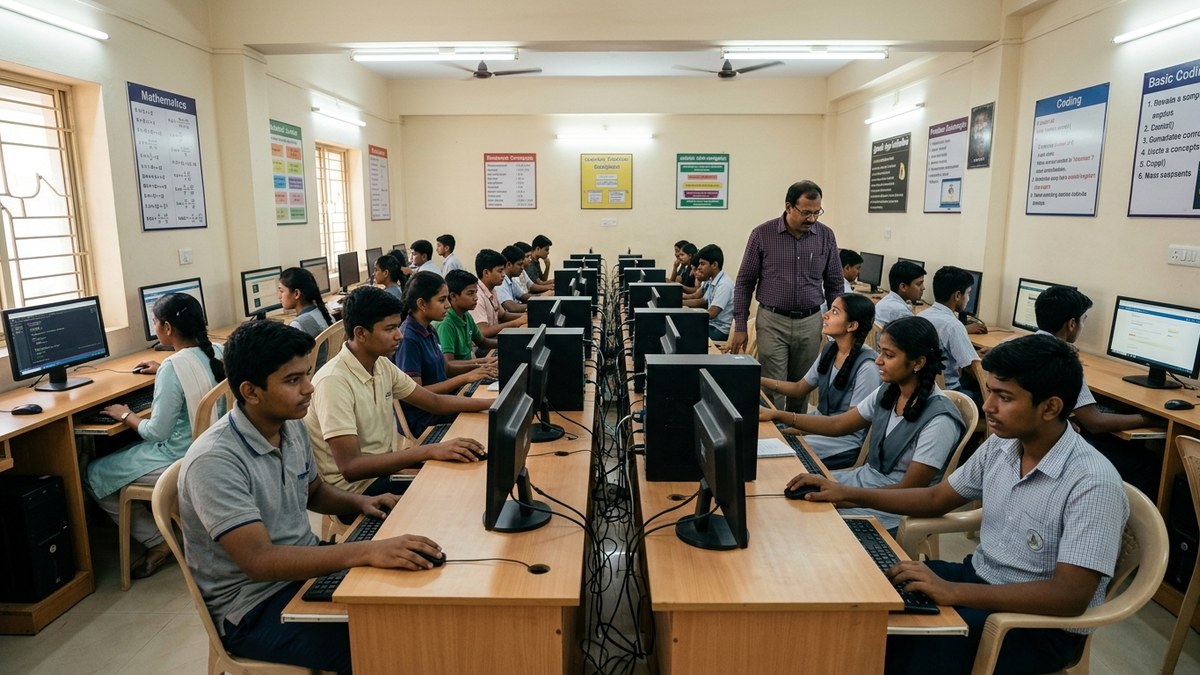
Most Indian schools have computers in labs. Most students touch them once a week. That is not enough. Digital skills require consistent, hands-on practice. Your child needs access to a computer at home or at a trusted learning space.
This is where the gap widens. Students from wealthy families get computers and tutoring. Students from middle-class families often do not. The result? A digital divide that becomes an economic divide by age 25.
Teachers understand this problem. That is why many educators are setting up Points of Digital Learning (PODs) in their communities. These are learning centres where trained educators help students build digital skills in small batches. Not lectures. Not theory. Actual practice on real machines.
The AI tools teachers are using in 2026 are also changing how we teach these skills. Personalized learning paths, instant feedback, adaptive difficulty levels. Your child no longer has to learn at the class pace.
The Hardware Problem Nobody Talks About
Here is what happens: a parent decides their child needs to learn coding. They buy a budget laptop for Rs.25,000. The laptop is slow. It crashes. The child gets frustrated and gives up. The laptop sits unused.
Quality matters. Your child needs a machine that can run modern software without lagging. Not a gaming laptop. Not a fancy ultrabook. Just something reliable that does the job.
This is why APNA PC exists. It is a complete bundle designed for Indian students and educators. Rs.30,000 gets you a Mini PC with i3 7th Gen processor, 8GB RAM, 128GB SSD, plus monitor, keyboard, mouse, webcam, and headset. Throw in three years of warranty and installation. Add education software that actually teaches coding, data, and digital tools.
APNA PC is built for PODs. It is built for homes. It is built for students who need to learn digital skills without their parents spending a fortune.
What Parents and Educators Can Do Today
Do not wait for your school to fix this. The government is working on it. The India Ministry of Education has launched several initiatives. But change is slow. Your child cannot wait.
Start now. Here are three concrete steps:
- Assess your child’s current digital skills. Can they use Google Workspace? Can they understand basic HTML? Can they spot a phishing email? Be honest about the gaps.
- Find a Point of Digital Learning in your area or consider starting one. Talk to local educators. Most are desperate to help but lack resources.
- Invest in a reliable machine. Not a toy. Not a hand-me-down. Something that will last and perform. APNA PC is a starting point. There are other options. But do not skip this step.
Teaching as a profession is evolving. Educators are no longer just content deliverers. They are coaches who help students navigate a digital world. If you are a parent, support them. If you are an educator, step up. If you are a student, take responsibility for your own learning.
The Bottom Line
Your child will not get a job in 2026 because they memorized history dates. They will get it because they can code, analyze data, work with teams online, and learn new tools quickly. Digital skills are not a bonus. They are the baseline.
Start building them now. Get your child access to quality hardware. Enroll them in structured learning. Push them out of their comfort zone. The students who do this will not be worried about the future. They will be leading it.
Ready to give your child a real advantage? Check out APNA PC and start their digital journey today. Complete bundle. Affordable price. Three-year support. No excuses left.
Frequently Asked Questions About Essential digital skills for students
What digital skills does my child actually need in 2026?
Basic coding and computational thinking, data literacy, cybersecurity and online safety, familiarity with AI tools, and hands-on use of collaborative software like Google Workspace or Microsoft Teams. These matter more to employers than exam scores alone. They are best built through regular practice, not theory.
Can a child learn these skills on a smartphone?
A phone is fine for watching lessons but poor for real work. Coding, spreadsheets, documents, projects and form filling all need a keyboard, a proper screen and multitasking. A shared home computer or a computer at a learning centre is far better for actually building skill.
Is school computer class enough to build digital skills?
Usually not. Most students touch a lab computer once a week and the syllabus is often outdated. Real skill needs consistent, hands-on practice with current tools, which means access to a machine at home or at a community learning space.
How much should I spend on a computer for learning digital skills?
You do not need a gaming laptop or a premium ultrabook. You need something reliable that runs modern software without lagging. A budget machine that constantly crashes usually ends up unused, so prioritise stability over specifications on paper.
What can parents do right now if the school is not teaching this?
Assess the child’s current skills honestly, find or help start a Point of Digital Learning nearby, and get access to a reliable computer. Then add structured lessons with clear weekly goals so learning is real and not just clicking through tutorials.
The National Education Policy 2020 identifies digital literacy, computational thinking and coding among the core skills students should build from the school level.