What If You Could Run a School From Your Home?
Here’s the truth: the traditional schooling model is broken for millions of Indian families. Long commutes. Overcrowded classrooms. One-size-fits-all curriculum. Expensive fees. Parents are exhausted. Teachers are burnt out. Students are disengaged.
But what if there was another way? What if you could start a microschool in your community right now, in 2026, with minimal investment and maximum impact?
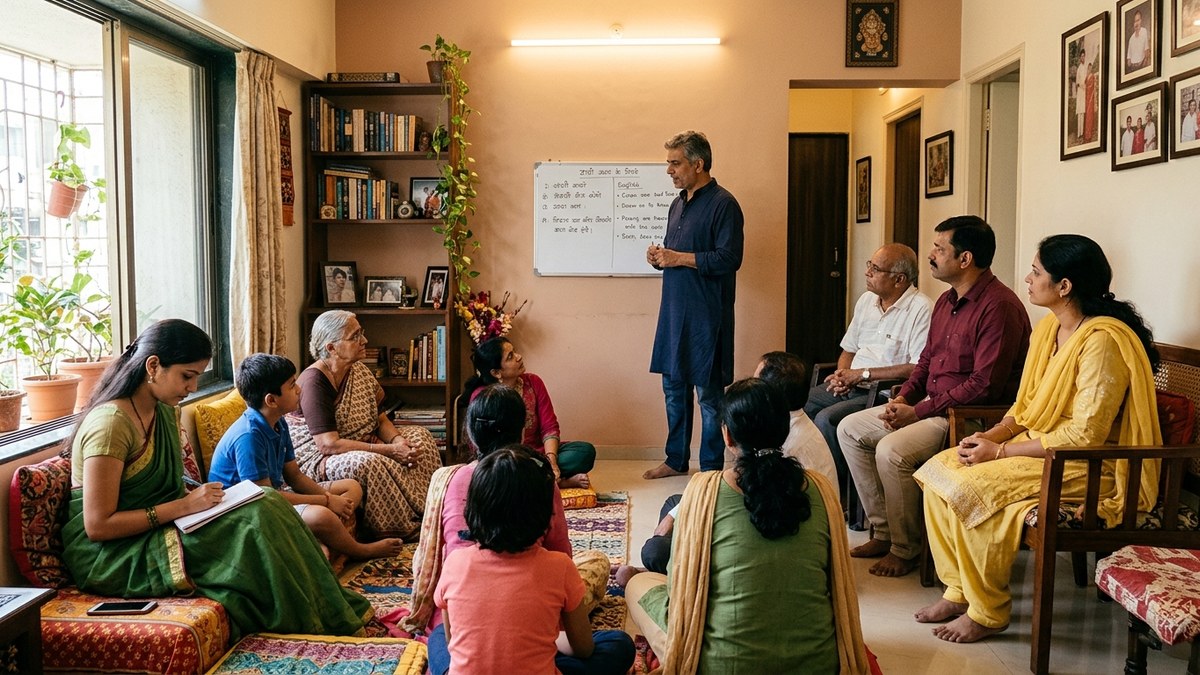
A microschool is exactly what it sounds like. Small. Intimate. Flexible. Typically 8-20 students learning together in a dedicated space, guided by a trained educator. It’s not a tuition centre. It’s not a coaching class. It’s a Point of Digital Learning (POD) – a community learning hub that combines personalized attention with modern education technology.
Let’s be honest: most people don’t realise how achievable this actually is. You don’t need a fancy building. You don’t need massive capital. You don’t need government licenses for community learning spaces in most cases. You need clarity, commitment, and the right tools.
Who Can Start a Microschool?
This isn’t gatekept. Anyone can do it.
- Homemakers looking to create meaningful work while staying flexible with family commitments
- Senior citizens wanting to share decades of knowledge with the next generation
- Tuition teachers tired of the grind of running to multiple homes and coaching centres
- Edupreneurs ready to build a sustainable education business that actually serves students
The common thread? You care about learning. You have space (even a spare room works). You’re willing to learn how to use digital tools properly.
That’s it. That’s the entry requirement.
The Three Essential Steps to Launch Your Microschool
Step 1: Define Your Community and Niche
Start hyper-local. Don’t try to serve everyone. Pick your neighbourhood, your street, your apartment complex. Identify the gap. Are there primary school kids whose parents work late? Are there secondary students struggling with maths? Are there seniors interested in learning digital skills? Your microschool solves one specific problem for one specific group.
Step 2: Set Up Your Physical and Digital Space
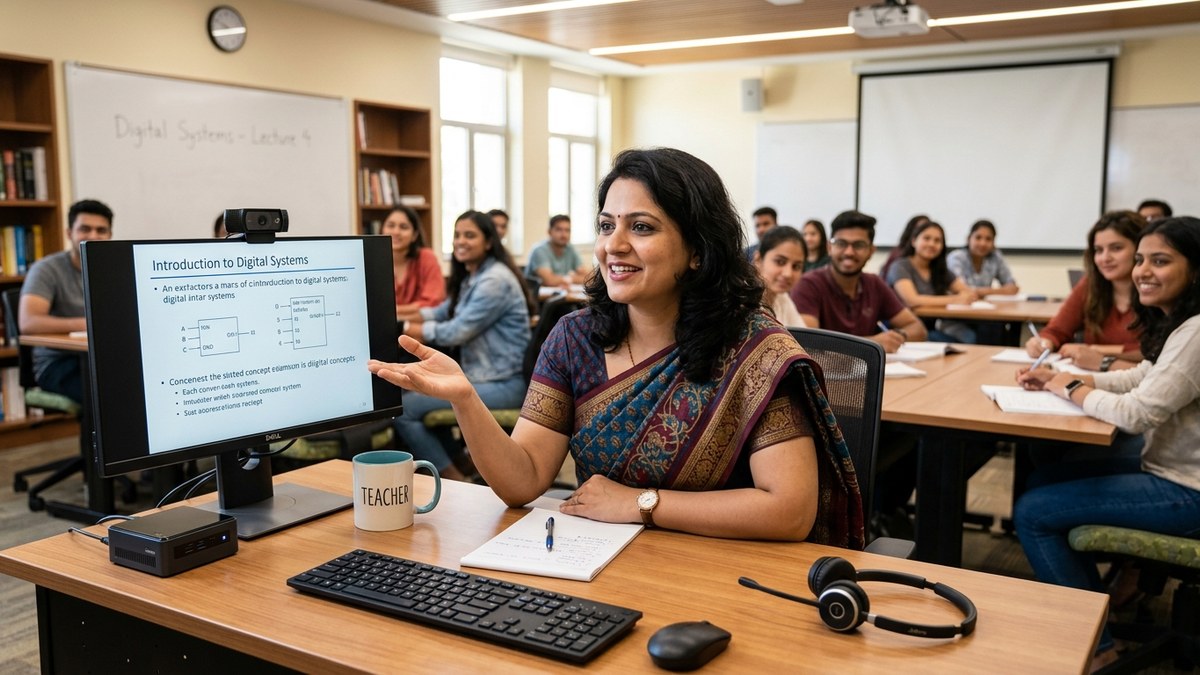
Your microschool needs two things: a physical POD and a digital backbone. The physical space can be your living room, a community hall, a local library corner. The digital backbone is where most people stumble. You need education software that actually works. You need reliable hardware. You need a webcam for hybrid learning. You need headsets for audio quality. You need a mini PC that won’t crash during an online class.
This is where APNA PC comes in. It’s a complete bundle. Rs.30,000. You get everything: Mini PC i3 7th Gen with 8GB RAM and 128GB SSD. Monitor. Keyboard. Mouse. Webcam. Headset. Education software included. 3-year warranty. Installation support. No hidden costs. No surprises.
Most educators waste money buying random equipment. APNA PC solves this. It’s designed specifically for educators running PODs.
Step 3: Recruit Your First Batch of Learners
Don’t overthink marketing. Talk to parents in your community. Create a simple WhatsApp group. Share what you’re offering and why it’s different. Word of mouth is your best friend. Start with 8-10 students. Build quality. Grow sustainably.
What Makes a Microschool Actually Work?
Small class sizes matter. Your students aren’t anonymous. You know their names. You know their struggles. You adapt your teaching. This is the opposite of a 60-student classroom where the teacher can’t even remember faces.
Personalization at scale is a myth. Personalization in a microschool is just reality. You teach Priya differently than you teach Arjun because they’re different learners. You can do this in a microschool. You cannot do this in a traditional school.
Community learning works because it’s rooted in relationships. Parents know you. They trust you. They see results. Their kids actually want to attend. Compare that to the typical tuition centre where kids show up because they have to.
For more detailed guidance, check out our start a microschool guide and explore our digital classroom setup resources.
The Business Reality
Let’s talk money. A microschool with 12 students, charging Rs.2,000-4,000 per student per month, generates Rs.24,000-48,000 monthly revenue. Your costs? Rent (if any), APNA PC (one-time), education software (included), your time. Your profit margin is healthy. You’re not getting rich, but you’re building a sustainable livelihood.
Most people don’t realise how profitable education can be when you remove the overhead. No fancy campus. No administrative staff. No marketing budget. Just you, your students, and the right technology.
For context on how communities are transforming education, read about community learning on Wikipedia. And if you want to understand the policy landscape, check the India Ministry of Education guidelines.
Your Next Move
Stop waiting for the perfect conditions. They won’t arrive. Start where you are. With what you have.
You have a space. You have knowledge. You have the desire to teach. What you need is the right hardware and software to deliver quality education to your community.
That’s where APNA PC changes the game. Rs.30,000. Complete bundle. Ready to go. No compromises on quality or functionality.
Your microschool isn’t a dream anymore. It’s a decision away.