
Your Teaching Skills Are Worthless Without Digital Ones
A tuition teacher in Bangalore charges Rs.500 per hour. A tuition teacher in the same city who teaches online charges Rs.1,200 per hour. Same subject. Same qualification. Same experience. The difference? Digital skills.
Here’s the truth: in 2026, being a good tuition teacher is no longer enough. You need to be a digitally equipped tuition teacher. Whether you’re a homemaker looking to earn from home, a senior citizen wanting to stay relevant, or an edupreneur building a learning centre, the gap between earning Rs.15,000 and Rs.50,000 monthly comes down to one thing: your comfort with technology.
Most people don’t realise that digital skills aren’t luxuries anymore. They’re the baseline. The entry fee. And if you’re not equipped, you’re already losing money.
Which Digital Skills Actually Matter for Tuition Teachers
Let’s be honest: not every digital skill matters. You don’t need to learn coding or graphic design. You need the skills that directly convert to cash in your bank account.
- Video teaching platforms. Google Meet, Zoom, YouTube Live. If you can’t conduct a live class without freezing or losing audio, you’re leaving students (and money) on the table. This single skill lets you earn 30000 teaching from home without stepping outside.
- Content creation and sharing. Recording short teaching videos, uploading to YouTube or WhatsApp channels, creating simple PDFs. Parents today expect their child’s tuition teacher to have a digital presence. Not having one means you’re competing with teachers who do.
- Basic digital marketing. Running a WhatsApp broadcast group. Creating a simple Instagram page. Getting listed on tuition finder apps. These aren’t optional anymore. They’re how new students find you.
- Payment and billing software. Accepting UPI, managing student fees digitally, keeping attendance records. When a parent asks “Can I pay online?”, saying no costs you the admission.
- Learning management systems (LMS). Platforms where you can upload lessons, assignments, and track student progress. This makes you look professional and keeps parents engaged.
- Basic troubleshooting. Fixing WiFi issues. Updating software. Handling a crashed system. Downtime is lost income. Period.
These aren’t complex skills. They’re learnable in weeks, not years. But most tuition teachers skip them because they seem “too technical”.
The result? They stay stuck at Rs.500 per hour while others move to Rs.1,500.
Why Your Current Setup Is Holding You Back
Most tuition teachers work on outdated laptops or tablets. Slow internet. No proper microphone. No webcam. Teaching from a dark corner of the house with a fan humming in the background.
Students notice. Parents notice. And they go to teachers with better setups.
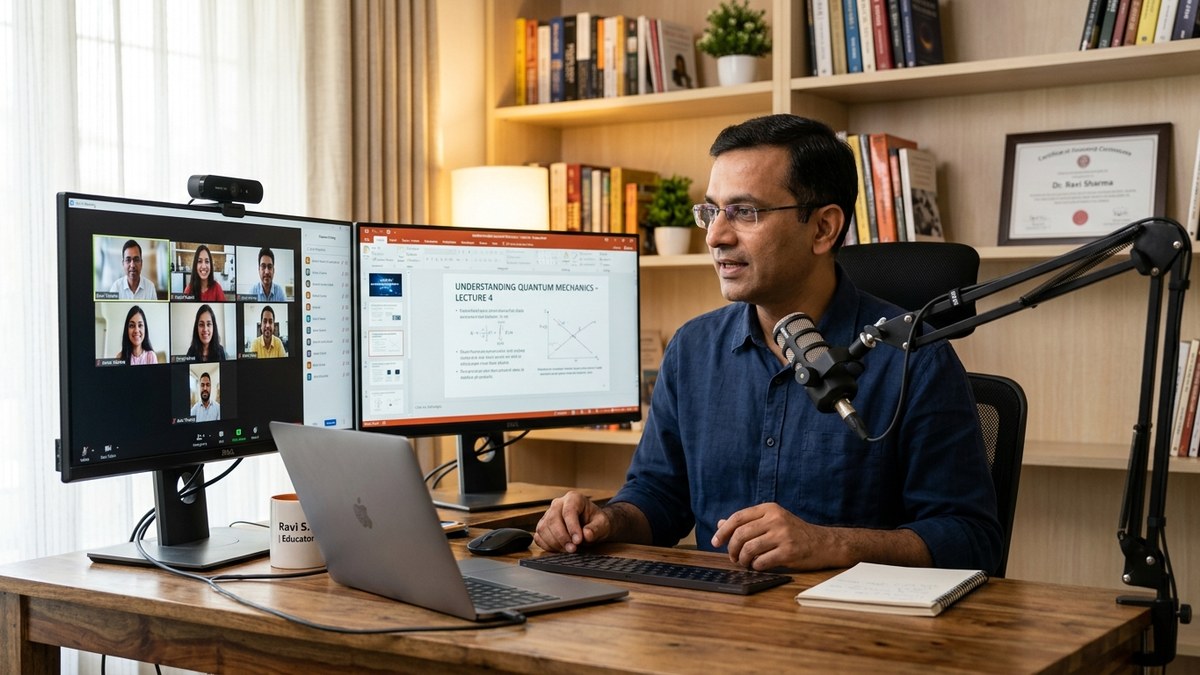
You don’t need an expensive laptop. But you need a dedicated, reliable system. One that doesn’t crash mid-class. One with a proper monitor so you can see student faces clearly. One with a webcam and headset that makes you sound professional.
This is why APNA PC exists. It’s a complete bundle designed for educators. Rs.30,000 gets you a Mini PC (i3 7th Gen, 8GB RAM, 128GB SSD), monitor, keyboard, mouse, webcam, headset, education software, 3-year warranty, and installation. No hidden costs. No surprises.
Most teachers spend Rs.30,000 on a single broken laptop repair over 3 years. APNA PC gives you a full, working system that lasts.
The POD Model: Teaching From Home, Earning Like a Business
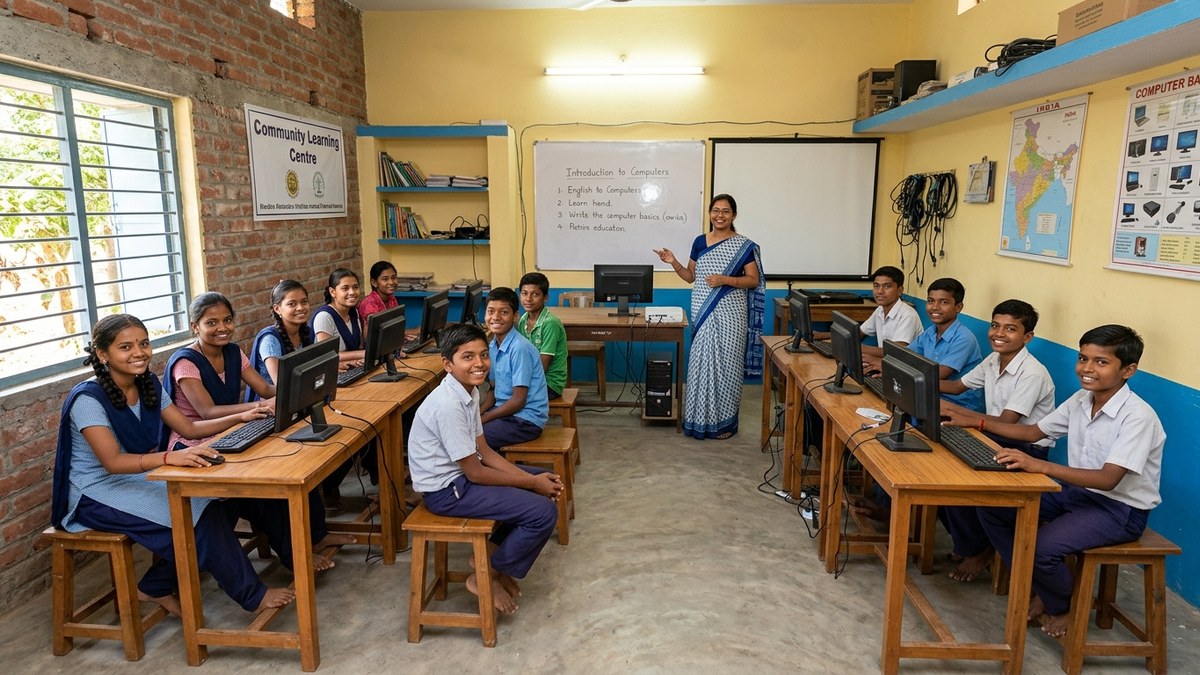
Here’s what’s changing in 2026: the rise of PODs (Points of Digital Learning). These are community learning centres run by trained educators. A homemaker. A retired teacher. An edupreneur. Someone like you.
A POD isn’t a formal school. It’s 10-15 students learning in a structured space with good internet, proper equipment, and a trained educator. Parents love PODs because they’re affordable, personal, and results-driven. Educators love them because they can serve more students without opening a full tuition centre.
Running a POD requires digital skills. You need to manage student data. Track progress. Communicate with parents. Conduct online sessions when needed. Market your POD online.
But here’s the payoff: a POD can generate Rs.1,00,000 to Rs.3,00,000 monthly depending on batch sizes and subjects. That’s not a tuition teacher’s income. That’s a business owner’s income.
Check out our home tuition business guide to see how others are building this.
Start Now. The Window Is Closing
In 2024, digital skills were a competitive advantage for tuition teachers. In 2025, they became standard. In 2026, they’ll be mandatory.
Schools are hiring online tutors. Parents are demanding video classes. Students are expecting recorded lessons. The tuition teacher without digital skills will be invisible.
But you’re reading this. You’re already thinking about change. That puts you ahead of 80% of tuition teachers in your city.
Here’s what to do next:
- Get proper equipment. APNA PC is designed for this. It’s not overkill. It’s the minimum you need to look and sound professional. Check APNA PC pricing and specs here.
- Learn one digital skill this month. Start with video teaching platforms. Master Zoom or Google Meet. That alone will open doors.
- Build your digital presence. A WhatsApp group. A simple website. A YouTube channel with 5 teaching videos. Something that shows you exist online.
- Consider the POD model. If you have space and capital, a POD can multiply your income 5-10x compared to traditional home tuition.
Most people don’t realise that digital skills for tuition teachers aren’t about being “modern” or “trendy”. They’re about money. They’re about reaching more students. They’re about charging what you’re worth.
The tuition teachers earning Rs.50,000+ monthly in 2026 won’t be the smartest or most experienced. They’ll be the ones who invested in digital skills and equipment early.
Learn more about digital literacy on Wikipedia and see how the Digital India initiative by MeitY is pushing educators to upskill.
The choice is yours. Stay where you are, or move forward.