Unschooling in India: What It Is and How It Differs from Homeschooling
Your child learns calculus by building a business. History comes alive through documentary research for a passion project. Science happens in the kitchen, the garden, the streets. This isn’t fantasy. This is unschooling in India, and it’s fundamentally different from homeschooling, though most parents conflate the two.
Let’s be honest: the Indian education system was designed for compliance, not curiosity. Unschooling in India challenges that head-on. It’s self-directed learning where children pursue their genuine interests, and parents facilitate rather than dictate. Here’s the truth: homeschooling can still look like traditional schooling at home. Unschooling looks like nothing you’ve seen before.
Homeschooling vs Unschooling in India: The Real Difference
Most people don’t realise these aren’t the same thing. Homeschooling means formal education delivered at home. You follow a curriculum, set schedules, conduct assessments. It’s structured, intentional, parent-led. Your child studies algebra on Tuesday at 10 AM because the syllabus says so.
Unschooling flips this entirely. Self-directed learning means your child decides what to learn, when, and why. The parent becomes a resource provider, not an instructor. Your teenager studies algebra because they need it to understand cryptocurrency or game development. The learning emerges from real questions.
- Homeschooling: Curriculum-driven, scheduled lessons, formal assessments, parent as teacher
- Unschooling: Interest-driven, flexible timing, real-world application, parent as guide
- Homeschooling: Structured subjects in isolation
- Unschooling: Integrated learning across multiple domains simultaneously
In India, this approach works particularly well because of our rich cultural resources, community networks, and mentorship traditions. A child interested in textiles can apprentice with a weaver. Another fascinated by urban planning can intern with local architects. This is learning through real engagement, not textbooks.
The challenge? India’s examination boards and college admissions still demand formal credentials. The CBSE website and other boards publish eligibility rules that families need to navigate. That’s why many unschooling families register with NIOS (National Institute of Open Schooling), which allows self-paced learning while maintaining board recognition. Check the NIOS registration guide for homeschooling parents for practical steps.
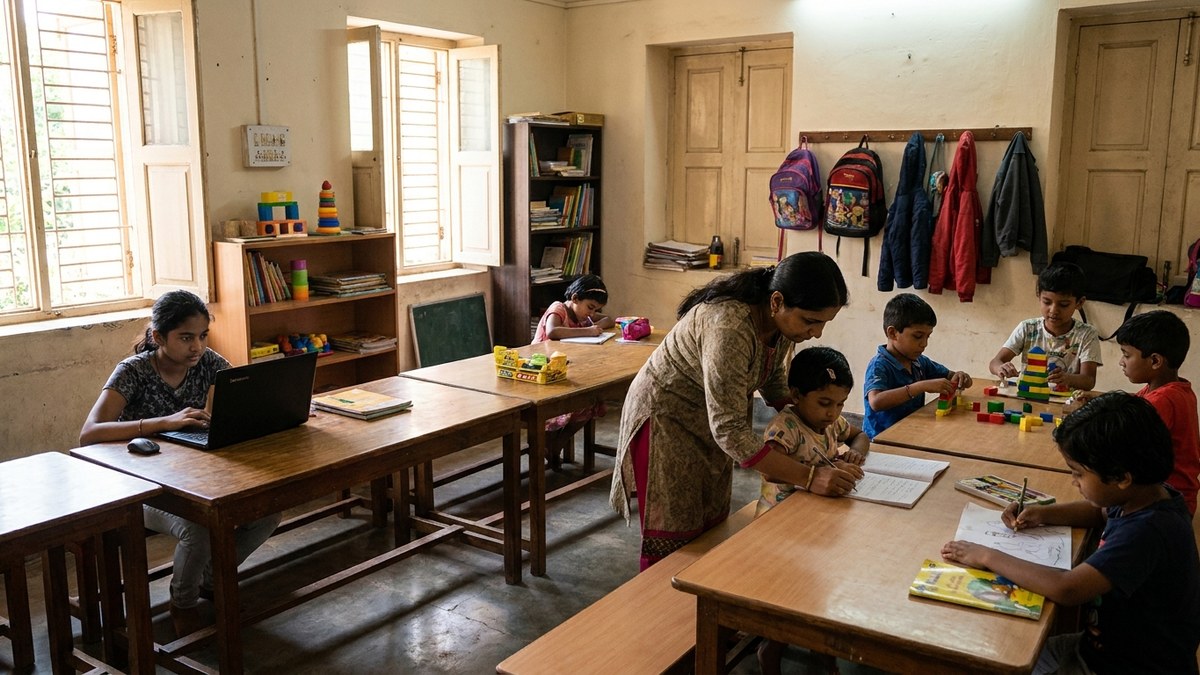
Self-directed learning isn’t chaos. It requires intentional infrastructure. You need resources, mentors, community access, and technology. This is where a Point of Digital Learning (POD) becomes invaluable. A POD is a home or community learning centre run by a trained educator who facilitates unschooling, provides structure without rigidity, and connects children to digital resources and real-world opportunities.
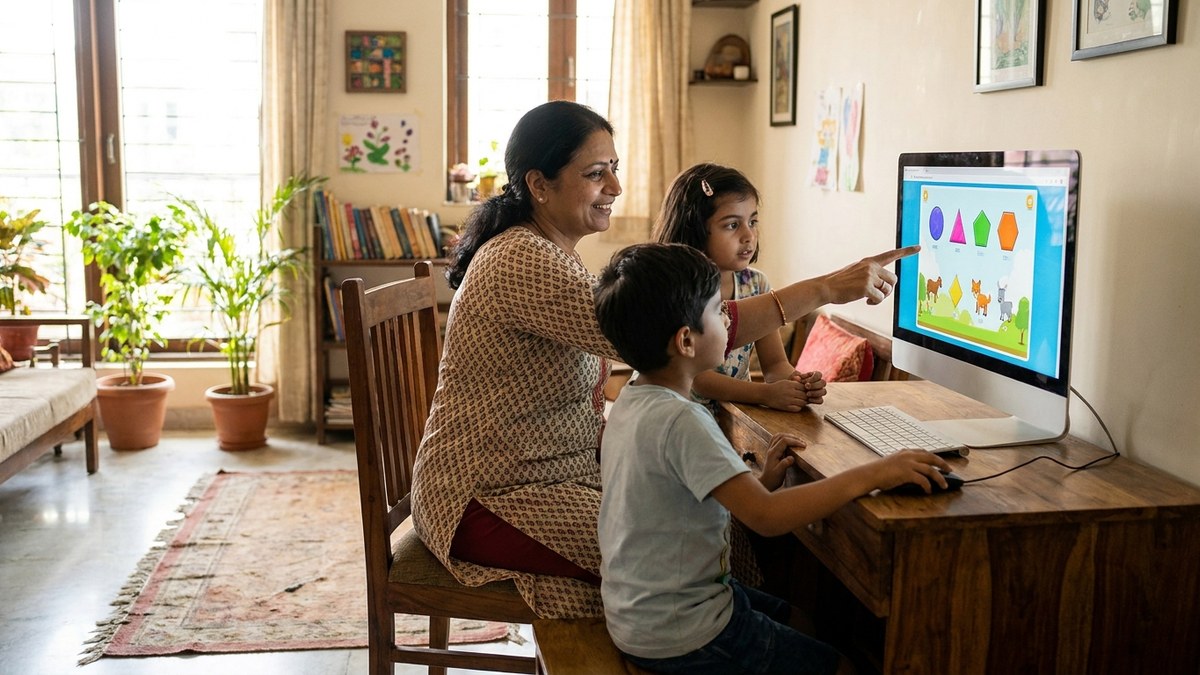
Consider this setup: a POD equipped with APNA PC, a complete bundle including education software, 3-year warranty, installation, Mini PC with i3 7th Gen processor, 8GB RAM, 128GB SSD, monitor, keyboard, mouse, webcam, and headset for Rs.30,000. With this infrastructure and a trained facilitator, children access the DIKSHA platform for quality content, research tools for self-directed projects, and digital communication with mentors. This transforms unschooling from a privilege of wealthy urban families into something accessible across India.
Here’s what unschooling in India actually looks like in practice. An 11-year-old interested in marine biology doesn’t read a chapter on ocean ecosystems. They watch documentaries, participate in citizen science projects, connect with marine researchers online, and plan a coastal research trip. Mathematics, writing, communication, and systems thinking all emerge naturally. They’re not “doing school”; they’re doing life, and learning happens as a byproduct.
Most people don’t realise the cognitive difference. Traditional schooling trains children to answer questions posed by others. Unschooling trains them to ask their own questions and pursue answers. This builds agency, resilience, and genuine intellectual curiosity. In India’s competitive landscape, this is radical.
The emotional dimension matters too. Children in unschooling environments report higher intrinsic motivation, less anxiety about grades, and stronger sense of ownership over their learning. For Indian children conditioned by decades of exam pressure, this can be life-changing for wellbeing.
But unschooling isn’t for everyone. It requires parents who can resist societal pressure, children with strong self-direction, and access to resources. It demands intentional community building. Many successful unschooling families in India connect through networks, share resources, and create collaborative learning spaces. The Apni Pathshala blog documents real stories of families navigating this path.
The technology piece is crucial. Understanding how learning actually happens, through exploration, failure, reflection, and iteration, means equipping your space with tools that enable this. Access to the DIKSHA platform provides curated educational content. But you also need basic infrastructure: a reliable computer, internet, software for research and creation.
Here’s the truth: unschooling in India is growing because parents are exhausted by the formal system’s failures. They’re watching their children lose curiosity by age 10. They’re seeing brilliant minds crushed by competitive pressure. They’re asking: what if there’s another way?
There is. Self-directed learning, supported by proper infrastructure and community, offers an alternative that honours how humans actually learn. It’s not easier than traditional schooling: it’s different and often harder for parents. But the results speak: young people who know themselves, pursue genuine interests, and possess real skills for real problems.
If you’re considering this path, start small. Read widely. Connect with communities. Build infrastructure thoughtfully. A POD with APNA PC for Rs.30,000 can be your foundation: quality technology that enables self-directed learning without breaking the bank.
The question isn’t whether unschooling works. It’s whether you’re ready to trust your child’s curiosity more than a curriculum.