Your Child’s Education Doesn’t Need a School Building
Let’s be honest: homeschooling in India has stopped being fringe. Thousands of parents are pulling their kids out of traditional classrooms and building learning at home. But here’s what most parents don’t realise when they start this journey – choosing the right home schooling board in India is more critical than the actual location of learning. The board you pick determines your child’s qualification value, university eligibility, and frankly, their future options.
You have real choices now. NIOS homeschooling India has exploded in popularity. CBSE private candidate registration is more accessible than ever. Cambridge IGCSE in India offers an international pathway. Each one plays a different game. Each one demands different things from you as a parent.
This isn’t a comparison that ends with “pick whichever feels right.” It ends with understanding which board actually fits your child’s learning pace, your family’s resources, and where you want them to be in 2026 and beyond.
NIOS: The Flexible Home Schooling Board in India
The National Institute of Open Schooling runs India’s largest open schooling system. If you’re hunting for a home schooling board in India that offers maximum flexibility with minimum hassle, NIOS is it. That’s the real pitch.
Here’s what NIOS actually gives you:
- Study materials delivered directly to your home or POD (Point of Digital Learning)
- No mandatory classroom attendance
- Multiple exam attempts allowed within a year
- Subjects chosen by you, not a rigid curriculum
- Recognition across Indian universities and many international institutions
The cost is genuinely low. Registration fees sit around Rs 2,000-3,000 per subject. You’re not paying for infrastructure you don’t use. If your child is a late bloomer, learns at their own pace, or has specific interests outside the standard curriculum, NIOS stops forcing square pegs into round holes.
But here’s the catch nobody mentions: NIOS requires serious parental involvement. You become the learning facilitator. Your home becomes the classroom. If you’re working full-time and expecting NIOS to be “set and forget,” you’ll struggle. The materials are good but self-study demands discipline. Your teenager needs to push themselves, not wait for a teacher to push them.
Most people don’t realise that NIOS works best when paired with structured support. That’s where a trained educator at a POD makes all the difference. It’s the difference between your child drifting through modules and actually mastering content.
CBSE: The Trusted Home Schooling Board in India
Want your child to follow the CBSE curriculum but study from home? CBSE private candidate registration lets you do exactly that. Your child gets the same syllabus, the same board exams, the same qualification – just without the commute and classroom.
Here’s the reality:
- Your child sits for official CBSE board exams at designated centres
- Curriculum is identical to CBSE school students
- Registration requires an affiliation with a registered school or institution
- You need structured learning support – textbooks alone won’t cut it
- Fees vary depending on your registration institution
CBSE private candidate registration is perfect if you want the prestige and recognition of CBSE without the school environment. Universities know CBSE. Employers know CBSE. If your child is self-motivated and you can afford quality tutoring or a POD with trained educators, this works.
The hidden cost? You’ll need to invest in proper learning support. Homeschooling CBSE isn’t cheaper than NIOS because the curriculum is denser, the expectations higher, and the self-study load heavier. Most parents end up hiring tutors or joining structured online programs anyway. Budget for that from day one.
Cambridge IGCSE: The International Gateway
Cambridge IGCSE in India is growing fast. It’s the home schooling board in India for families with international aspirations – whether that’s higher education abroad or a global career path, this board opens doors that others don’t.
What makes Cambridge different:
- Recognised across 160+ countries
- Focuses on conceptual understanding over rote learning
- Offers subject choice and flexibility
- English-medium curriculum exclusively
- Higher fees than CBSE or NIOS
Cambridge works beautifully for homeschooling because the curriculum is modular and self-study friendly. Your child can learn at their pace. The assessment is continuous, not just final exams. If your teenager is strong in English, enjoys problem-solving over memorisation, and you’re willing to pay premium fees, Cambridge is worth serious consideration.
The catch: Cambridge IGCSE requires registration through an authorised centre in India. You can’t just register as a private candidate from home. You need institutional backing. Plus, finding quality Cambridge curriculum resources in India is harder than finding CBSE materials. You’ll likely need online tutoring support or a POD with Cambridge-trained educators.
Which Board Wins for Your Family?
Stop looking for the “best” board. There isn’t one. There’s only the right board for your situation.
Pick NIOS if: Your child learns independently, you want maximum flexibility, cost matters, and you’re comfortable with self-paced learning supported by a good POD or tutor.
Pick CBSE private candidate if: You want mainstream recognition, your child thrives with structure, you can afford tutoring support, and India is your primary focus.
Pick Cambridge IGCSE if: You’re thinking globally, your child is strong in English, you have the budget, and you want a curriculum that rewards understanding over memorisation.
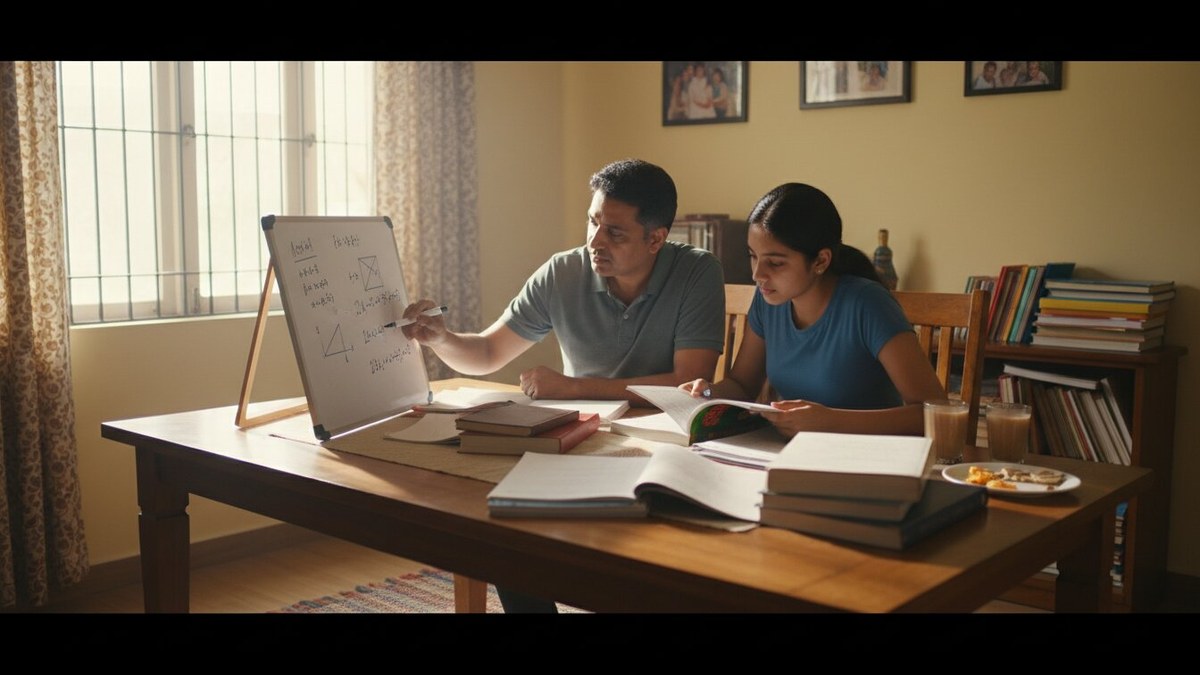
Here’s the truth: the board matters less than the learning environment you create. A motivated teenager with a trained educator at a POD will succeed on any board. An unmotivated teenager with expensive tutors will struggle on every board.
Before you register, audit your actual situation. How much time can you dedicate? What’s your budget? Where does your child want to study after school? What’s their learning style? Only after answering these honestly should you pick your board.
Your homeschooling setup – whether it’s a dedicated room, a POD, or a community learning centre – matters more than the name on the certificate. Check out how microschool vs traditional school models are reshaping learning in India. Also, if your teenager is in Class 9, map their future now with this employability skills roadmap for Class 9.
For official information, visit the CBSE official website, check Ministry of Education guidelines, and explore UNESCO education programs for global perspectives on homeschooling standards.
Your child’s education is happening at home now. Make sure it’s structured, supported, and aligned with a board that actually serves their future. That’s not negotiable.