
The Hard Truth About Spoken English Practice
Most Indian students do not speak English at home because they are waiting for the “right” classroom. They sit in tuition centres for two hours a week, stay silent, then wonder why their fluency does not improve. Here is the truth: spoken English practice happens between classes, not during them. It happens when you are alone. It happens when you decide to actually use your voice.
Spoken English exercises are not complicated. They do not require expensive coaching or native English speakers. What they require is consistency, a space to practise without judgment, and the right tools. This guide shows you exactly how to build a daily spoken English practice routine at home that actually works.
Why Your Current Approach Is Failing
Let us be honest: most English speaking practice at home never happens. You buy a book. You download an app. You tell yourself you will practise tomorrow. Tomorrow comes and goes. Six months later, your English sounds exactly the same.
The problem is not your effort. The problem is you are trying to practise without structure, without feedback, and without accountability. You need a system. You need exercises that fit into your actual life. You need to hear yourself speak.
- You avoid speaking because you fear making mistakes
- You have no one to talk to at home
- You do not know what to practise
- You cannot track your own progress
- Your family environment does not support English conversation
These are real barriers. Acknowledging them is the first step to breaking through them.
Five Daily Spoken English Exercises You Can Do Right Now
These exercises take 15-30 minutes. Do them every single day. No exceptions.
1. The Mirror Method
Stand in front of a mirror. Pick a topic: your day, a news story, your ambitions, anything. Speak for three minutes without stopping. Watch your mouth, your expressions, your confidence. Record yourself on your phone. Play it back. Listen for clarity, pace, and pronunciation. This feels awkward the first time. Do it anyway.
2. Shadowing Audio Content
Find a YouTube video or podcast in English. Listen to a 30-second clip. Pause it. Repeat exactly what you heard, matching the accent and speed. This trains your ear and your mouth together. Start with news or educational content. Your brain will absorb the rhythm of proper English.
3. Question and Answer Self-Interview
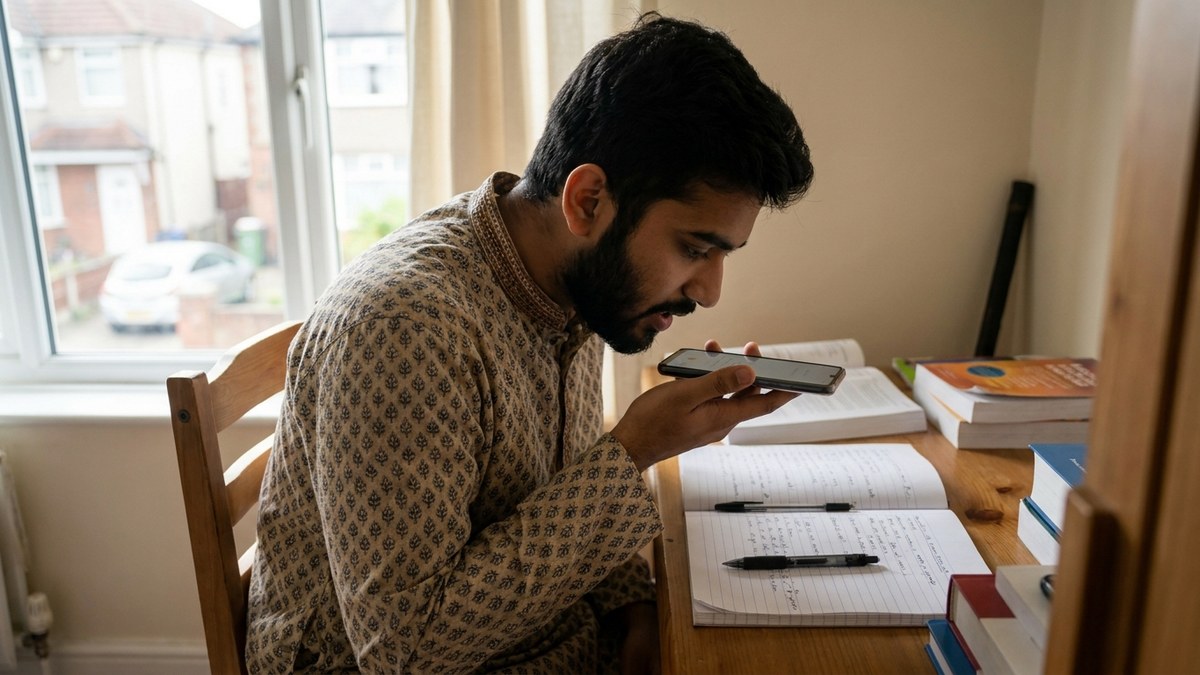
Write down 10 questions about yourself. “What are your career goals?” “What did you learn today?” “What challenges are you facing?” Answer each one in 60 seconds. Record yourself. Listen back. Notice where you hesitate, where you repeat words, where your grammar breaks down.
4. Story Retelling
Read a short story or news article in English. Close the book. Tell the story out loud in your own words. Record it. Play it back. Did you miss key points? Did you use filler words like “um” or “like”? Retell it again tomorrow. Better this time.
5. Conversation Practice With a Friend (Online or Offline)
Find one friend who also wants to improve. Set a time. Have a real conversation entirely in English. No switching to Hindi. No translating. Awkward silences are fine. Mistakes are fine. This is where real fluency lives.
Why You Need the Right Setup at Home
Here is what stops most students: they try to practise on a phone with terrible audio. They sit on a bed. They get distracted. They give up.
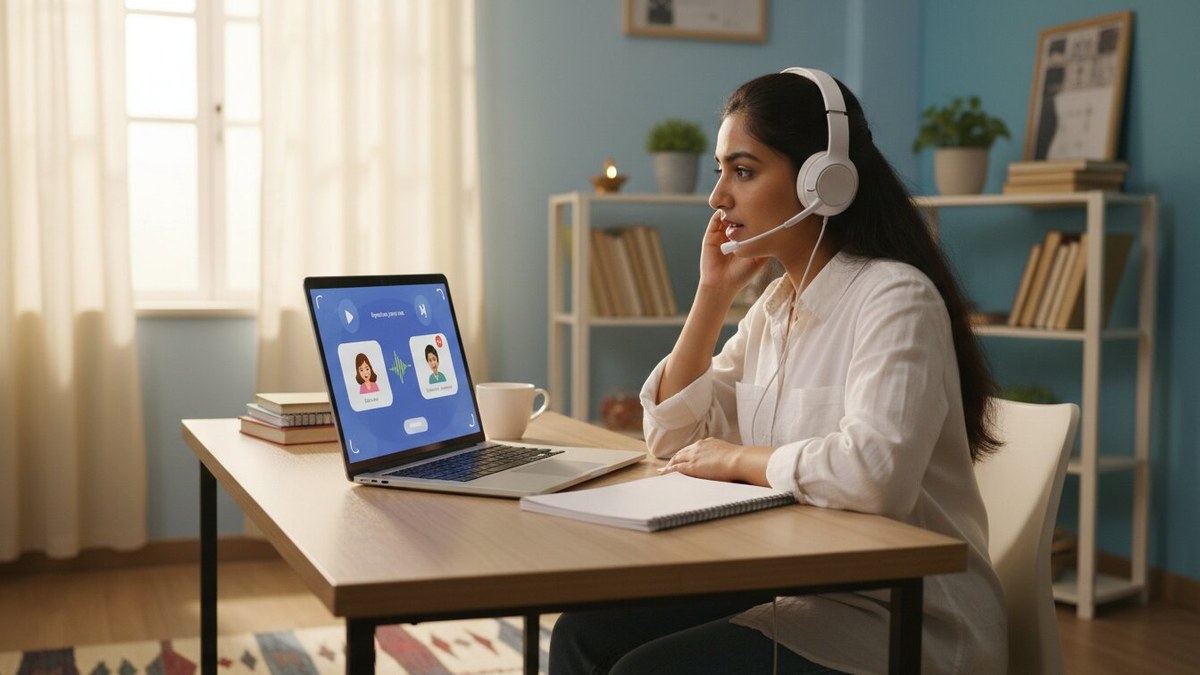
Spoken English practice requires a dedicated space and proper equipment. You need a computer with a good microphone and headset. You need stable internet. You need a comfortable chair and a desk. You need to signal to your brain that this is serious time.
This is exactly why APNA PC exists. It is a complete home learning bundle designed for Indian students. Comes with a Mini PC (i3 7th Gen, 8GB RAM, 128GB SSD), monitor, keyboard, mouse, webcam, and professional headset. Three-year warranty. Full installation. Everything you need to build a Point of Digital Learning (POD) right in your home or community centre.
Rs.30,000 for a complete setup. That is less than three months of private tuition. And it never expires.
With APNA PC, you can record yourself clearly. You can join online conversation groups. You can access the English language learning platforms. You can build real communication skills for employability from your own room.

The 30-Day Challenge
Do not just read this. Act on it.
Pick one exercise from the list above. Do it every day for 30 days. Record yourself on Day 1. Record yourself on Day 30. Listen to both. You will hear the difference. Your pace will be smoother. Your hesitations will be fewer. Your confidence will be unmistakable.
Most people do not realise that fluency is not a destination. It is a habit. It is what happens when you show up consistently, even when progress feels invisible.
If you are serious about spoken English practice, join free employability skills training programs in your area. Find peers. Build accountability. Learn how teaching works so you can teach others and deepen your own understanding.
But start with the exercises. Start today. Start with your voice.
Set up your home learning space with APNA PC. Get the tools. Get started.