
Your child sits in a classroom with 40 others. The teacher moves on. Your child is lost.
This is the reality for millions of Indian students. Not everyone learns at the same speed. Not everyone needs the same explanation. Yet our education system treats them like they do.
When parents hunt for group tuition vs one to one tuition, they’re really asking: “What will actually help my child learn?” The answer isn’t simple. But it’s worth getting right.
Let’s break down both formats honestly. Because choosing between group tuition classes and personalised one to one tutoring will shape your child’s academic journey. And your wallet.
Group Tuition vs One to One Tuition: The Math Works. The Learning Doesn’t Always.
Here’s the truth: Group tuition classes are cheaper. A tutor charges Rs.200-400 per student per hour when teaching 8-10 kids. Parents love this. Budgets breathe easier.
But what happens inside that classroom?
- The bright student finishes the problem in 2 minutes. They’re bored, disrupting others.
- The struggling student needs 15 minutes. By then, the class has moved on.
- The shy student never raises their hand. Their doubts stay buried.
- The tutor teaches to the middle. Everyone else suffers.
Group tuition works best for motivated students who learn independently. They use the class as a checkpoint, not their primary learning source. For everyone else? It’s expensive daycare disguised as education.
Most people don’t realise that group classes also create social pressure. Kids compare themselves constantly. A weak student in a group feels it. Confidence crashes. Performance follows.
That said, group tuition has one genuine advantage: peer learning. When students explain concepts to each other, everyone benefits. This happens naturally in groups. It doesn’t happen in one-to-one.
One-to-One Tutoring: Expensive But Powerful. If Done Right.
Personalised one to one tutoring is the opposite problem. It’s expensive (Rs.400-1000+ per hour). Not every family can afford it. But when a child gets a tutor’s full attention?
Magic happens.
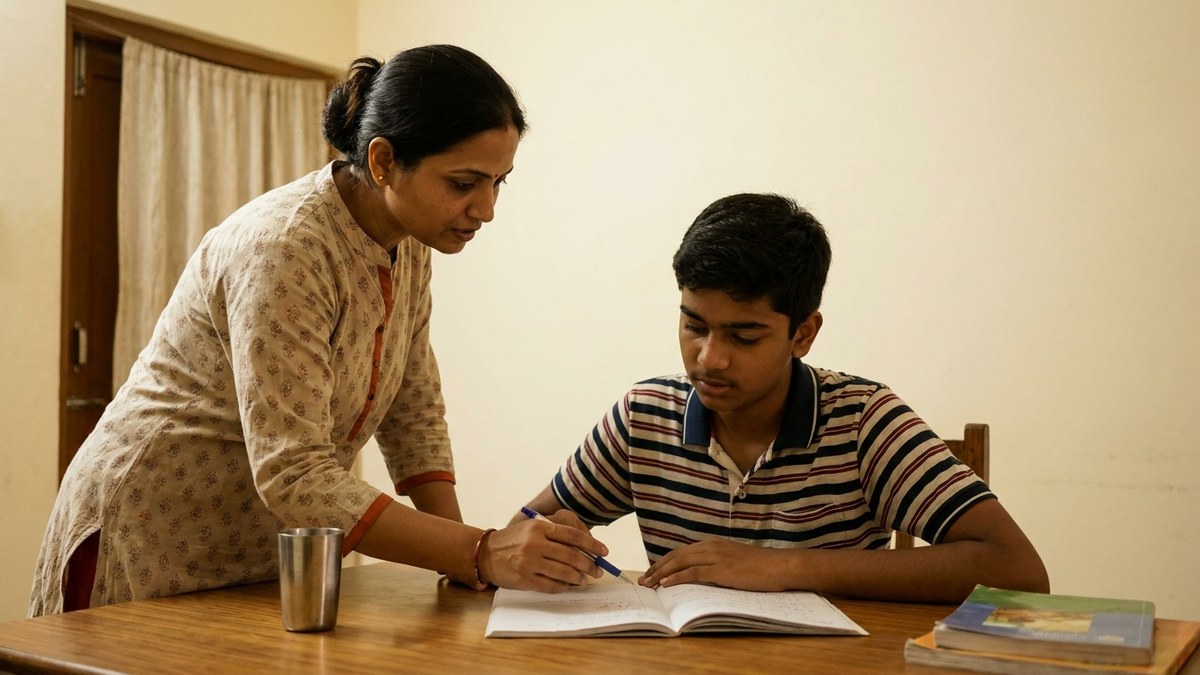
- The tutor sees exactly where the child gets stuck. Not guessing. Not moving on.
- The pace adjusts to the child. Not the clock.
- The teaching style matches how the child learns. Visual? Hands-on? Conversational? Done.
- The child asks anything without fear. No judgment. No embarrassment.
- Progress is measurable. Because nothing is hidden.
What research says about tutoring confirms this. One-to-one intervention closes learning gaps faster than any other format.
But here’s the catch: One-to-one tutoring only works if the tutor is genuinely skilled. A bad one-to-one experience is worse than no tuition at all. The child internalises wrong concepts faster. Confidence erodes. The damage takes months to undo.
The Real Question: What Does Your Child Actually Need?
Forget the format debate for a moment. Ask yourself this: Is my child struggling or soaring? The choice between group tuition vs one to one tuition starts here, not with price lists.
Choose group tuition if: Your child is doing okay. They need a confidence boost, some competitive spirit, or reinforcement of concepts already mostly understood. They’re social and learn well from peers. Your budget is tight.
Choose one-to-one tutoring if: Your child is significantly behind. They have specific learning gaps. They’re shy or anxious in groups. They need customised teaching methods. You can afford it and find a qualified tutor.
The hybrid approach: Some families do both. One-to-one for core concepts. Group classes for practice and peer learning. This works. But it’s expensive and demanding on the student’s time.
Let’s be honest: Most Indian parents choose based on budget first, need second. That’s understandable. But it’s backwards. Need should drive format. Then you find a way to afford it.
What About Online Tuition? A Third Option.
This is where things get interesting. Online coaching vs offline coaching changes the equation entirely. You get personalised one-to-one attention at group-tuition prices. Or group classes from expert teachers anywhere in India.
The catch? You need a setup at home. A decent computer. Stable internet. A quiet space.
For tuition teachers and edupreneurs, this is huge. Online teaching platforms to earn money let you reach more students without renting a tuition centre. Your margin improves. Your reach expands.
But you need the right equipment. This is where APNA PC comes in. Rs.30,000 gets you everything: Mini PC (i3 7th Gen, 8GB RAM, 128GB SSD), monitor, keyboard, mouse, webcam, headset, plus 3 years warranty and installation. It’s the complete bundle for running tuitions at home or setting up a POD (Point of Digital Learning).
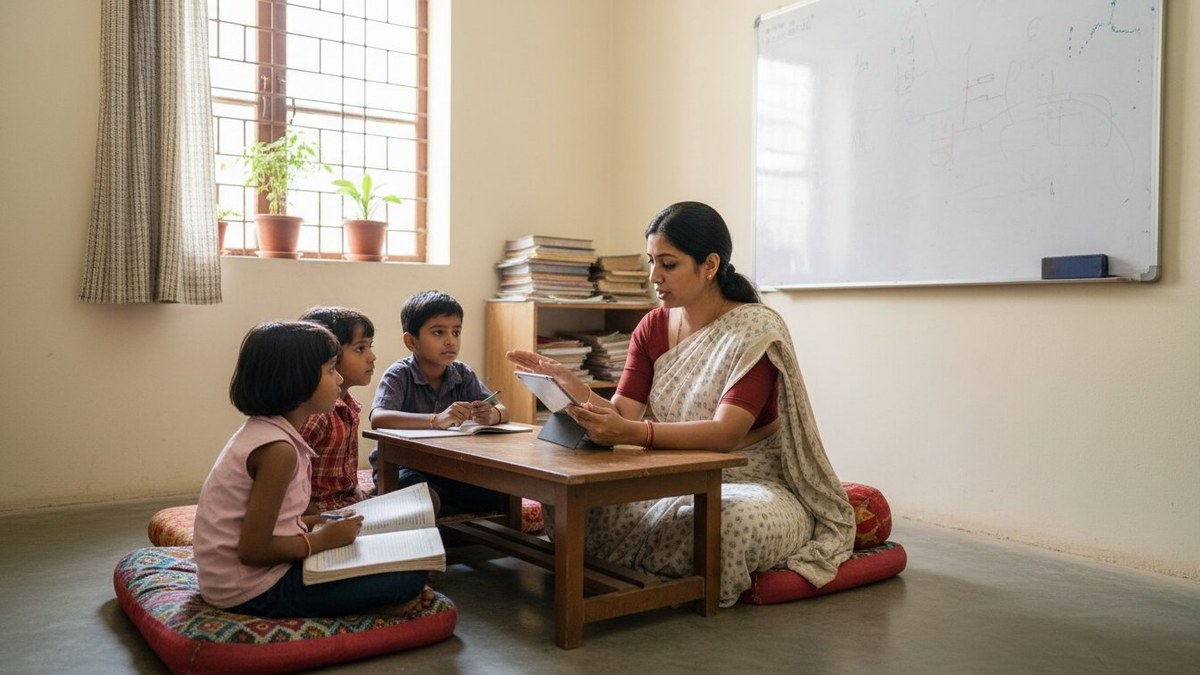
For homemakers looking to earn, senior citizens wanting purpose, and tuition teachers scaling up, APNA PC removes the equipment barrier. You can start online tuition immediately. No tech confusion. No hidden costs.
The government also supports this. DIKSHA platform provides free learning resources you can use to enhance your tuition content.
Group Tuition vs One to One Tuition: The Final Verdict
Group tuition vs one to one tuition isn’t about which is universally better. It’s about matching the format to the child.
Group tuition classes work for average-to-good students with social confidence. One-to-one tutoring works for students with specific gaps or learning differences. Online formats let you access the best of both worlds.
The real game-changer? Technology. With the right setup, you can personalise group learning. You can make one-to-one tutoring affordable. You can reach students across cities.
Stop choosing based on what’s easy. Choose based on what works. Then take action.
Your child’s learning trajectory depends on it.