
Your Students Are Studying Wrong. Here’s Why.
Most people do not realise that the way they study is the reason they forget. Your students sit for hours. They read textbooks. They highlight. They feel productive. Then exam day arrives and their minds go blank. This is not a memory problem. This is a study methods problem.
Let us be honest: passive reading does not work. Neither does cramming. The Indian education system has normalised these habits for decades, and we are paying the price in failed exams, frustrated students, and burned-out teachers. But there is a better way. Two study methods have emerged from cognitive science that actually work: active recall and spaced repetition. If you are teaching students in your tuition centre or POD (Point of Digital Learning), these techniques will transform how your learners retain information.
Active Recall: Stop Reading, Start Testing
Here is the truth: your brain does not strengthen memories by reading. It strengthens them by retrieving them.
Active recall means forcing your brain to pull information from memory without looking at the source. Not highlighting a textbook. Not re-reading notes. Actually retrieving the answer from your memory. This is uncomfortable. This is why most students avoid it. But discomfort is the signal that learning is happening.
Think about your best students. The ones who pass consistently. They ask themselves questions. They close the book and try to explain concepts aloud. They attempt problems before checking solutions. They use flashcards. They teach others. These are all active recall techniques. Your struggling students? They passively read. They highlight. They feel like they know the material until the exam proves them wrong.

Here is how to implement active recall in your tuition centre or POD:
- Flashcards: Not just vocabulary. Use them for formulas, historical dates, scientific processes, anything that requires retrieval. Your students should make their own cards. The act of creating them is learning.
- Practice problems: Real exam-style questions. Not textbook examples. Students must attempt without solutions visible.
- Self-explanation: Ask students to explain concepts aloud without notes. Record themselves if possible. Listening back reveals gaps.
- Peer teaching: Your students teach each other. This forces active retrieval and exposes weak understanding immediately.
- Low-stakes quizzes: Frequent, short tests with no grade attached. Just retrieval practice. Check out student engagement activities for more ideas on making these interactive.
Active recall alone is powerful. But combine it with spaced repetition and you have an unstoppable study method.
Spaced Repetition: The Smartest of All Study Methods
Most people do not realise that forgetting is not the enemy. Forgetting is the teacher. Your brain forgets information on a curve. If you review at the exact moment you are about to forget, you reset that curve and strengthen the memory. This is spaced repetition.
The timing matters. Review too soon and you waste time. Review too late and you have already forgotten. The sweet spot is just before forgetting kicks in. For most people, this happens roughly at these intervals: one day after learning, three days later, one week later, two weeks later, one month later.
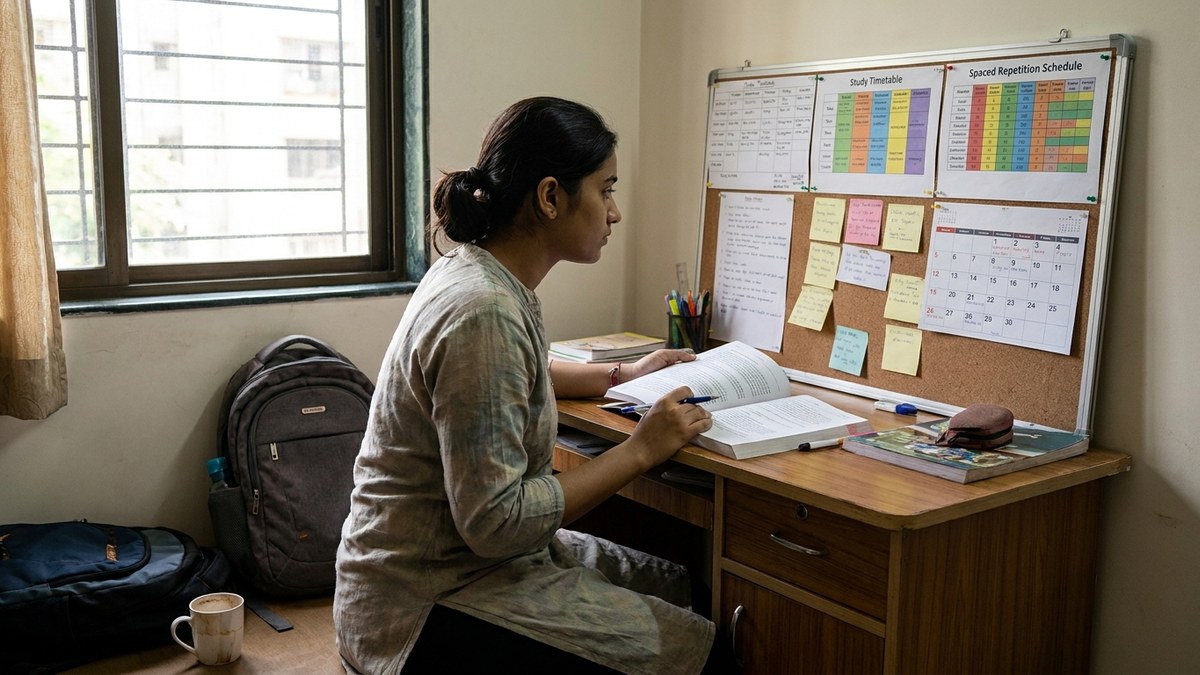
Here is the problem with traditional methods: students cram everything into one session. They study for the exam a few days before. This creates short-term memory that vanishes after the test. Real learning requires spacing out review sessions over weeks and months.
Your role as a teacher is to design this spacing. Create a revision calendar. Week one: initial learning. Day two: first review. Day four: second review. Week two: third review. Week four: final review. This is not complicated. But it requires planning and consistency from both you and your students.
Digital tools make this easier. The DIKSHA platform offers structured learning paths. Many tuition centres now use dedicated software to automate spaced repetition scheduling. If you are running a POD and need reliable technology, APNA PC (the complete bundle at Rs.30,000) includes education software that tracks student progress and schedules reviews automatically. Three years warranty. Full installation included. Everything a modern tuition centre needs.
Why These Study Methods Work for Indian Students
The Indian curriculum is vast. Boards like CBSE official site demand breadth and depth. Students cannot memorise their way through. They need efficient study methods that stick information in long-term memory. Active recall and spaced repetition do exactly that.
These are not new concepts. Cognitive science has proven them for decades. UNESCO education frameworks increasingly recognise these principles. Yet most Indian tuition centres still rely on traditional methods: more classes, more notes, more pressure.
You can be different. You can teach these techniques alongside content. Your students will learn faster, retain longer, and feel less stressed. They will pass exams consistently. Their parents will notice. Your reputation will grow.
Start small. Pick one subject. Introduce active recall through flashcards or peer teaching. Add spaced repetition with a simple calendar. Track results. Your students will show improvement within weeks. Then scale up to other subjects. Other batches. Eventually, this becomes your teaching culture.
For more strategies on keeping students engaged while using these methods, visit the Apni Pathshala blog.
The study methods you teach today shape how your students learn for life. Choose wisely.
Ready to build a modern learning centre? Start your POD today with the right tools and proven techniques.