
The Real Truth About Study Abroad for Indian Students
Your parents think studying abroad is impossible. Your friends think it’s only for the rich. Both are wrong. Study abroad for Indian students is more accessible than ever, but nobody tells you the actual roadmap. Most people don’t realise that the barrier isn’t talent or money alone. It’s information.
Every year, over 1.3 million students from India pursue overseas education. They’re not all from billionaire families. They’re from Delhi, Mumbai, Bangalore, small towns, tier-2 cities. They’re like you. Here is the truth: if you have a plan, discipline, and the right preparation tools, you can study abroad for Indian students who want global careers. This guide cuts through the noise and gives you the actual steps.
Step 1: Choose Your Destination and University
Don’t pick a country because it sounds fancy. Pick it because it fits your goals, budget, and timeline. The USA, UK, Canada, and Australia dominate Indian student choices. But Germany, Netherlands, and New Zealand are cheaper and equally strong academically.
Research universities using these filters:
- Course quality in your field
- Tuition fees (compare USD, GBP, AUD, CAD)
- Scholarship availability for international students
- Post-study work visa options
- Cost of living in that city
Create a shortlist of 5-8 universities. Don’t apply to 20. Quality over quantity wins.

Step 2: Meet Academic Requirements and Standardized Tests
Let us be honest: your 10+2 grades matter, but your test scores matter more. Most universities want either SAT/ACT (for USA) or A-Levels/IB (for UK/Commonwealth). For postgraduate programs, they want GMAT or GRE. If you want to improve your academic skills before applying, explore skills development programs that strengthen your profile.
For language proficiency, IELTS or TOEFL is mandatory for English-speaking countries. Most universities require a minimum band score of 6.5-7.0 in IELTS or 90-100 in TOEFL.
Timeline: Start test prep 6-9 months before application deadlines. Standardized tests aren’t about luck. They’re about systematic preparation. Join coaching if needed, but consistency beats expensive tutoring every time.
Step 3: Build a Compelling Application
Your grades and test scores get you in the door. Your application gets you admitted.
Focus on these components:
- Statement of Purpose (SOP): Write 500-750 words explaining why you want this course, why this university, and what you’ll do after graduation. Be specific. Avoid generic statements.
- Letters of Recommendation: Get 2-3 from professors or mentors who know your work deeply. Give them your SOP so they write targeted letters.
- Resume/CV: List academic achievements, internships, projects, leadership roles, and skills. Quantify impact where possible.
- Essays: Some universities ask personal essays. Write honestly about challenges you’ve overcome.
Most people don’t realise that application writing is a skill. You need feedback. Get your SOP reviewed by teachers, mentors, or application consultants before submitting.
Step 4: Understand Funding and Scholarships
Here is the truth: full scholarships are rare for international students. But partial scholarships, teaching assistantships, and work-study options exist.
Funding sources for Indian students:
- University scholarships (merit-based or need-based)
- Government scholarships (check the Government Skill Development Portal for India-specific programs and skill development training programs that can boost your profile)
- External scholarships (Fulbright, British Council, Commonwealth scholarships)
- Education loans from Indian banks (HDFC, ICICI, SBI offer education loans up to 1 crore)
- Parent savings and part-time work during studies
Calculate total cost of attendance: tuition + accommodation + food + transport + insurance. Then build your funding strategy around that number.
Step 5: Handle Visa Applications
Once you get an admission letter, visa approval is the next hurdle. Each country has different requirements. USA requires F-1 visa, UK requires Student visa, Canada requires Study Permit, Australia requires Student visa.
Common documents needed:
- Admission letter from university
- Proof of financial support (bank statements, loan approval)
- Passport
- Medical certificates
- Police clearance certificate
Don’t rush this step. Visa officers see hundreds of applications. Yours must be organized, honest, and complete. One missing document can delay approval by months.
Step 6: Prepare for the Transition
Getting admitted and visa approval is 70% of the battle. The remaining 30% is preparing mentally and logistically for the move.
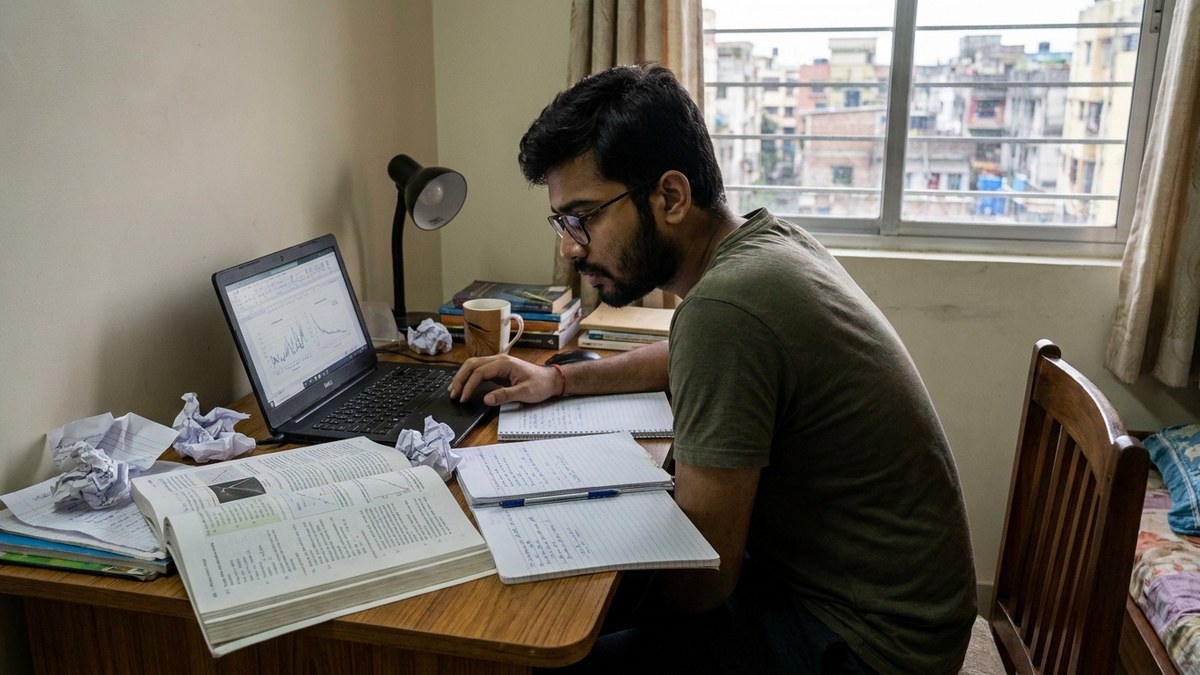
Before you leave India, arrange accommodation, open a local bank account (many universities help), buy travel insurance, and connect with other Indian students at your university on social media.
Most importantly, build your network back home. Stay connected with mentors, teachers, and peers through digital platforms. A good internet connection and a reliable PC setup help you maintain these connections and stay grounded.
Study Abroad for Indian Students: Why Preparation Tools Matter
Here is the truth: studying abroad requires serious online work. You’ll take online tests, attend virtual interviews, submit digital applications, and maintain communication with universities across time zones.
Pro tip: Many coaching centers now offer online prep through digital platforms. If you’re serious about international admissions, you need a reliable setup. An APNA PC gives you a dedicated learning space at home with 8GB RAM and solid processing power. No lag during mock tests, no distractions, pure focus.
You need a system that doesn’t fail you. An APNA PC at Rs.30,000 includes everything: i3 7th Gen processor, 8GB RAM, 128GB SSD, monitor, keyboard, mouse, webcam, headset, and 3-year warranty. No hidden costs. No compromise on specs.
Whether you’re prepping for IELTS, writing your SOP, or attending virtual university tours, this setup handles it all smoothly. It’s designed for students like you who are serious about international education.
Get your APNA PC today and create a dedicated learning space for your overseas education journey.
Final Word
Study abroad is not a dream reserved for the elite. It’s a path that requires planning, discipline, and the right tools. You have the talent. You have the ambition. What you need is clarity on the steps and a reliable setup to execute them.
Start today. Pick your destination. Register for your first standardized test. Write your first draft SOP. Every small action compounds into admission offers and visa approvals.
Your future abroad starts now.