
Project-Based Learning: Why Most Indian Teachers Still Teach the Old Way
Your students sit in rows. They listen. They memorize. They forget. This is not education. This is storage. Project-based learning examples show us a different path, but Indian teachers rarely take it. Here is the truth: project-based learning (PBL) works better than lectures, yet most classrooms ignore it completely.
Let us be honest. The Indian education system prizes rote learning. Students cram for board exams. They pass. They forget everything six months later. Parents accept this. Schools accept this. But what if there was another way? What if students actually learned by doing?
Project-based learning examples prove this works. When a student builds a water filter instead of reading about filtration, something changes in their brain. They own the knowledge. They remember it. They can apply it.
Most people do not realize that PBL teaching method is not new. It has been around for decades. What is new is that Indian teachers now have the tools to implement it. Digital tools. Community spaces. Support systems. The barrier is not knowledge anymore. It is courage.
What Is Project-Based Learning and Why Should You Care?
Project-based learning is simple. Students work on real problems. They research. They collaborate. They create solutions. They present their work. The teacher guides, not lectures.
Compare this to traditional teaching. A math teacher explains fractions for 45 minutes. Students copy notes. They solve 20 textbook problems. They understand nothing. Next week, they have forgotten everything.
Now imagine this. A group of students needs to divide a plot of land fairly among five families. They must calculate fractions, percentages, and areas. They must present their solution to the class. Suddenly, fractions matter. They are real. They are necessary.
This is project-based learning in India. It works in villages. It works in cities. It works with young children and teenagers. The PBL teaching method is flexible. It adapts to your students. It adapts to your resources.
Here are real project-based learning examples that work in Indian classrooms:
- A group researches local water pollution and proposes solutions to their village council
- Students create a school garden, manage budgets, and track crop growth over months
- Children design and build a rainwater harvesting system for their community
- A team investigates local food waste and creates a composting business plan
- Students document local folk art and create a digital museum exhibition
- A group analyzes local job markets and creates career guidance for younger students
These are not fantasy projects. Teachers across India run these right now. In community learning centres. In tuition classes. In school classrooms. They work because they matter to students.
How to Start Project-Based Learning Tomorrow
You do not need permission. You do not need new buildings. You do not need to wait for government approval. You can start today.
Step one: Choose a real problem your students care about. Not a fake problem from a textbook. A real one. Something in their community. Something they see every day.
Step two: Let students research. Give them time. Give them access to information. This is where digital literacy skills for Indian students become essential. They need to search online. They need to verify sources. They need to think critically.
Step three: Let them collaborate. Assign roles. Some research. Some organize. Some design. Some present. Everyone contributes.
Step four: Create something. A presentation. A prototype. A proposal. A video. A proposal to local government. Something real that goes beyond the classroom.
Step five: Let them present to a real audience. Not just the teacher. Invite parents. Invite community members. Invite local officials. Make it matter.
This is the PBL teaching method in action. No complicated theory. No expensive training. Just good teaching.
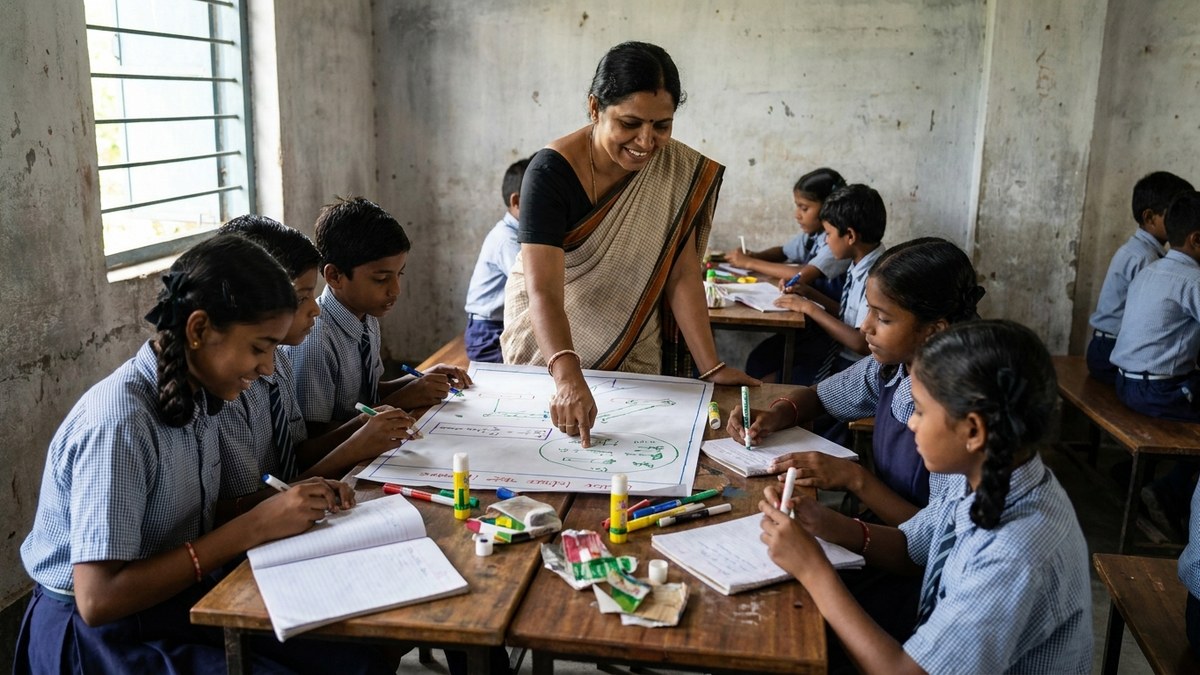
Most people do not realize that project-based learning examples require one thing above all else: a space to work. A place where students can spread out materials. Where they can talk without disturbing others. Where they can display their work.
This is where a Point of Digital Learning (POD) changes everything. A POD is a community learning centre run by a trained educator. It can be in your home. It can be in a community hall. It can be anywhere.
Inside a POD, you have the tools you need. APNA PC is the foundation. This is a complete education bundle. A Mini PC with i3 7th Gen processor, 8GB RAM, 128GB SSD. A monitor. A keyboard. A mouse. A webcam. A headset. Education software included. Three-year warranty. Installation included. All for Rs.30,000.
Why does this matter for project-based learning? Because your students need to research online. They need to create presentations. They need to edit videos of their project work. They need to communicate with mentors outside your classroom. APNA PC gives them these tools.
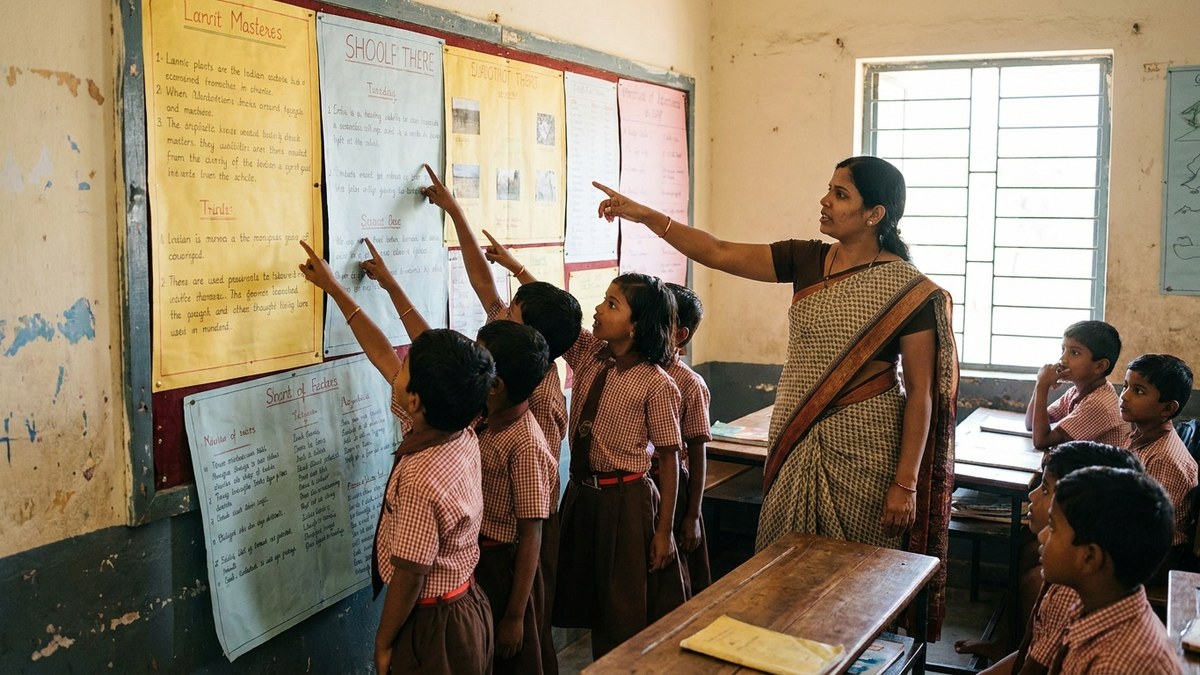
You can run a POD with APNA PC. Tuition teachers do this. Homemakers do this. Senior citizens do this. Edupreneurs do this. They teach students using project-based learning methods. They charge fees. They earn money. They impact their communities.
The project-based learning examples that succeed are the ones where students feel ownership. They chose the problem. They found the solutions. They presented to real people. This is not school theater. This is real education.
Why Indian Teachers Must Act Now
The world is changing. Jobs are changing. Students need different skills now. Memorization alone will not help them. They need to solve problems. They need to collaborate. They need to communicate. They need to think creatively.
Project-based learning teaches all of these. The PBL teaching method is not optional anymore. It is essential.
You can learn more about integrating technology into education through AI education courses in India. You can understand the broader context through Education in India. You can access free resources through the DIKSHA platform.
But the most important step is this: start a POD. Run project-based learning examples with real students. See what happens when you stop lecturing and start facilitating.
Ready to begin? Start a Teach to Earn Learning POD today and change how your students learn.