
The Memorization Trap Nobody Talks About
Your child sits with a textbook for three hours. She can recite the entire chapter. Ask her to apply one concept? Blank stare.
This is the Indian education story. We have built a system that rewards memorization and punishes thinking. Students memorize formulas, dates, definitions. They forget them the moment the exam ends. Here is the truth: memorization is the slowest path to real learning. Experiential learning, on the other hand, sticks. It transforms knowledge from words on a page into lived experience.
Most people do not realise that hands-on learning activates different parts of the brain than passive reading. When a student builds a circuit, grows a plant, or solves a real problem, they are creating neural pathways that last. This is not theory. This is neuroscience.
Experiential learning means learning by doing. Activity-based learning means students are not sitting still. They are moving, experimenting, failing, fixing, succeeding. And that process? That is where actual learning happens.
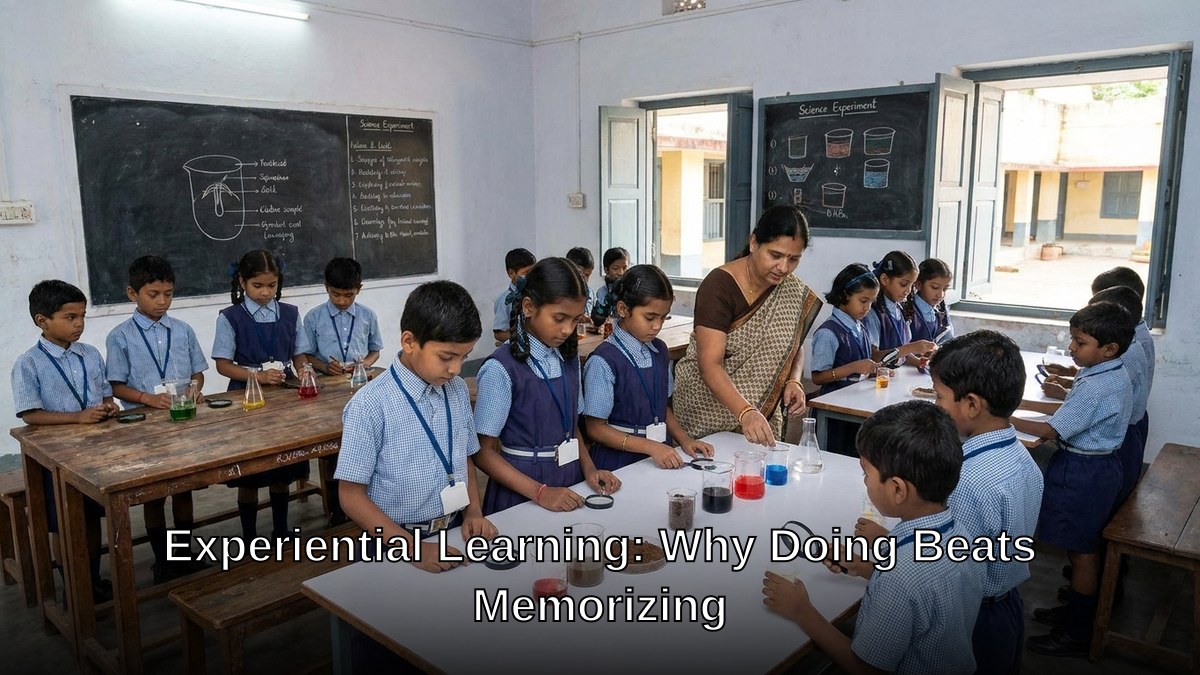
Why Indian Teachers and Parents Are Ready for This Shift
Let us be honest: the tuition industry in India thrives on memorization. It is easier to teach. It is easier to test. But tuition teachers who have moved to activity-based learning see something different. Their students ask better questions. They retain more. They actually enjoy learning.
Homemakers running community learning centres have discovered this too. When they stopped forcing children to memorize and started letting them experiment, attendance went up. Parent satisfaction went up. Results went up.
Senior citizens who have started teaching through experiential methods report the same thing: kids are more engaged. They come back. They bring friends.
Edupreneurs building their own learning businesses understand this deeply. The future is not in coaching centres that pump out test scores. The future is in learning spaces where students actually think.
The barrier has never been philosophy. The barrier has been access to tools. How do you run an activity-based learning centre from your home without proper equipment? How do you create digital demonstrations? How do you even get started?
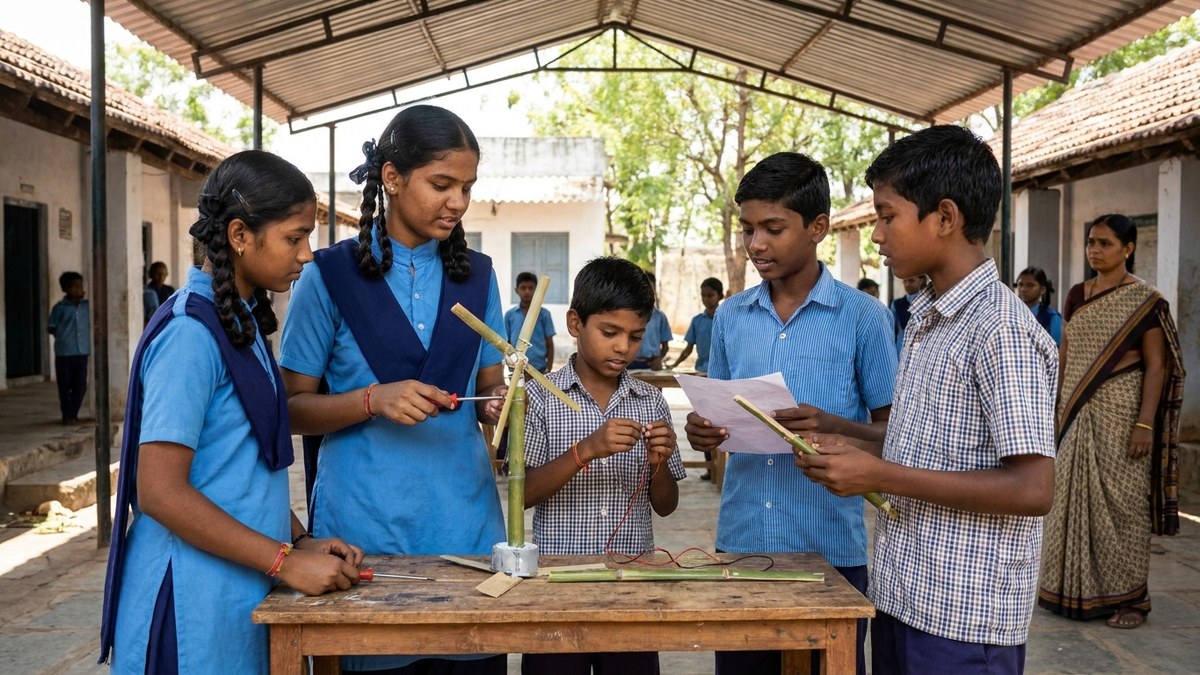
What Experiential Learning Actually Looks Like
A student learning fractions through a textbook reads: “3/4 means three parts of four.” A student learning through experiential methods cuts a pizza into four pieces and eats three. Guess who remembers fractions?
A child memorizing the water cycle writes it down. A child who creates a mini water cycle in a bottle, watches condensation form, sees evaporation happen? She owns that knowledge.
Science becomes real when students do experiments instead of reading about them. History becomes real when students role-play historical events. Mathematics becomes real when students build structures that need to be measured and calculated.
This is not new pedagogy. Educational research from UNESCO global education frameworks and India Ministry of Education guidelines all point to the same conclusion: hands-on learning produces better outcomes.
The challenge is implementation. You need space. You need materials. You need technology to demonstrate concepts that are hard to show physically. You need a system to track progress and communicate with parents through parent-teacher communication apps in India.
Most educators know this. They just do not know how to start without spending a fortune.
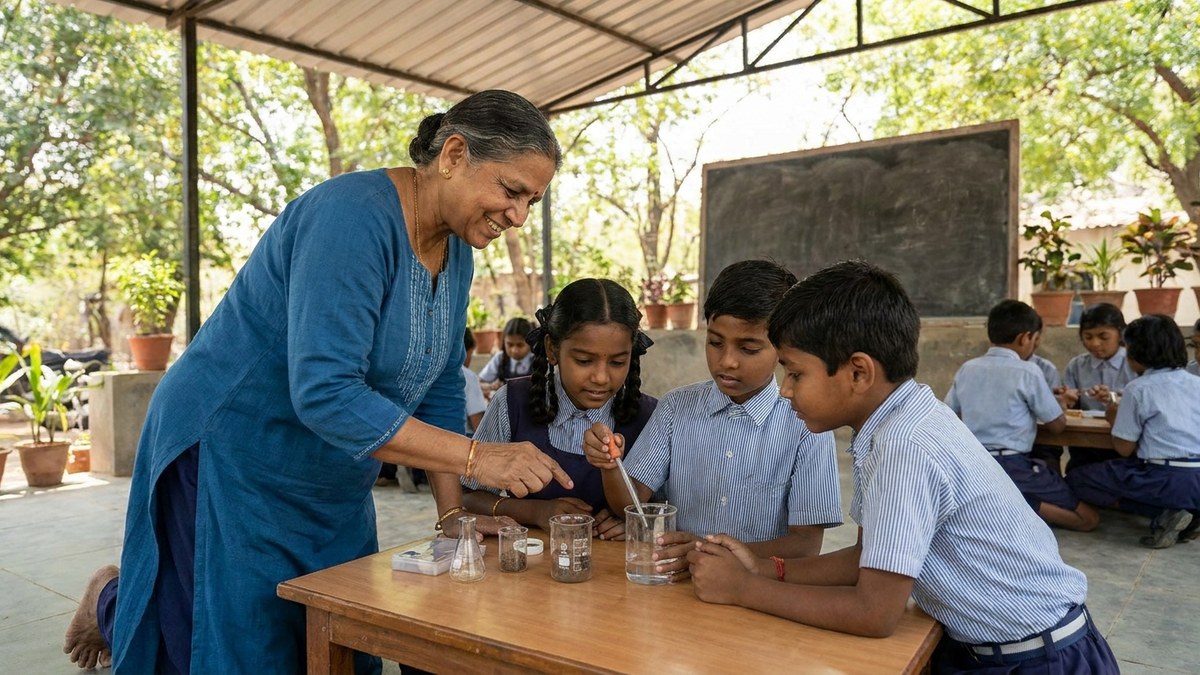
The Real Cost of Staying Traditional
You can continue running a tuition centre the old way. Rent a room. Hire someone. Teach from textbooks. Charge Rs.500 per month. Compete on price with every other centre in your area.
Or you can build a Point of Digital Learning. A POD. A home or community learning centre where experiential learning happens. Where students actually want to come. Where parents see real results. Where you can charge more because you deliver more.
The salary of a government teacher is a fixed number. Check the government teacher salary breakdown if you want the exact figure. But an edupreneur running an activity-based learning centre? Income scales with quality and reputation, not with years of service.
This is not about replacing teachers. It is about empowering them. Homemakers can start earning. Senior citizens can stay active and relevant. Tuition teachers can build real businesses instead of just earning hourly wages.
The Missing Piece: Technology and Infrastructure
To run experiential learning at scale, you need three things: a trained educator, a learning space, and technology.
The educator part is easy. Anyone can learn to facilitate hands-on learning. The space can be a room in your home. But technology? That is where most people get stuck.
You need a computer to show demonstrations. You need software designed for activity-based learning. You need reliable hardware that does not crash in the middle of a class. You need a webcam for online sessions. You need audio equipment so students can hear clearly.
Buying all this separately costs a fortune. Rs.40,000 here. Rs.15,000 there. And you end up with mismatched equipment that does not work well together.
APNA PC solves this problem. It is a complete bundle. Mini PC with i3 7th Gen processor, 8GB RAM, 128GB SSD. Monitor, keyboard, mouse, webcam, headset. Education software included. Three-year warranty. Professional installation. Everything you need to run a Point of Digital Learning. All for Rs.30,000.
This is the infrastructure that makes experiential learning possible for homemakers, senior citizens, and edupreneurs. Not just possible. Profitable.
With APNA PC, you can run digital demonstrations. You can show videos of experiments before students do them. You can track student progress. You can conduct online sessions. You can build a learning centre that feels modern and professional.
Most people do not realise that the barrier to starting a quality learning business is not knowledge or passion. It is equipment. APNA PC removes that barrier.
Start Your Experiential Learning Journey Today
The shift from memorization to experiential learning is not coming. It is already here. Parents are tired of tuition centres that produce robots. Students are tired of rote learning. Teachers are ready for something better.
You can be the one who brings activity-based learning to your community. You can build a POD that actually makes a difference. You can earn a real income doing work that matters.
All you need is the right setup. Get APNA PC today and start building your Point of Digital Learning.
The future of education is hands-on. The future is now. Are you ready?