
When Students Teach, Everyone Learns Faster
Your child sits in a classroom with 40 other kids. The teacher explains algebra. Half the class gets it. Half doesn’t. Nothing changes until the next day’s lesson.
Here’s the truth: peer learning flips this broken model on its head. When students teach each other, something magical happens. The student explaining the concept learns 90% better than passive listening. The student receiving help understands faster because the explanation comes from someone who just figured it out themselves, not from a textbook.
This approach isn’t new. It’s ancient. But in Indian homes and classrooms, we’ve buried it under the weight of one-way teaching. Time to dig it back up.
Why Collaborative Learning Works When Traditional Teaching Doesn’t
Let’s be honest: most people don’t realise that when students work together, the fear factor disappears. When a classmate explains something, there’s no authority pressure. No judgment. A student can ask “stupid” questions without shame. They can say “I don’t understand” without losing face.
In a traditional classroom, asking for clarification feels like admitting defeat. In peer learning setups, it’s expected. Normal. Encouraged.
The numbers back this up. Students retain 70% of what they teach others. They retain only 10% of what they read. This isn’t opinion. This is how human brains work.
Here’s what happens when students teach each other:
- Student A struggles with fractions. Student B explains using real examples from their kitchen. Suddenly fractions make sense.
- Student C teaches a concept and realises they didn’t understand it fully. They learn by teaching.
- Confidence builds. Anxiety drops. Questions flow freely.
- The tuition teacher or educator becomes a guide, not a gatekeeper of knowledge.
For homemakers running tuition from home, this is gold. For edupreneurs building learning pods, this is your competitive advantage. For senior citizens mentoring grandchildren, this is connection without frustration.
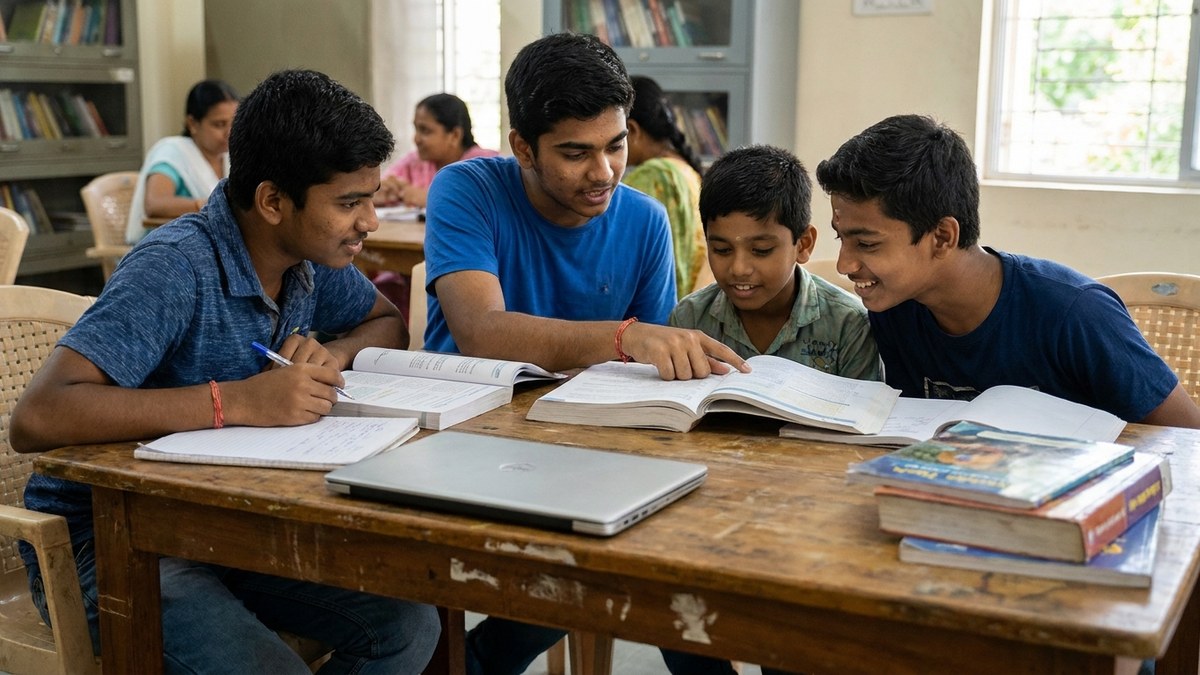
Peer Learning in Indian Homes and Learning Pods
Most people don’t realise that student-led teaching doesn’t require fancy infrastructure. It requires structure and the right tools.
A Point of Digital Learning (POD) is the perfect setting for this. Whether it’s your home or a community centre, collaborative learning happens when:
- Students work in small groups (3-5 people maximum)
- One student explains while others listen and ask questions
- Roles rotate. Everyone teaches. Everyone learns.
- An educator monitors, guides, and steps in only when needed
- Digital tools help organize the content and track progress
The educator’s job changes completely. You’re not the expert standing at the front. You’re the orchestrator. You design the activity, assign roles, and help when understanding breaks down.
This approach aligns perfectly with what the Central Board of Secondary Education now emphasizes: collaborative learning and critical thinking, not rote memorization.
If you’re running a tuition centre or POD, student-led teaching multiplies your impact. One educator can guide 15-20 students engaged in this method. Traditional one-way teaching? You’re capped at 8-10 before quality crashes.
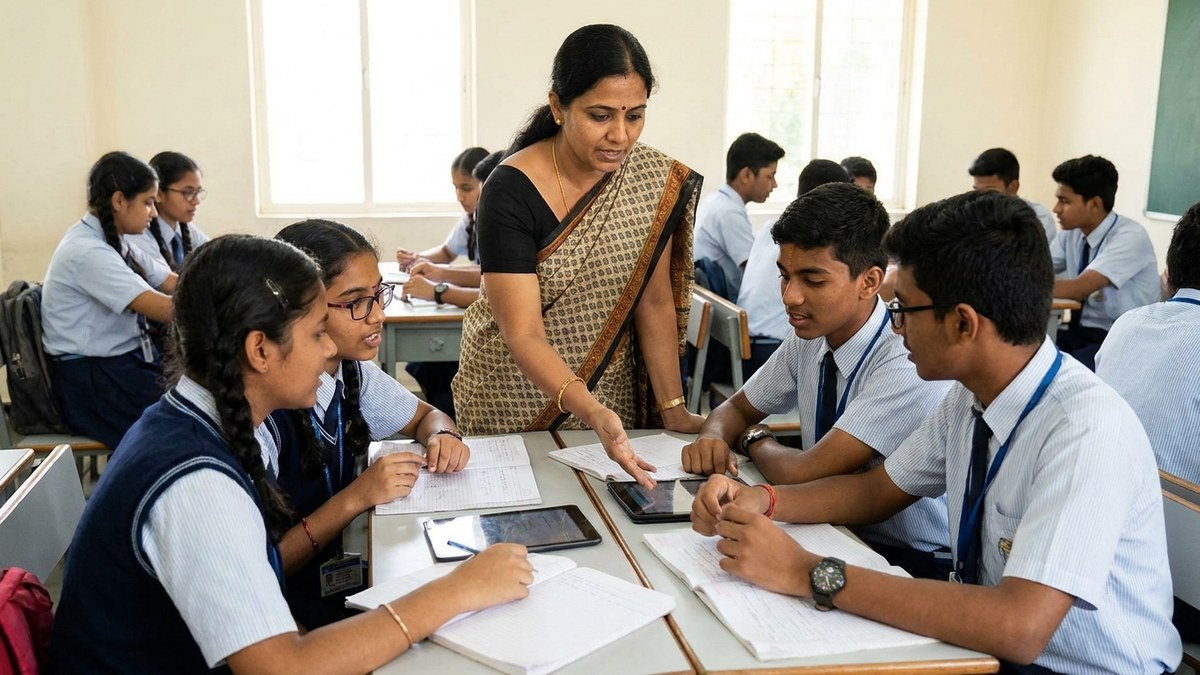
How to Actually Implement Student-Led Teaching
Let’s be direct: most tuition teachers don’t know how to run sessions where students teach each other. They default to lecturing because that’s what they experienced.
Start small. Pick one topic. Divide students into pairs or small groups. Assign one student as the “teacher” for that topic. Give them 10 minutes to explain. The rest ask questions. Rotate roles.
Use Think-Pair-Share in Indian Classrooms as your framework. It’s simple. It works.
Digital tools help tremendously. With APNA PC, you can run a POD that supports collaborative learning beautifully. The complete bundle (Rs.30,000) includes everything: education software, Mini PC i3 7th Gen with 8GB RAM, monitor, keyboard, mouse, webcam, headset, plus 3-year warranty and installation. Students can collaborate on screens. Teachers can monitor progress in real-time. Content stays organized.
The DIKSHA digital learning platform offers free resources aligned with Indian curricula. Layer student-led teaching on top of these resources, and you’ve built something powerful.
Who Benefits Most From Peer Learning
Homemakers: You can run tuition from home using this method. Charge less, deliver more value, have less stress. Students learn from each other while you guide.
Senior citizens: You can mentor grandchildren or neighborhood kids. Collaborative learning reduces the pressure on you to have all the answers. Kids teach each other. You facilitate.
Tuition teachers: This is your path to scaling. Stop being the bottleneck. Build a system where students learn from each other.
Edupreneurs: This is your moat. Most online platforms are one-way. You can build PODs that emphasize student-led teaching. Parents will pay premium fees because results show up faster.
The Bottom Line
Peer learning isn’t a nice-to-have. It’s how humans actually learn best. We’ve ignored this truth for decades, replacing it with lecture halls and passive listening.
If you’re serious about education, start here. Train your students to teach each other. Watch their confidence explode. Watch their retention jump. Watch your own workload drop.
Ready to build a learning pod that harnesses the power of students teaching students? Start your POD today and join educators across India who are proving that the best learning happens when students teach each other.