
Your Students Are Bored. Gamification in Education Examples Will Fix That.
Most classrooms in India still look like they did 30 years ago. A teacher stands. Students sit. Chalk meets board. Minds wander. Here is the truth: children learn faster when they play. Not pretend learning disguised as play. Real play. Real stakes. Real rewards.
Gamification in education examples show us something powerful. When you add game mechanics to learning, engagement shoots up. Not by 10%. By 200%, 300%, sometimes more. A tuition teacher in Mumbai saw her dropout rate fall from 40% to 8% after introducing game-based learning in classrooms. A homemaker running a community learning centre in Delhi watched shy children become confident speakers within weeks. An edupreneur in Bangalore scaled from 50 students to 200 just by redesigning lessons around simple game rules.
Let us be honest: you do not need fancy technology to start. You need strategy. You need to understand what makes games work. Then you apply those principles to your classroom or learning centre.
Gamification in Education Examples: Strategies That Work Right Now
Example 1: Points and Leaderboards. A tuition teacher in Pune created a simple system. Correct answer = 10 points. Helping a peer = 5 bonus points. Top 3 students each week get announced. No prizes needed. Just recognition. Within a month, attendance went from 65% to 92%. Students competed not to beat each other, but to contribute more. That is peer learning techniques at work combined with game mechanics.
Example 2: Level-Based Progress. An edupreneur teaching coding to 9-12 year olds divided the curriculum into 5 levels. Level 1 = Beginner. Level 5 = Master. Students could only move forward after proving competency. They wore badges. They showed their level on their desk. These gamification in education examples work because struggling students stop feeling “behind.” They feel like they are on a journey. Completion rates jumped from 58% to 94%.
Example 3: Missions and Quests. A homemaker running a community learning centre used story-based tasks. “Mission 1: Decode the Ancient Math Problem.” “Quest 2: Solve the Mystery of English Grammar.” Each mission had clear objectives. Each had rewards. Not money. Digital certificates. Extra screen time. Recognition in the community newsletter. Enrollment doubled in one semester.
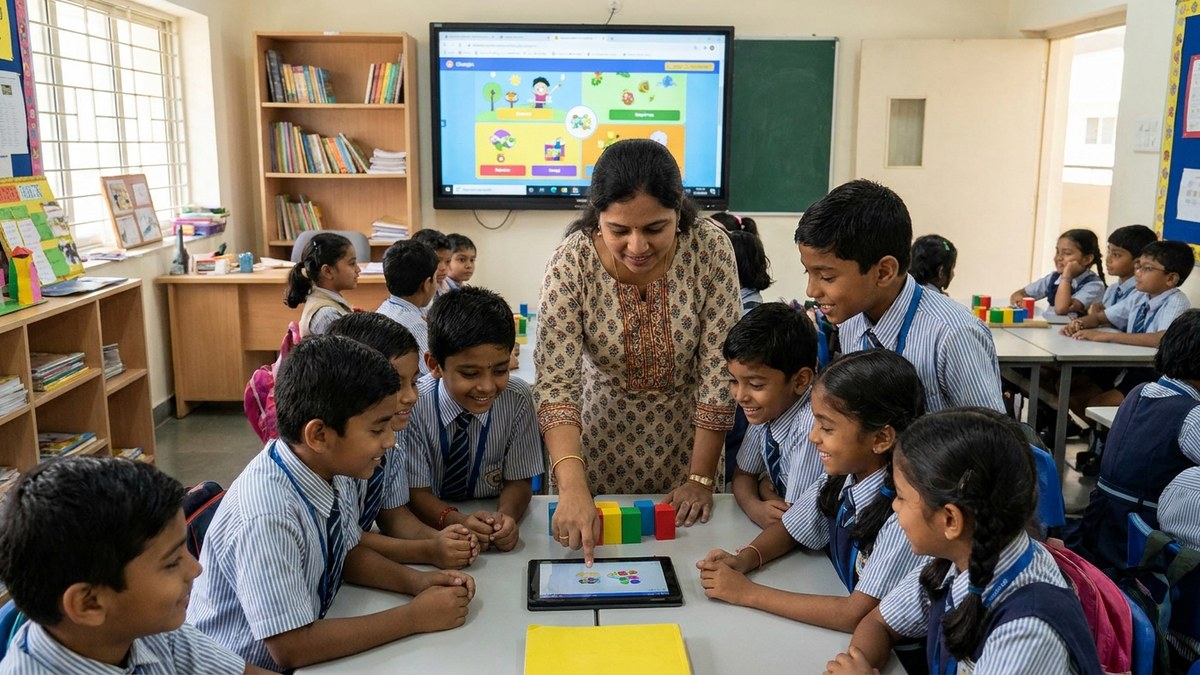
Example 4: Time Challenges and Speed Rounds. A Delhi tuition centre introduced 5-minute speed rounds for math facts. Students competed against the clock, not each other. The leaderboard reset weekly. This meant everyone had a fresh chance to win. Anxiety dropped. Confidence rose. And math facts stuck because students practiced them repeatedly, willingly.
Example 5: Collaborative Challenges. Instead of individual competition, a Bangalore learning centre created team-based missions. Groups of 4 solved problems together. Groups earned points together. The entire class celebrated when any group won. This reduced bullying. It built community. It made learning a shared experience, not a solo battle.
Why Game-Based Learning in Classrooms Actually Sticks
Most people do not realise why games work for learning. It is not the fun. Fun is the wrapper. The real engine is feedback. Games give instant feedback. Wrong answer? Instant response. Right answer? Immediate reward. No waiting for test results two weeks later. No uncertainty. This rapid feedback loop is why brains absorb gamification in education examples and game-based content 40% faster than traditional teaching.
Games also lower fear. When a student fails in a game, they try again. No shame. No permanent record. In a classroom, failure feels permanent. A bad test score becomes part of your identity. In a game, it is just a level you have not passed yet. That psychological shift is enormous.
Gamified teaching strategies also create what researchers call “productive struggle.” The game is hard enough to be interesting, but not so hard that it crushes motivation. Students stay in this zone for hours without complaining. Compare that to a traditional class where students check the clock every 5 minutes.
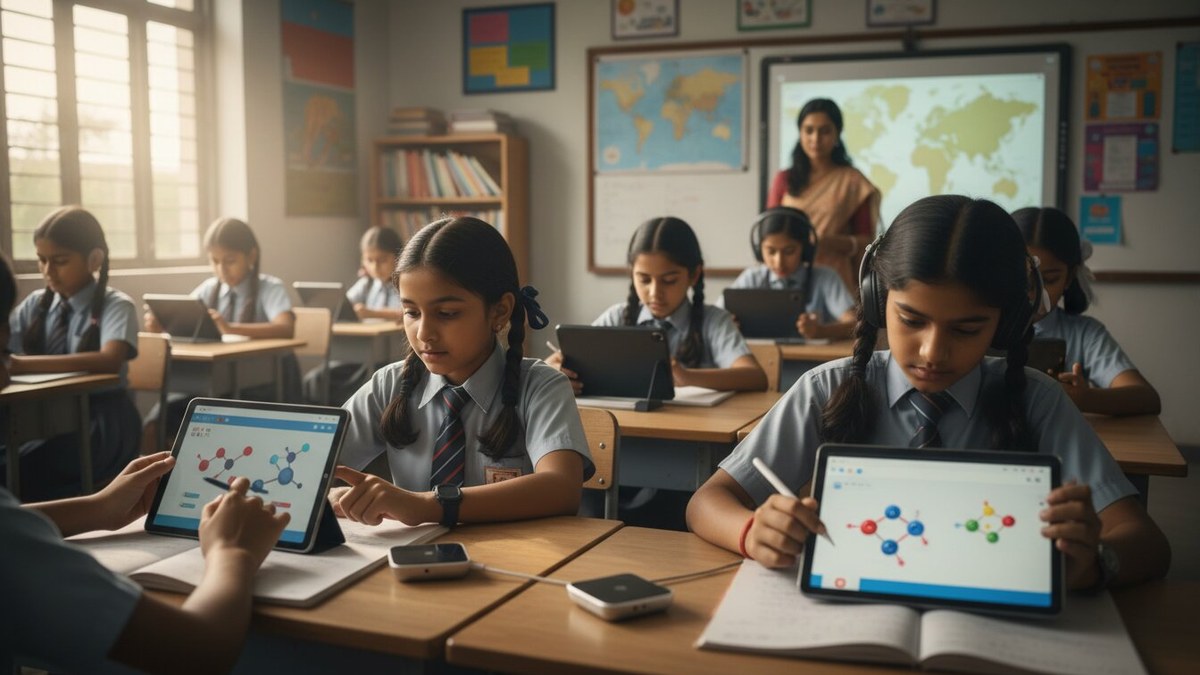
How to Start Gamifying Your Teaching Today
You do not need a budget. You do not need permission from anyone. You can start tomorrow.
- Pick one topic you teach regularly. Math facts. English vocabulary. Science concepts. Anything.
- Design one simple game rule. Points for correct answers. Levels for progress. Badges for milestones. Pick one.
- Introduce it to your students. Explain the rule. Keep it simple.
- Play for 10 minutes. Observe what happens. Most teachers are shocked by the energy shift.
- Expand from there. Add more game mechanics. Introduce leaderboards. Create missions. Build slowly.
Here is the truth: if you want to scale your learning centre or tuition business, gamification in education examples are not optional anymore. Students have phones. They play games. They know what engagement feels like. When they come to your class and sit through lectures, they feel the difference. They leave. They tell friends not to come. You lose students.
But when you gamify, something shifts. Students want to come back. They bring friends. They complete homework without being asked. They recommend you to others. Word spreads fast.
Build Your POD With the Right Tools
If you are serious about this, you need two things: a strategy (which you now have) and the right setup. A Point of Digital Learning centre needs reliable hardware and software. This is where APNA PC comes in.
APNA PC is a complete bundle designed for educators like you. Rs.30,000 gets you everything: education software pre-loaded, Mini PC with i3 7th Gen processor, 8GB RAM, 128GB SSD, monitor, keyboard, mouse, webcam, headset, plus 3-year warranty and installation. No hidden costs. No confusion.
Why does this matter? Because when you implement gamified teaching strategies, you need a system that does not crash. You need a webcam for recording lessons. You need audio for online classes. You need reliable storage for student progress data. APNA PC handles all of this. And the 3-year warranty means you are protected.
Whether you are a homemaker starting a community learning centre, a senior citizen who wants to teach part-time, a tuition teacher expanding your business, or an edupreneur building a network of learning centres, APNA PC gives you the foundation to deliver game-based learning without technical headaches.
Check out the full details at education loan guide to explore your funding options for starting a POD today.
Learn more about education policy from the India Ministry of Education and get broader context from the Education in India overview.