
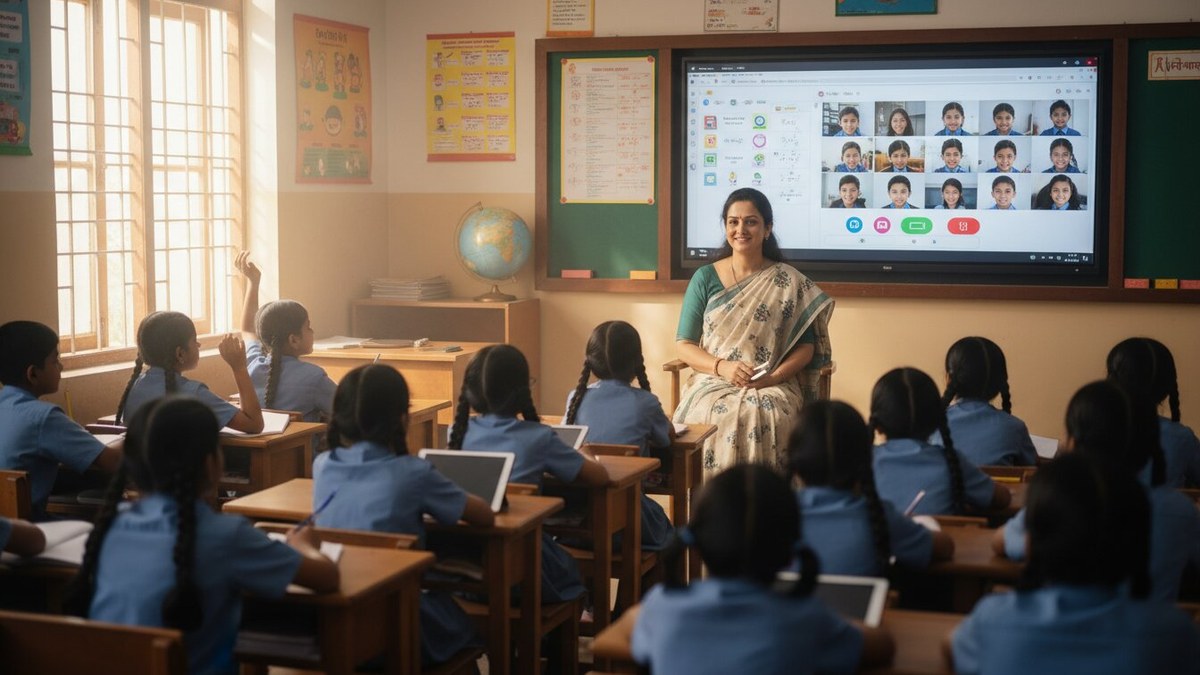
Your child sits in a classroom. The teacher is also on screen. Half the class is physical. Half is online. Is this hybrid learning or blended learning? Nobody knows anymore.
Here is the truth: Most Indian schools have stopped caring about the difference between hybrid learning and blended learning. They use the terms interchangeably. They shouldn’t. For homemakers managing children’s education, tuition teachers building their practice, and edupreneurs launching learning centres, this confusion costs money and results.
Let us be honest. The terminology matters because the execution is completely different. These two models are not the same thing. One requires infrastructure. One requires pedagogy. One is about location. One is about method.
What Hybrid Learning Actually Is
Hybrid learning means the same class happens in two places simultaneously. Students attend in person. Other students join live from home. The teacher delivers one lesson to both groups at the same time. This is what most Indian schools attempted during post-COVID reopening.
The problem is obvious. A teacher cannot give equal attention to students in the room and students on screen. The online students get 40% of the interaction. The in-person students get distracted by the camera. Nobody wins.
This model requires:
- High-speed internet connectivity
- Professional video conferencing setup
- Teacher training in managing dual classrooms
- Student discipline in both spaces
- Proper hardware like APNA PC with webcam and headset
Most Indian schools lack three of these five elements. That is why this approach has failed in most institutions.
Why Blended Learning Beats the Hybrid Learning Approach
Blended learning is different. It mixes online and offline instruction for the same students, but not at the same time. A student might attend class on Monday, Wednesday, Friday. They complete assignments online on Tuesday and Thursday. Or they watch recorded lessons at home and do hands-on activities in school.
It is about mixing methods, not mixing locations. It is flexible. It works in resource-constrained settings. It actually improves learning outcomes when designed properly.
Blended learning works because:
- Teachers can prepare content once and reuse it
- Students learn at their own pace for online portions
- In-person time focuses on discussion and projects
- Assessment happens continuously, not just in exams
- It works with basic technology like APNA PC
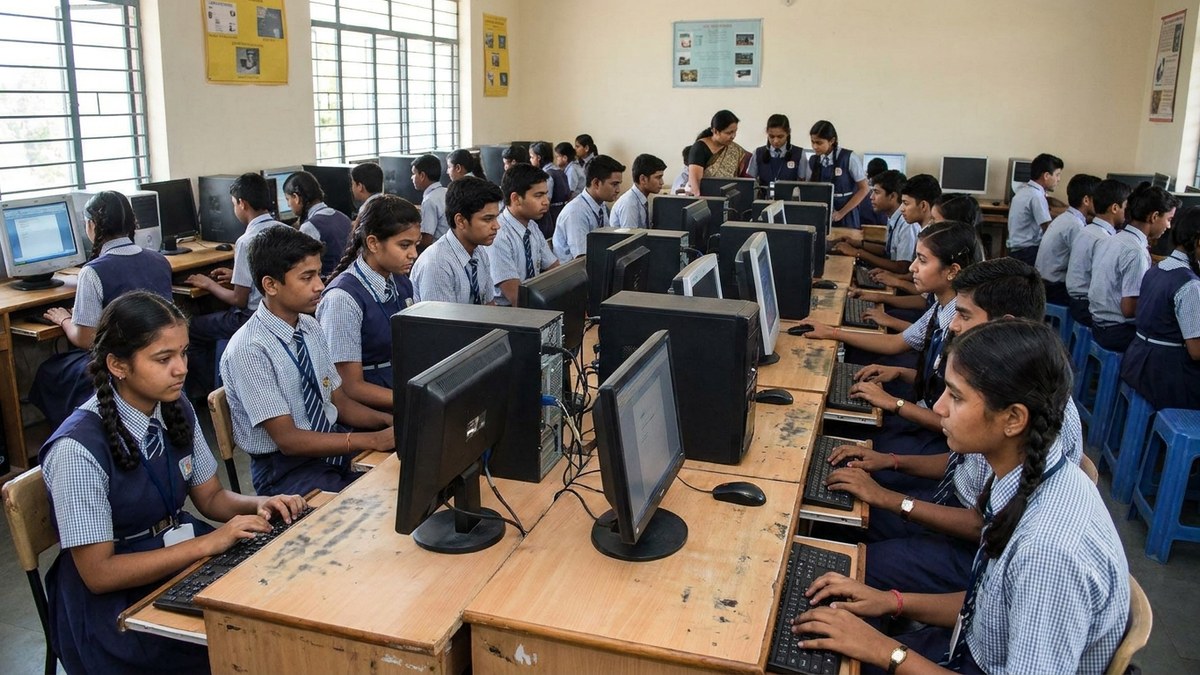
For tuition teachers and edupreneurs running a Point of Digital Learning (POD), blended learning is the answer. You do not need simultaneous broadcasting. You need a structured schedule where students come for certain sessions and work independently for others.
Which Model Works for Indian Schools?
Most people don’t realise that the simultaneous model is a luxury. It requires infrastructure that government schools do not have and many private schools cannot afford. It assumes perfect internet, which India still does not have everywhere.
Blended learning is the practical model for India. It is what the DIKSHA digital learning platform was designed for. It is what the Digital India initiative actually supports.
For your POD or tuition centre, blended learning means you can serve more students with the same resources. You schedule in-person batches on specific days. Students access learning materials online on other days. You use APNA PC as your central hub for content delivery and student management.
The investment is smart. APNA PC costs Rs.30,000 for the complete bundle. You get education software, a 3-year warranty, installation, and hardware (Mini PC i3 7th Gen, 8GB RAM, 128GB SSD, monitor, keyboard, mouse, webcam, headset). This is your entire technology infrastructure for blended learning.
Why This Matters for Your Learning Centre
If you are running a tuition centre or community learning space, choose blended learning. Schedule students in batches. Teach in person during assigned slots. Provide online assignments and recorded content for independent study. Use STEM education India principles to design your content. Track progress through student data projects.
This approach scales. The simultaneous model does not. It requires you to be online and offline at the same time. Blended requires you to be strategic about when you use each method.
Senior citizens looking to contribute to education in their communities should understand this distinction too. Blended learning lets you teach in person during your available hours. You do not need to manage online classrooms. You do not need advanced technical skills. You need structure and clear scheduling.
Homemakers managing children’s education benefit from blended learning because it offers flexibility. Your child attends structured sessions when you can manage it. They work independently on other days. No pressure to be online at exact times. No competing with other families for screen time.
The Real Question
Stop asking whether hybrid or blended learning is better. Ask yourself what you can actually execute with the resources you have. Most Indian schools and learning centres have the resources for blended learning. Few have the resources for the simultaneous model.
Choose blended. Design it properly. Invest in the right tools like APNA PC. Train your educators. Track your results. Scale steadily.
That is how you build sustainable education delivery in India.
Get your APNA PC bundle today and start your blended learning centre. Visit teachtoearn.in to order yours.