
Most People Don’t Realise Reading Comprehension Is A Skill, Not A Gift
Your daughter stares at a page for twenty minutes and remembers nothing. Your tuition student can decode every word but fails to answer a single question. You’re convinced they lack aptitude. Here’s the truth: they’ve never been taught how to read strategically. Reading comprehension isn’t something you’re born with. It’s a learned skill, and Indian students especially suffer because our classrooms treat it like a passive activity instead of an active process.
Whether you’re a homemaker helping your child prepare for bank exams, a senior citizen wanting to stay sharp, a tuition teacher struggling to improve student scores, or an edupreneur building a learning centre, these strategies matter. They matter because exam scores depend on them. Career advancement depends on them. Confidence depends on them.
Let’s be honest: most reading training in India focuses on speed. Read faster, they say. Skim more, they say. But faster reading without understanding is just wasting paper. We need to flip this approach entirely.
The Three Non-Negotiable Reading Comprehension Strategies That Work
Stop trying seventeen different methods. Stick to what actually works.
- Pre-reading: Activate Your Brain Before You Start Most students jump straight into the passage. Wrong move. Spend 30 seconds scanning the title, headings, and first sentence. Ask yourself: what do I already know about this topic? What am I about to learn? This primes your brain to absorb information faster. For bank exams, this technique cuts reading time by 15-20% without sacrificing accuracy.
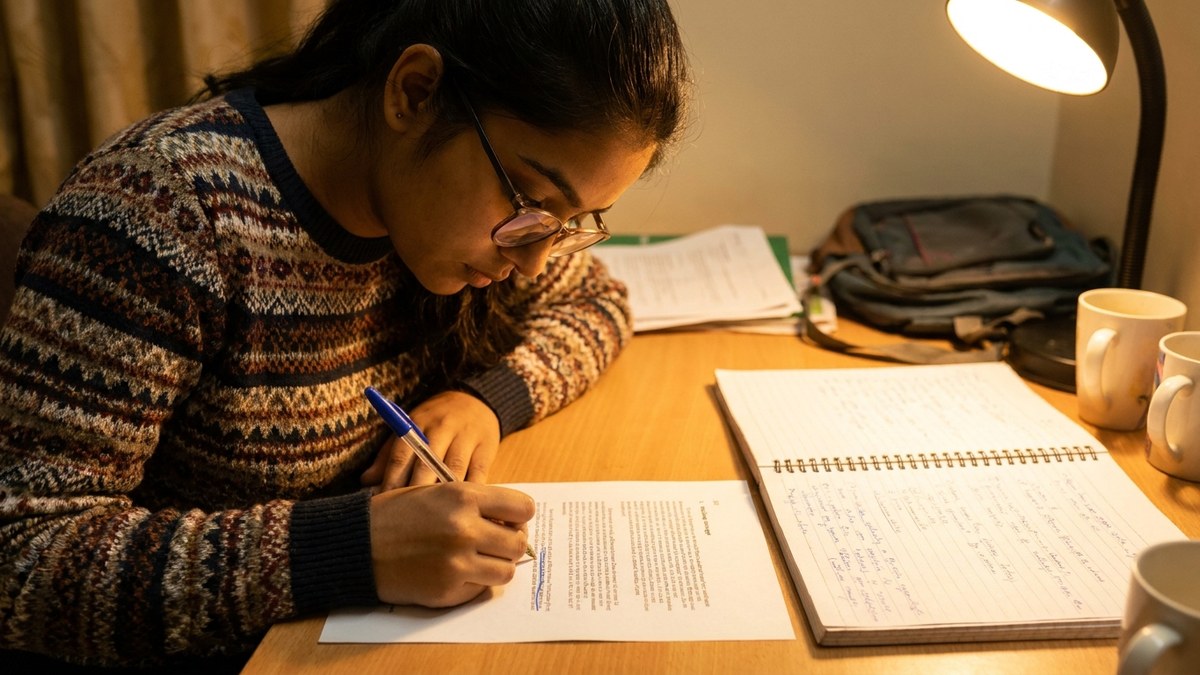
- Active Annotation: Mark As You Go Underlining random words is useless. Instead, mark only three things: the main idea of each paragraph (one mark), any word you don’t know (circle it), and any detail that answers a potential question (bracket it). This forces your brain to engage with the text instead of letting your eyes glaze over. When you finish reading, you’ve already identified 70% of what the questions will ask.
- Question Prediction: Guess Before You Read the Options After reading each paragraph, pause. What question could be asked about this? Write it down in two words. When you reach the actual questions, you’ll recognise your prediction or spot the correct answer faster. This is how Education in India should be taught, but rarely is.
Reading Comprehension for Bank Exams: The Specific Approach
Bank exams like IBPS, SBI, and RRB have a specific format for this section. You get 5-7 passages with 40-50 questions total. Time pressure is brutal. Generic strategies won’t cut it.
- Read the questions first (only the question stem, not the options). Now you know what to hunt for in the passage.
- Skim the passage looking only for those specific details. Ignore everything else.
- Return to the options only when you’ve located the relevant information in the text.
- Never rely on your general knowledge. The answer is always in the passage. Always.
This approach saves 3-4 minutes per passage. In a 60-minute exam, that’s the difference between finishing confidently and panicking through the last two passages.

Vocabulary: The Silent Killer
You can use perfect comprehension strategies, but if you don’t know what 30% of the words mean, you’ll still fail. This is especially true for Indian students taking competitive exams where passages use advanced English.
Don’t memorise word lists. Instead, maintain a “passage vocabulary notebook.” Every time you encounter an unfamiliar word in a passage, write it down with its context. Review these words weekly. You’ll remember them because you’ve seen them in real passages, not in isolation.
Building a Reading Habit: The Real Foundation
All the strategies in the world won’t help if you read once a week. This skill improves through consistent exposure. Read something every single day. Not textbooks. Real material: news articles, blogs, short stories, opinion pieces.
Start with 15 minutes daily. Gradually increase to 30 minutes. Your brain needs this repetition to develop speed, vocabulary, and understanding simultaneously. UNICEF India education reports consistently show that reading frequency directly correlates with exam performance.
Why Your Learning Environment Matters More Than You Think
Here’s what most people miss: you can’t develop strong comprehension skills in a chaotic environment. Distractions destroy focus. If you’re running a tuition centre or learning space, you need proper infrastructure. A quiet room. Good lighting. A screen for teaching passages. Ideally, a computer setup where students can practice digital comprehension (which is increasingly common in modern exams).
This is where APNA PC changes the game. A complete bundle at Rs.30,000 gives you a Mini PC (i3 7th Gen, 8GB RAM, 128GB SSD), monitor, keyboard, mouse, webcam, and headset. Plus 3-year warranty and installation. For a tuition teacher or edupreneur running a Point of Digital Learning (POD), this setup lets you teach these techniques on screen, show smart board for classroom teaching methods, and let students practice in a distraction-free digital environment.
Your students deserve to learn this skill properly. They deserve a space where focus is possible. They deserve strategies that work, not motivational speeches.
If you’re serious about improving comprehension outcomes, invest in both strategy training and the right environment. Explore APNA PC today and see how proper infrastructure accelerates learning results. For educators interested in comprehensive training approaches, consider exploring a special education teacher course that applies universal design principles to instruction.
Reading comprehension isn’t magic. It’s methodology. Master the strategies. Build the habit. Create the environment. Watch your students transform from frustrated page-starers into confident, strategic readers.