
Why Most Teachers Still Don’t Know How Their Students Actually Learn
Here’s the truth: you can teach the same lesson to 30 students and watch 10 of them light up while 20 stare blankly. Not because they’re lazy. Not because you’re a bad teacher. The real reason is simpler and more fixable than you think. They learn differently.
Learning styles matter. Whether you’re a homemaker tutoring your grandchild, a senior citizen volunteering at a community centre, or running a tuition centre, understanding how different students absorb information will change everything about how you teach. The problem is that most educators in India have never been trained to identify these styles, let alone adapt their teaching around them.
Let’s be honest: the traditional “stand and deliver” classroom doesn’t work for everyone. And once you understand why, you’ll stop blaming yourself when a student struggles.
The Four Learning Styles You Need to Know
David Kolb’s model gives us a practical framework. Most people don’t realise that this theory has been tested and refined for decades. It identifies four distinct ways people process information. Knowing these four learning styles will help you immediately recognise what works for each student.
- Concrete Experience (Activists): These students learn by doing. They need hands-on activities, experiments, real-world problems. Give them a math problem on paper and they’re lost. Build it with blocks or money, and they understand instantly. In Indian households, this is the child who learns cooking by standing in the kitchen, not by reading a recipe.
- Reflective Observation (Reflectors): They learn by watching and thinking. They need time to process. They ask “why” constantly. They prefer group discussions, case studies, and time to think before answering. These students often get labeled as “slow” when they’re actually thorough.
- Abstract Conceptualisation (Theorists): These are your logical, systematic learners. They want the big picture first. They love diagrams, frameworks, structured information. They need to understand the “why” before the “how.” Many Indian students excel here because our system rewards this style, but it leaves others behind.
- Active Experimentation (Pragmatists): They learn by trying things out and testing ideas. They want to know how to use what they’ve learned immediately. They’re impatient with theory alone. They need projects, simulations, and real applications.
How to Identify Which Style Your Student Has
You don’t need a fancy assessment tool. Watch. Listen. Ask simple questions.
When you explain something new, notice who immediately wants to try it (Activist), who asks clarifying questions (Reflector), who wants to understand the theory first (Theorist), and who asks “how will I use this” (Pragmatist). Within a week of observation, you’ll see the pattern.
Ask your students directly: “Do you learn better by doing, watching, listening to explanations, or trying things out?” Most will know their own preference. Parents and guardians can also tell you. The child who disassembles toys is likely an Activist. The one who reads instruction manuals is probably a Theorist.
Here’s what matters: most students aren’t purely one style. They’re blends. Your job is to identify their dominant preference and teach to that first, then gradually expose them to other styles. This is exactly what educators learn in the Nursery Teacher Training Course, where child psychology and individual differences form the foundation.
Teaching Every Type of Student in Your Classroom or Learning Centre
Once you know your students’ learning styles, here’s how to adapt.
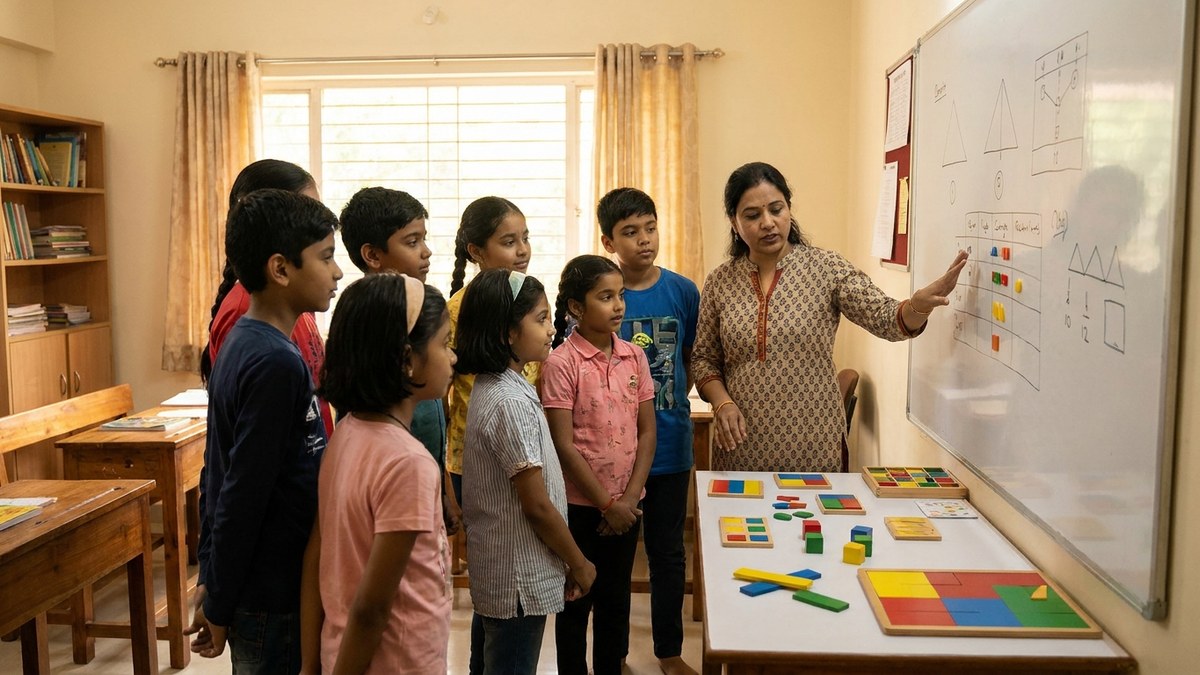
For Activists: Use experiments, role-plays, field trips, problem-solving activities. Let them move around. Make learning physical. In a maths class, have them measure the room. In a language class, have them act out stories.
For Reflectors: Give them time. Use pair work, small group discussions, observation tasks. Ask them to keep learning journals. Don’t rush them to answer. Their silence isn’t confusion; it’s processing.
For Theorists: Provide structured notes, diagrams, flowcharts, logical progressions. Explain the system. Answer their “why” questions thoroughly. Use videos that explain concepts clearly.
For Pragmatists: Show them real-world applications immediately. Use case studies, projects with deadlines, and practical challenges. Connect theory to practice always.
The best teaching mixes all four. Start with the theory (Theorist). Show how it works in practice (Pragmatist). Let them try it (Activist). Give them time to reflect (Reflector). Repeat.
Why Learning Styles in Education Matter More Than Ever in India
India’s education system has traditionally favored one style: the Theorist. Rote learning, board work, and passive listening have dominated for decades. But the world is changing. Students need to think, create, and solve problems. That requires engaging every type of learner. Different learners need different approaches, not one-size-fits-all lectures.
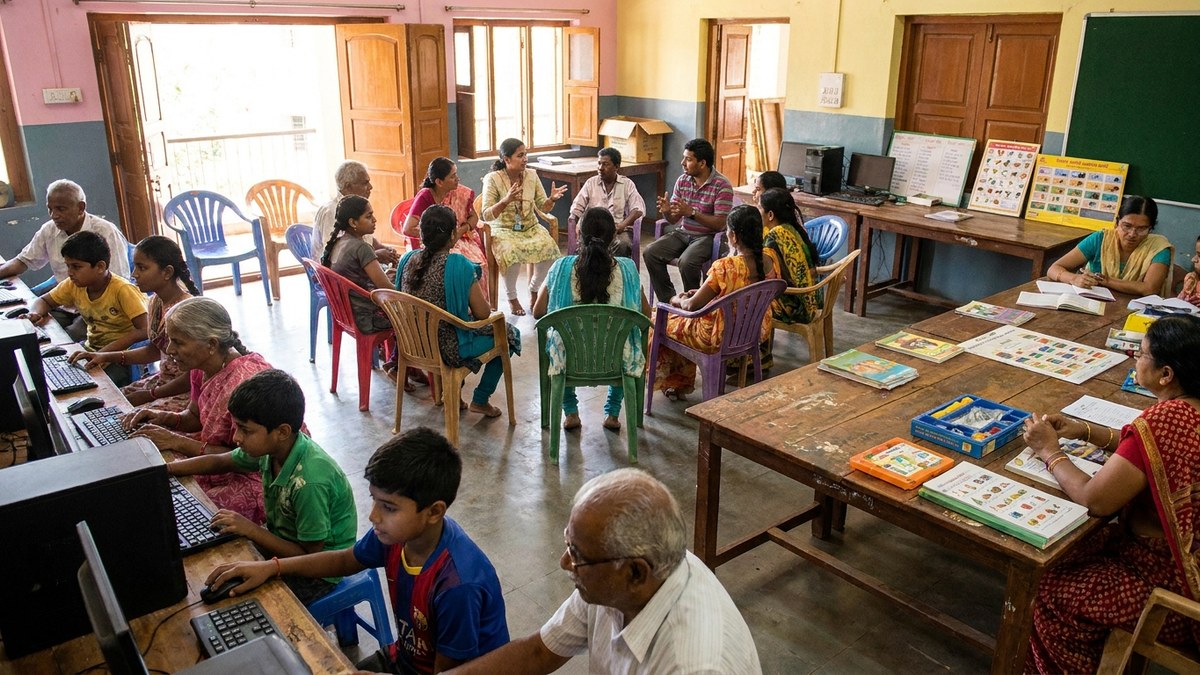
Whether you’re running a Point of Digital Learning centre or tutoring from home, understanding how your students learn gives you an edge. You’ll see faster progress. Students will feel understood. Parents will notice the difference.
For more on how education is evolving in India, read about Education in India and explore platforms like DIKSHA platform which recognises diverse learning needs.
The comparison between Vocational Training vs Degree also highlights how different learners need different pathways.
The Tool That Makes Teaching Every Style Possible
Here’s what separates successful educators from the rest: they use technology smartly. You can’t deliver personalised learning for every style without tools that help you track, adapt, and deliver content in multiple formats.
That’s where APNA PC comes in. A complete bundle at just Rs.30,000 that includes education software, a Mini PC (i3 7th Gen, 8GB RAM, 128GB SSD), monitor, keyboard, mouse, webcam, and headset, plus 3 years warranty and installation. Everything you need to run a professional Point of Digital Learning centre or enhance your home tutoring setup.
With APNA PC, you can deliver video lessons for Theorists, interactive simulations for Activists, discussion forums for Reflectors, and project management tools for Pragmatists. All from one platform. All designed for Indian educators and learners.
Stop teaching the same way to every student. Start recognising how they actually learn. Get APNA PC today and give every student the chance to learn their way.