
The Grading System in India: What Parents and Teachers Actually Need to Know
Your child’s report card arrived. You saw a CGPA of 8.2 and felt relief. But do you actually know what that number means? Most parents do not realise that India’s grading system in India varies wildly depending on which board your child attends. CBSE uses one scale. State boards use another. Some schools mix percentages with grades. The confusion is real, and it directly impacts how you assess your child’s actual performance.
Here is the truth: without understanding how your board evaluates students, you cannot make informed decisions about tutoring, subject choices, or career paths. This post breaks down exactly how CBSE and state boards grade, what CGPA calculation really means, and why the CBSE grading scale matters for your child’s future.
CBSE Grading Scale: The Nine-Point System Explained
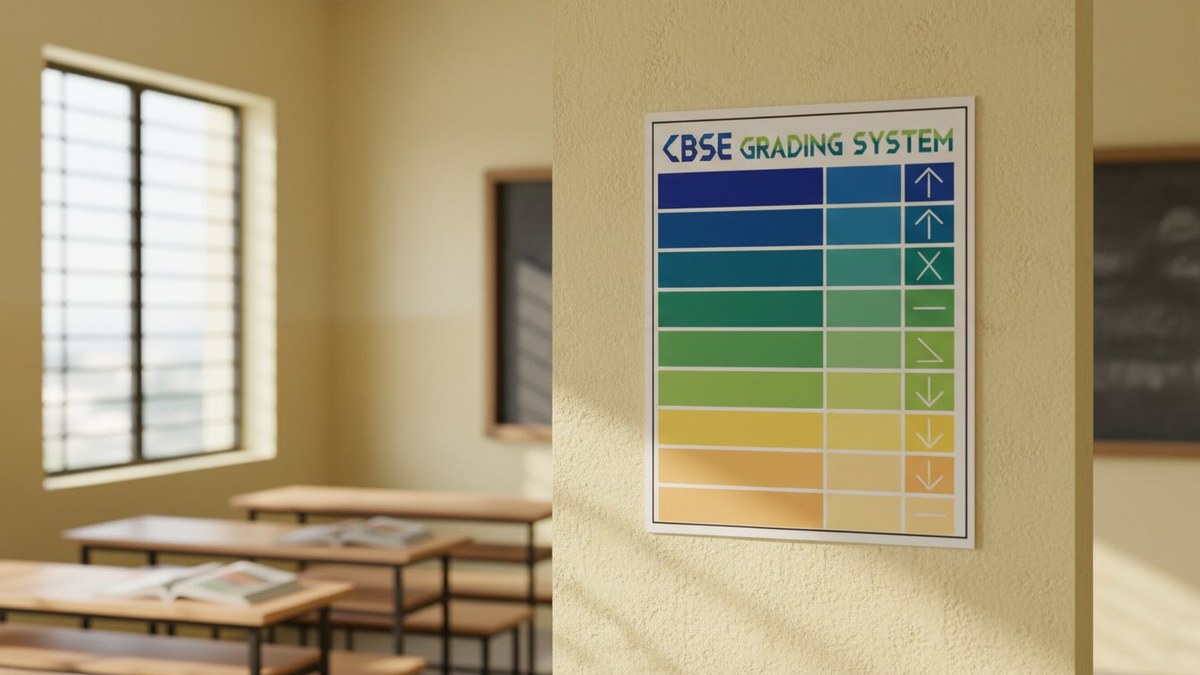
The Central Board of Secondary Education introduced a nine-point grading scale years ago. It replaced pure percentages with letter grades tied to numerical bands. This shift confused many parents initially. Some still think it is softer than percentage-based marking. It is not.
Here is how the CBSE grading scale works:
- A1 (91-100): Exceptional performance
- A2 (81-90): Very good
- B1 (71-80): Good
- B2 (61-70): Satisfactory
- C1 (51-60): Adequate
- C2 (41-50): Needs improvement
- D (33-40): Poor
- E1 (21-32): Very poor
- E2 (00-20): Fail
Each grade carries a point value. A1 is 10 points. A2 is 9 points. This is where CGPA calculation enters the picture. Your child’s Cumulative Grade Point Average is the weighted average of all subject grades. It is not a percentage. It is a compressed representation of performance across all subjects.
Let us be honest: colleges and employers still want to see high CGPA scores. A 9.0 CGPA looks vastly better than a 7.5 CGPA, even though the percentage difference might be smaller than you think. The grading system in India has created a psychological impact that numbers alone never achieved.
For official information on CBSE standards, check the CBSE official website or read more on the Central Board of Secondary Education Wikipedia page.
State Board Grading System in India: A Different Animal Entirely
Most people do not realise that state boards across India use completely different evaluation methods. Maharashtra, Tamil Nadu, Karnataka, Gujarat, Rajasthan – each has its own system. Some still use pure percentages. Others use grades. A few use hybrid models.
Maharashtra boards, for example, use a 100-point scale with percentage-based results. Tamil Nadu uses a 5-point scale. Karnataka has shifted toward grade-based systems in recent years. This fragmentation means a student scoring 85% in a state board might not be directly comparable to a CBSE student with an A1 grade.
Here is what matters: state board evaluation tends to be more lenient in some regions and stricter in others. State board cutoffs for merit lists differ dramatically. If you are running a tuition centre or coaching institute, you need to understand these local variations. Parents planning to shift schools or boards should factor in these grading differences.
The practical implication is significant. A student transferring from a state board to CBSE might find the grading suddenly more competitive. Conversely, a CBSE student moving to a state board might see their grades improve without any real change in performance.
CGPA Calculation: The Math Behind the Number
CGPA calculation is straightforward once you understand the premise. Take the grade points for each subject. Multiply by the credit hours or weightage for that subject. Add them all up. Divide by total credit hours. That is your CGPA.
Example: If your child scores A1 in English (10 points, 1 credit), A2 in Math (9 points, 1 credit), and B1 in Science (8 points, 1 credit), the CGPA is (10+9+8)/3 = 9.0.
Most schools now display CGPA on report cards. Some parents still ask for percentage conversion. The conversion exists, but it is not standardised across boards. This creates more confusion.
The real issue: CGPA matters for college admissions, scholarship eligibility, and competitive exam cutoffs. A difference of 0.5 CGPA points can mean the difference between getting into your target college or not. This is why understanding your board’s grading system in India is not academic trivia. It is crucial information for your child’s future.
Why Your Child’s Board Matters More Than You Think
If you are considering starting a coaching institute franchise in India, you need to know that different boards require different teaching approaches. CBSE students need to understand conceptual depth. State board students often need to memorise specific textbook content. The grading systems reward different skill sets.
Parents often ask: which board is easier? The answer is not simple. CBSE is nationally standardized but competitive. State boards vary by region. Some state boards have easier grading but tougher entrance exams. Others have stricter grading but more straightforward college admissions.
Here is what you should do: understand your child’s specific board’s evaluation criteria. Request detailed feedback from teachers beyond just grades. Track performance trends, not single report cards. If your child is considering vocational courses after 12th, know that some boards weight practical assessments differently than theory.
Setting Up Your Home Learning Space for Success
Whether your child attends CBSE or state board, effective learning happens in the right environment. Many parents and educators are now running Point of Digital Learning (POD) centres from home or community spaces. These centres need proper infrastructure to deliver quality education aligned with board requirements.
A dedicated learning setup includes a reliable computer system. This is where APNA PC comes in. For just Rs.30,000, you get a complete bundle: education software pre-loaded, 3-year warranty, professional installation, and hardware (Mini PC i3 7th Gen, 8GB RAM, 128GB SSD, monitor, keyboard, mouse, webcam, headset). It is built for educators and learners who need stability, not flashy upgrades.
A POD run by a trained educator using proper technology can deliver results aligned with any board’s grading system. Students get personalised attention. Teachers track progress systematically. Parents see measurable improvement in CGPA and grades.
Final Word: Stop Chasing Grades, Start Understanding Systems
The grading system in India is not designed to confuse you. It is designed to standardise evaluation. But standardisation across 28 states and multiple boards is messy. Your job as a parent or educator is to decode your specific board’s system and work within it strategically.
Do not obsess over a single grade. Understand the CBSE grading scale or your state board’s criteria. Know how CGPA calculation impacts your child’s options. Set up a proper learning environment. Get support from trained educators if needed.
Your child’s future depends not on gaming the system, but on genuinely understanding it.