
Why Vernacular Teaching in India Isn’t a Compromise. It’s the Real Deal.
Here’s the truth: Most people don’t realise that vernacular teaching in India isn’t about dumbing down education. It’s about making it stick. When a child learns in her mother tongue, her brain doesn’t waste energy translating. She understands faster. She retains longer. She asks better questions.
Yet we still treat regional language education like a stepping stone to “real” learning in English. Wrong. Dead wrong.
If you’re a homemaker running tuition from home, a senior citizen sharing knowledge in your community, or an edupreneur building your own learning pod, vernacular teaching is your superpower. Not your limitation. The market agrees. States like Tamil Nadu, Gujarat, and Maharashtra have seen learning outcomes jump when students study in their mother tongue first.
This blog shows you exactly how to create educational content in regional languages, build your Point of Digital Learning (POD), and reach students who learn best in the language they think in.
The Real Problem with English-Only Teaching
Let’s be honest: forcing every student into English-medium education creates three immediate problems.
- Comprehension gap. A student struggling with English syntax can’t focus on maths concepts. She’s stuck decoding words instead of solving problems.
- Confidence crash. When a child can’t express herself in the language of instruction, she stops raising her hand. She stops asking. She stops learning.
- Dropout risk. Rural and semi-urban students especially abandon education when the medium feels foreign. Vernacular content keeps them engaged.
Regional language education solves this. When you teach in Marathi, Tamil, Kannada, Telugu, or Bengali, you’re not lowering standards. You’re removing the language barrier so actual learning can happen.
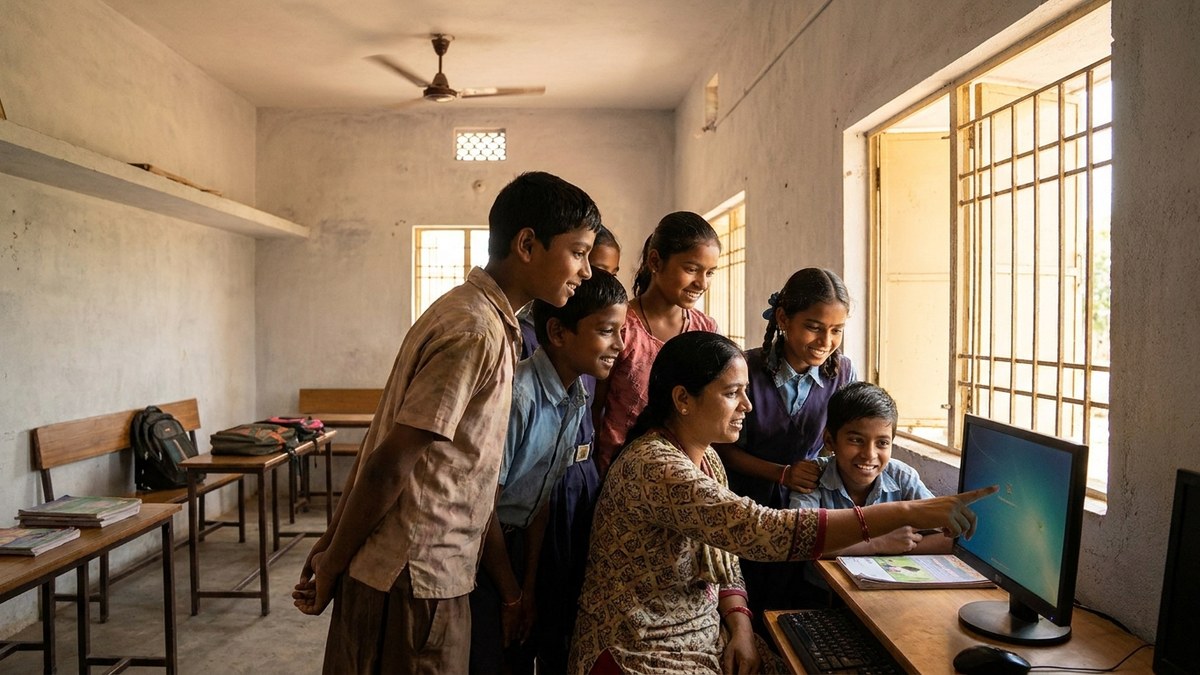
How to Create Vernacular Educational Content That Actually Works
Creating content in regional languages isn’t just translation. Translation is lazy. It’s copying English material word-for-word into another language. That fails because idioms, examples, and context don’t travel.
Here’s what works:
- Localise, don’t translate. A maths problem about apples means nothing to a village child. Rewrite it with mangoes, coconuts, or rice. Use local examples. Use local currency. Use local references your students already know.
- Record in your own voice. Don’t hire expensive voice actors. Your students trust your voice. Your accent is fine. Your pace is fine. Your warmth matters more than perfection.
- Use free tools first. You don’t need fancy software. Google Slides works in every language. So does OBS Studio for recording. Canva has templates in regional languages. Start simple. Scale later.
- Build community feedback loops. Ask your students what confuses them. Ask parents what their children discuss at home. Let vernacular content evolve based on real feedback, not guessing.
- Mix video, text, and audio. Some students learn by watching. Others by reading. Others by listening. Vernacular content works best when you offer all three formats in the same language.
The DIKSHA portal already hosts thousands of vernacular resources. Study what works. Adapt it. Add your own voice.
Setting Up Your POD for Regional Language Teaching
A Point of Digital Learning (POD) is a physical or online space where students gather with a trained educator. It’s not a formal school. It’s more intimate. More flexible. More responsive to local needs.
To run a successful vernacular POD, you need three things:
- Hardware that works. You need a reliable system. APNA PC is built for exactly this. It’s a complete bundle: Mini PC i3 7th Gen, 8GB RAM, 128GB SSD, monitor, keyboard, mouse, webcam, and headset. All for Rs.30,000. Includes 3-year warranty and installation. No hidden costs. No surprises. It handles video conferencing, content creation, and student management without breaking a sweat. Perfect for running a POD from home or a community centre.
- Content in the right language. Everything your students see and hear should be in their mother tongue. Menus. Instructions. Lessons. Assessments. No code-switching. No confusion.
- A trained educator. That’s you. You don’t need a degree in education technology. You need patience, local knowledge, and willingness to learn alongside your students.
Check out best edtech apps for Indian teachers to find tools that support regional languages. Many mainstream apps still don’t. Choose ones that do.
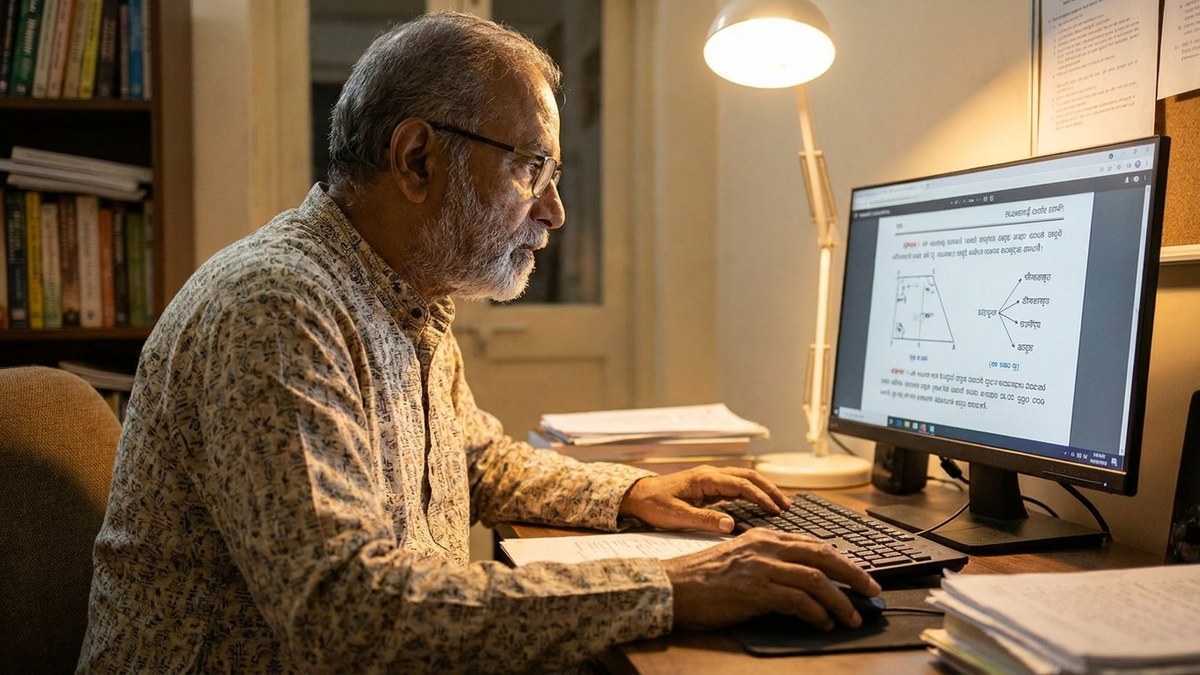
Assessment and Grading in Vernacular Learning
Here’s where most educators stumble. They teach in regional languages but assess in English. That defeats the entire purpose.
Your assessments must be in the same language as your teaching. When you test a student in English after teaching in Tamil, you’re testing language skills, not subject knowledge. Two different things.
Use formative assessment. Quick quizzes. Group discussions. Peer feedback. All in the vernacular. Save formal exams for when students are ready. And when they do take board exams, they’ll have deep conceptual clarity to fall back on.
Understand how CBSE and state board grading systems actually work. State boards often allow vernacular medium. Use that. It’s not a weakness. It’s policy.
Why Homemakers and Senior Citizens Are Perfect for This
You have something formal educators don’t: community trust and local knowledge.
A homemaker knows the neighbourhood. She knows which children struggle. She knows which families need flexible timings. She can create a POD that fits real lives, not a rigid timetable.
A senior citizen brings experience. You’ve lived through the education system. You know what actually matters. You can teach in the language you grew up with. Your students see you as a bridge between old wisdom and new tools.
Both of you can start small. One subject. Five students. One language. Grow from there. APNA PC gives you the hardware to scale without the capital investment.
The Business Case for Vernacular Teaching
Let’s talk money. Parents in tier-2 and tier-3 cities are desperate for quality education in their children’s mother tongue. They’ll pay. Not premium fees. But consistent fees for consistent results.
A POD with 15-20 students, charged Rs.500-1000 per month per student, generates Rs.7,500-20,000 monthly. Enough to cover hardware costs in 2-3 months. After that, it’s profit.
Edupreneurs are already seeing this. Check UNESCO education resources for global data on mother tongue teaching. The trend is clear. Vernacular education works. And it pays.
Your Next Step
Don’t wait for the perfect setup. Don’t wait for a fancy degree. Don’t wait for someone to give you permission.
Start now. Pick one subject. Pick one language. Pick five students. Record one lesson on your phone. See what happens.
When you’re ready to scale, when you want to run a proper POD with video conferencing, content management, and student tracking, that’s when APNA PC becomes your foundation. Rs.30,000. One-time investment. Three-year warranty. Everything included.
Start your vernacular POD today. The students are waiting. They’re waiting in your language.