
A growth mindset in students is the belief that abilities and intelligence can be developed through effort, practice, and learning from mistakes. Teachers who cultivate this mindset help students become resilient, curious, and willing to take on challenges.
What Is a Growth Mindset and Why Does It Matter in Education?
A growth mindset is the understanding that intelligence, talent, and ability are not fixed traits but can be improved over time. The opposite is a fixed mindset, where students believe their abilities are set in stone. Research from Stanford on growth mindset and enhanced learning shows that students with a growth mindset perform better academically, persist longer on difficult tasks, and recover faster from setbacks.
In the Indian education context, where competitive exams and high expectations are common, a growth mindset protects students from anxiety and burnout. Instead of fearing failure in board exams or entrance tests, they view preparation as a skill to be built. This mindset is especially valuable for students preparing for NEET, JEE, or other standardised tests, where sustained effort and learning from mistakes are critical.
How Can You Spot Fixed vs Growth Mindset in Your Students?
Recognising fixed and growth mindset patterns in your students helps you respond with the right support. The table below shows common statements and behaviours:
| Situation | Fixed Mindset Response | Growth Mindset Response |
|---|---|---|
| Student gets a low score | “I’m bad at this subject. I’ll never pass.” | “I didn’t understand this topic. Let me ask for help and try again.” |
| A task is difficult | “This is too hard. I’m giving up.” | “This is challenging. I’ll break it into smaller steps.” |
| A peer does better | “They’re smarter than me. I can’t compete.” | “They worked differently. What can I learn from their approach?” |
| Feedback is given | “The teacher is criticising me. I’m not good enough.” | “This feedback shows me what to improve. I’ll work on it.” |
| Learning something new | “I don’t know how to do this yet, so I won’t try.” | “I don’t know how to do this yet. I’ll practise and learn.” |
Listen for the word “yet” in your students’ speech. A student who says “I can’t do algebra yet” is already thinking with a growth mindset. Your job is to reinforce and expand this thinking.

How Can Teachers Develop Growth Mindset in Students? Six Practical Strategies
Use these evidence-based strategies in your teaching to help students build a growth mindset:
- Praise effort, not talent. Instead of saying “You’re so smart,” say “You worked really hard on that problem, and it shows.” Effort-based praise teaches students that success comes from their actions, not from being naturally gifted. This shifts their focus from proving themselves to improving themselves.
- Teach the brain as a muscle. Explain to students that the brain grows when they struggle. Use simple science: when they learn something new, their brain forms new connections. Share that even small daily practice strengthens these connections. This helps students see difficulty as a sign of growth, not failure.
- Use “yet” language consistently. When a student says “I can’t do this,” add “yet” to the end: “You can’t do this yet, but with practice you will.” This one word keeps the door open to improvement and removes the finality of failure.
- Normalise mistakes as part of learning. Share your own mistakes in front of students. Show how you solved them. Create a classroom culture where mistakes are discussed openly, not hidden. When students see mistakes as information, not shame, they take more risks and learn faster.
- Set process goals, not just outcome goals. Instead of focusing only on exam results, try “Revise for 1 hour daily and solve 5 practice problems each week.” Process goals are in the student’s control and build confidence as they complete them. Outcome goals depend on many factors outside their control.
- Offer specific, actionable feedback. Instead of “Good job,” say “You solved this correctly by breaking it into three steps. Next time, try explaining why each step works.” Specific feedback shows students exactly what they did well and what to improve, which builds a growth mindset faster than vague praise.
MIT’s teaching resources on growth mindset confirm that these strategies work across cultures and age groups, from primary school to adult learners.
Where Can You Apply Growth Mindset Teaching Across Different Learning Contexts?
The context in which you teach shapes how you apply growth mindset strategies. Whether you run a tuition centre, teach at home, or work in a school, the core principles stay the same, but the approach shifts.
In a tuition or home setting, you have the advantage of one-on-one or small group teaching. Use this to give detailed feedback and notice when a student is stuck. Ask “What have you tried so far?” instead of giving the answer. This builds problem-solving skills and shows students that struggle is expected.
In a school classroom, create peer learning opportunities. Pair a student who understands a concept with one who doesn’t. The first student explains (which deepens their own learning), and the second student learns from a peer, often in language they understand better. Both build a growth mindset through the process.
For edupreneurs and learning centre owners, train your staff to use growth mindset language. Consistency across all teachers matters. If one teacher praises talent and another praises effort, students get mixed messages. Use tools like best note-taking apps for college students in India to help students track their learning progress and see their own growth over time.
What Technology and Tools Support Growth Mindset Development?
Modern tools can reinforce growth mindset thinking in your students. Digital platforms allow students to track their progress, revisit mistakes, and see improvement over weeks and months. This visual record of growth is powerful.
For students working on research projects, tools like how to use Perplexity AI for student research projects teach them to ask better questions and learn from multiple sources, which is a growth mindset skill. Similarly, Suno AI educational songs guide for teachers shows how creative tools can make learning engaging and help students see learning as an active, creative process.
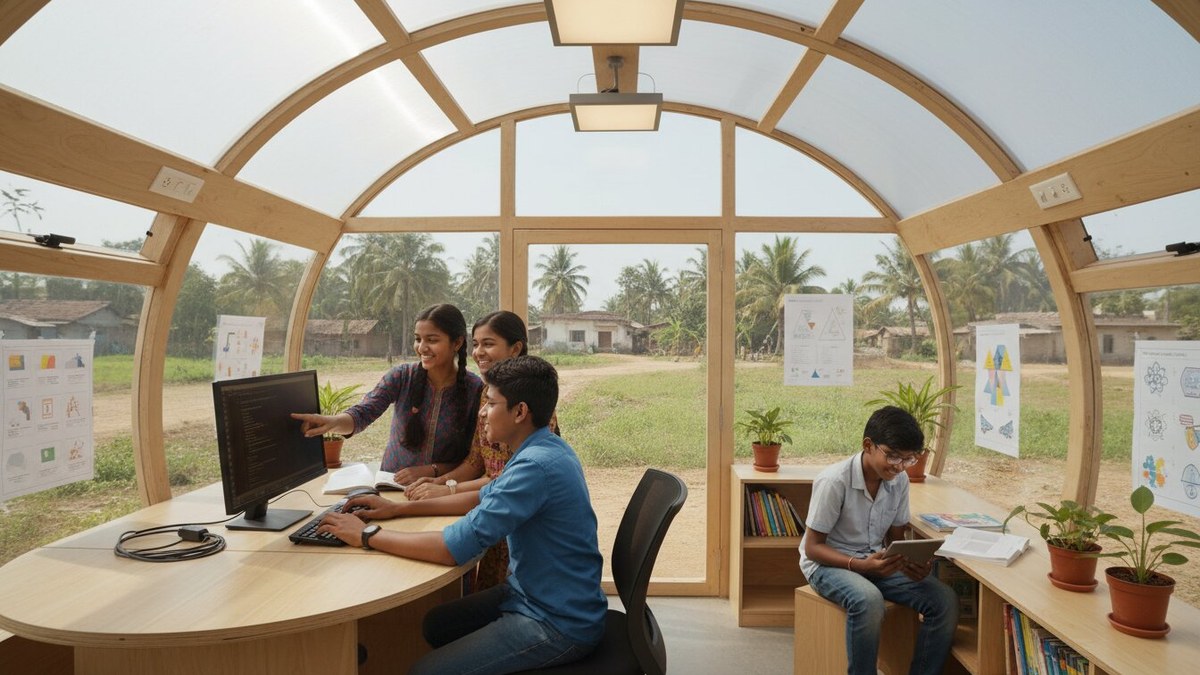
If you’re setting up a learning centre or POD (Point of Digital Learning), having reliable hardware and pre-loaded educational software matters. APNA PC comes with a complete bundle including monitor, keyboard, mouse, webcam, headset, and 3-year warranty, with Scratch, LibreOffice, VS Code, and other tools that let students learn coding, design, and problem-solving, all skills that naturally build a growth mindset.
For students preparing for competitive exams, NEET preparation at home without coaching guides show how self-study with the right mindset can be as effective as classroom coaching. This reinforces that learning is in their control.
What Challenges Arise When Building Growth Mindset, and How Can You Overcome Them?
Building a growth mindset takes time, and you will face resistance. Some students have been told they’re “not math people” or “not creative” for years. Changing this belief is possible but requires patience and consistency.
Challenge: Students say “I’m just not good at this.” Response: Acknowledge their feeling, then reframe. “You feel frustrated right now, and that’s normal. Frustration means your brain is working on something new. Let’s try a different approach.”
Challenge: Parents push for grades over learning. Response: Communicate that growth mindset leads to better academic results long-term. Share how students who focus on effort and learning recover faster from setbacks and perform better in competitive exams.
Challenge: You slip into fixed mindset language yourself. Response: It happens. Notice it, acknowledge it, and model correction. “I said you’re not a writer, but that’s not true. You haven’t written much yet. Let’s work on it together.”
How Can You Measure Growth Mindset in Your Students?
How do you know if your efforts are working? Look for these signs:
- Students ask more questions and are not afraid to say “I don’t understand.”
- They use “yet” language naturally: “I haven’t learned this yet.”
- They take on harder tasks without immediately giving up.
- After a mistake, they ask “What can I do differently?” instead of blaming external factors.
- They celebrate peers’ success instead of comparing themselves negatively.
- They revise their work and see revision as improvement, not punishment.
Keep a simple log of these behaviours over a term. You’ll see the shift happen gradually, and so will your students.
Frequently Asked Questions
Can a fixed mindset student become a growth mindset student?
Yes, absolutely. A fixed mindset is not a permanent trait; it’s a belief that can change. With consistent exposure to growth mindset language, effort-based praise, and seeing their own progress, students shift their thinking. This change often takes weeks to months, not days, but it is real and lasting.
Is growth mindset the same as positive thinking?
No. Positive thinking means believing you’ll succeed without effort. Growth mindset means believing you can improve through effort. Growth mindset is realistic and action-oriented; it’s not about feeling good, but about doing the work needed to improve.
How do I balance growth mindset with realistic expectations?
Growth mindset doesn’t mean every student will become a doctor or engineer. It means every student can improve in areas they choose to focus on. Help students set realistic goals based on their effort and time, not on comparing themselves to others.
What if a student has learning disabilities or neurodivergence?
Growth mindset applies to all students. A student with dyslexia can develop a growth mindset about reading. The goal is not to erase the disability but to help them see that they can improve and learn strategies to work with their brain, not against it.
How long does it take to see results from teaching growth mindset?
Some students show shifts in attitude within weeks. Others take months. Consistency matters more than speed. If you praise effort one day and talent the next, students get confused. Stick with growth mindset language and practices for at least a full term to see real change.
Apni Pathshala runs PODs across 21 Indian states with over 30,000 hours of learning, using Apni Prerna for student safety and monitoring. Explore APNA PC to set up your own learning centre with pre-loaded educational software, reliable hardware, and tools that help students track their growth and build confidence in their learning.