
Your child with disability deserves to learn at their own pace, from home, without compromise.
Let’s be honest: most Indian parents of children with disabilities face a brutal choice. Either send their child to a mainstream school where they struggle to keep up, or accept limited learning options at home. Neither feels right. Neither feels fair.
Here’s the truth: accessible learning isn’t about special treatment. It’s about removing barriers. And the biggest barrier right now? A lack of proper technology at home.
Most people don’t realise that a simple home computer setup can unlock learning possibilities that no classroom ever could. A child with cerebral palsy can use voice-to-text software. A student with visual impairment can access screen readers. A teenager with autism can learn in a controlled, predictable environment without sensory overload. This isn’t aspirational talk. This is real.
The problem has always been cost and complexity. Until now.
How Home Computers Enable Real Accessible Learning
When a student with disability learns from home with the right setup, something shifts. They stop trying to fit into the system. The system finally fits them.
- Self-paced progress: No pressure to keep up with 40 other students. Your child learns when they’re ready, how they’re ready.
- Assistive technology integration: Screen magnification, text-to-speech, voice commands, switch access. All available on one device.
- Reduced sensory stress: Controlled lighting, no classroom noise, no social anxiety. The environment adapts to them, not the reverse.
- Better parent involvement: You see exactly what your child is learning. You can reinforce it immediately. You’re not locked out of the process.
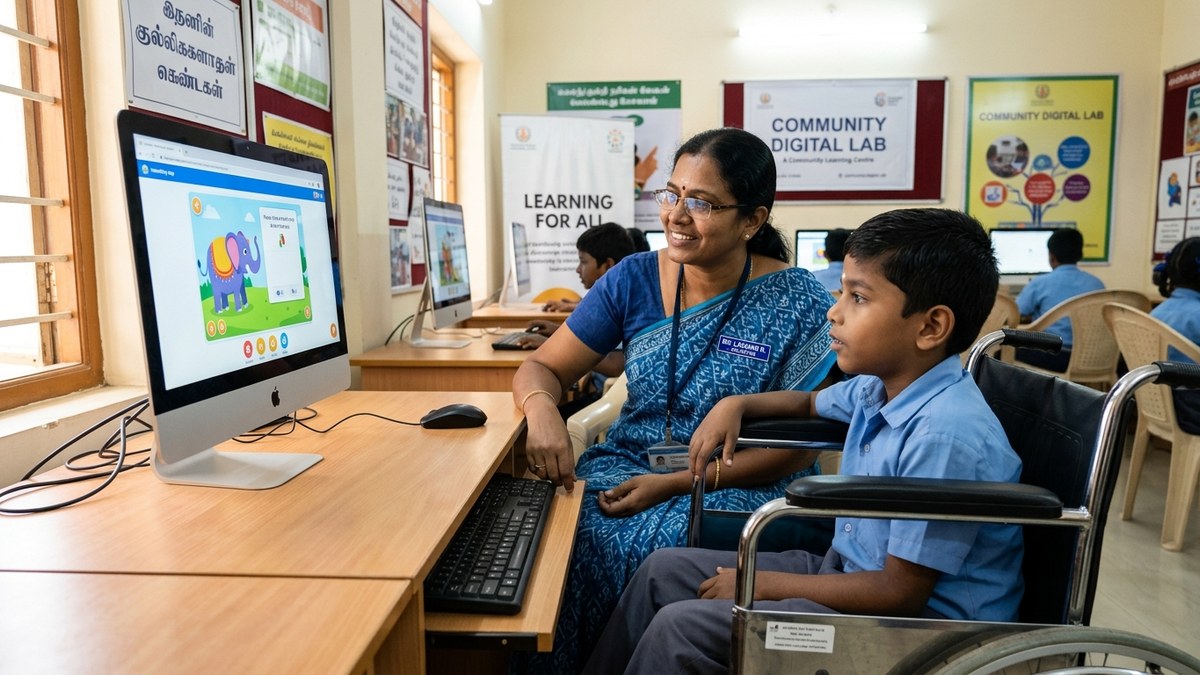
- Continuity with trained educators: A Point of Digital Learning (POD) educator can guide your child’s learning journey, whether at home or in a community centre.
But here’s where most setups fail: they’re built for general learners, not for children with disabilities. The software isn’t designed for accessibility. The hardware isn’t powerful enough. The warranty doesn’t cover the specific needs you have. You’re left troubleshooting alone.
What Inclusive Education Actually Requires
According to CBSE guidelines on inclusive education, every child deserves access to technology that supports their learning style. The guidelines are clear. Schools should provide it. But they often don’t.
So parents have to step in.
The challenge isn’t just buying a computer. It’s buying the right computer. One that comes with educational software pre-installed. One that has assistive technology built in. One that’s backed by real support, not just a helpline that never picks up.
When you’re dealing with a child’s education, you can’t afford to gamble on generic hardware.
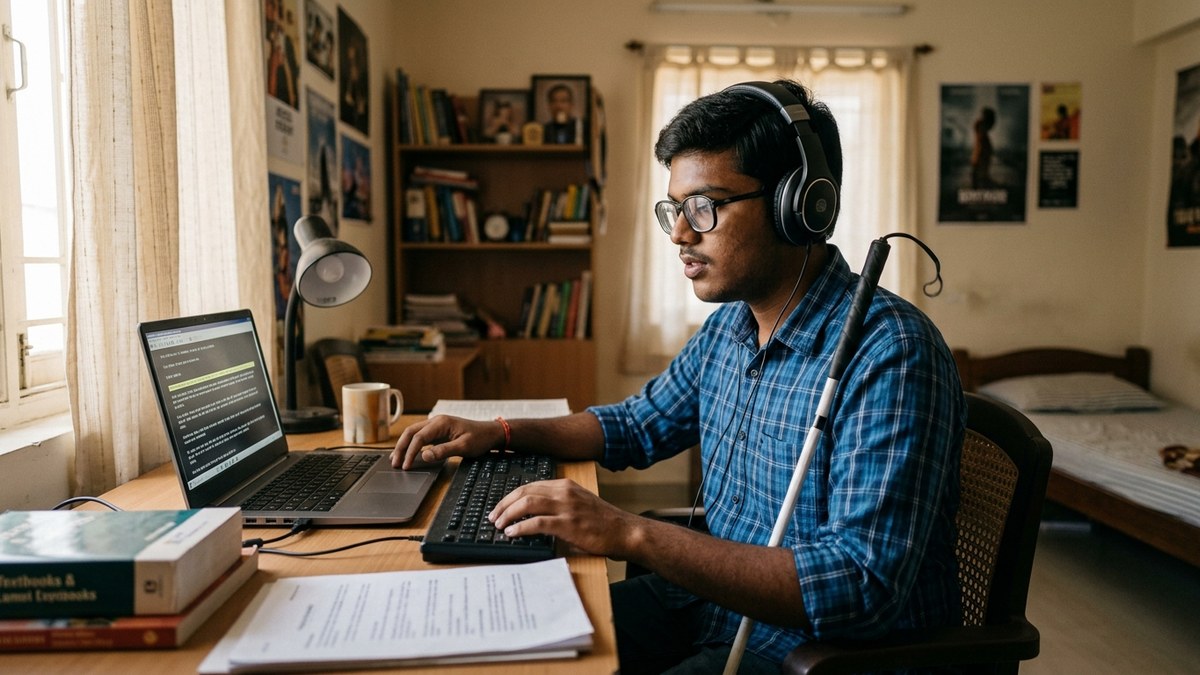
That’s why APNA PC exists. It’s not just a computer. It’s a complete learning ecosystem designed specifically for Indian students, including those with disabilities.
APNA PC: Built for Accessible Learning
Here’s what you get with APNA PC for Rs.30,000:
- Mini PC with i3 7th Gen processor, 8GB RAM, 128GB SSD (fast, reliable, no lag)
- Monitor, keyboard, mouse, webcam, headset (everything you need, nothing you don’t)
- Educational software pre-loaded and configured for accessibility
- 3-year warranty (because educational devices need to last)
- Professional installation (so you’re not wrestling with cables)
This isn’t a gaming PC. It’s not overpowered or expensive. It’s exactly what a student with disability needs to access inclusive education without their family going broke.
The software comes with assistive technology support. The warranty covers the specific use case of educational access. The installation team understands that accessibility matters. You’re not on your own.
Most people don’t realise that a Point of Digital Learning (POD) educator can work with your child using APNA PC, whether at home or in a community centre. This means your child gets one-on-one attention from someone trained in both their disability and digital learning. No more compromises.
Making Inclusive Education Real in Your Home
If you’re considering a home computer setup for your child with disability, start here:
- Identify what assistive technology your child actually needs (not what you think they need)
- Test the software before committing to the hardware
- Ensure the device comes with real support, not just a product manual
- Connect with a trained educator who understands accessible learning
This is exactly what happens when you choose APNA PC. You’re not buying a computer. You’re buying access. Access to education designed for your child, not despite them.
For more on how schools and communities are setting up proper digital infrastructure, read about setting up computer labs in schools. And if you want to understand how digital literacy programs in schools work, we’ve covered that too.
Research from UNESCO global education research confirms what parents already know: technology works best when it’s paired with trained educators and designed for the learner’s actual needs.
Your child’s disability is not a barrier to learning. The lack of proper tools is. APNA PC removes that barrier. Today.
Ready to give your child accessible learning at home? Explore APNA PC and start your child’s learning journey now.