
AI in Indian Classrooms: The Reality Check Your School Needs
Your child’s school is falling behind. Not because teachers don’t care. But because AI in Indian classrooms remains a luxury, not a standard.
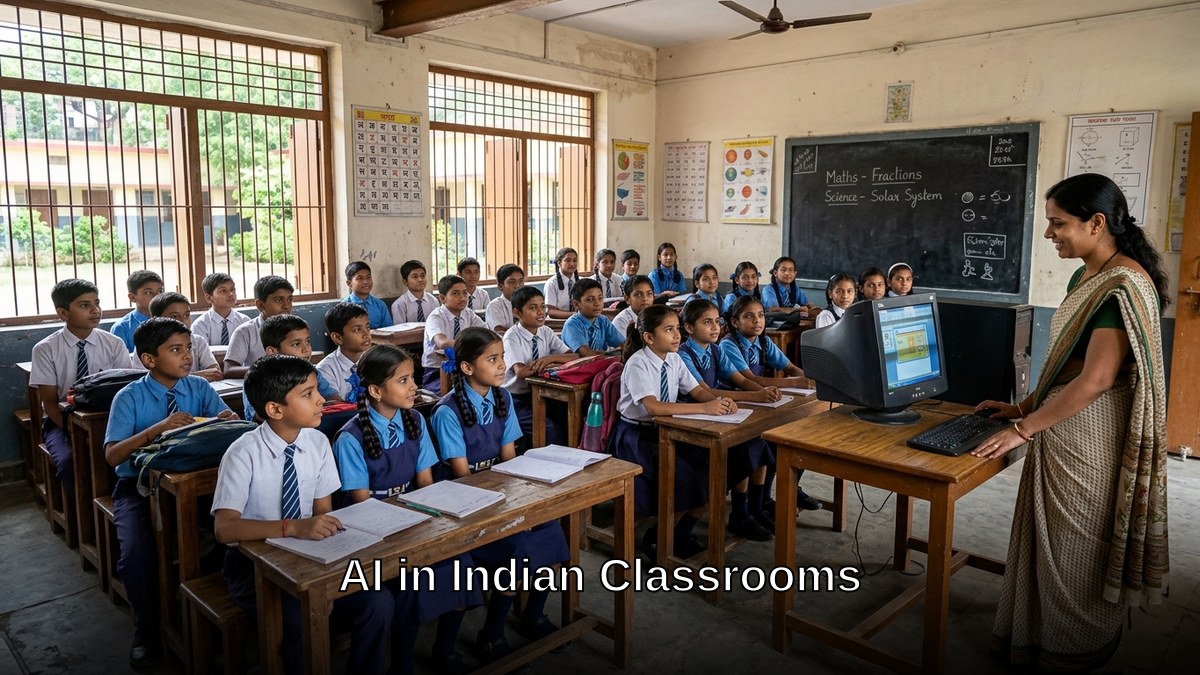
Let us be honest: most Indian schools talk about artificial intelligence in education like it’s a distant dream. Meanwhile, students in tier-1 cities get personalised learning algorithms while rural classrooms still share one projector between five sections. AI education India is real, but it’s fractured. Unequal. Broken.
Here is the truth: AI doesn’t require Silicon Valley budgets. It requires the right tools, the right training, and educators willing to use them.
Key Takeaways
- AI in Indian classrooms today splits into three tiers: premium schools with full AI integration, mid-range schools with partial administrative AI tools, and rural or government schools with almost none.
- This is a reality check, not a hype piece: policy documents push AI in education, but teachers need actual infrastructure to use it, not just ambition.
- AI does not require Silicon Valley budgets; it requires the right tools, basic training and a willingness among educators to try them.
- A Point of Digital Learning with one intelligent setup can serve 50 or more students, closing part of the Tier 3 gap without a school-wide AI budget.
- A bundled setup like APNA PC, at around Rs.30,000, gives smaller centres a realistic entry point into usable classroom technology.
Why AI in Indian Classrooms Matters Right Now
The India Ministry of Education has set ambitious goals. The Digital India initiative pushes technology into every corner. But policy papers don’t teach children. Teachers do. And teachers need infrastructure.
Most people do not realise that artificial intelligence schools in India operate on three levels:
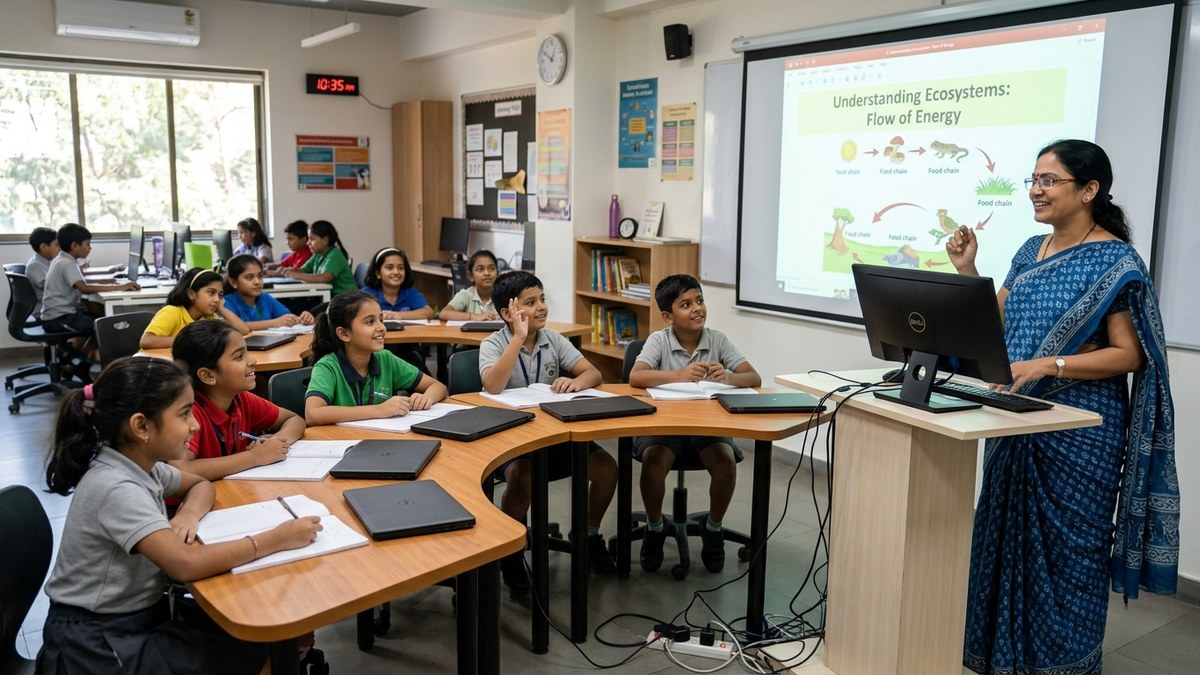
- Tier 1: Premium schools with full AI integration, adaptive learning platforms, real-time student analytics. Cost: Rs.5-10 lakhs per student annually.
- Tier 2: Mid-range schools with partial AI tools, mostly for administration. Cost: Rs.1-2 lakhs per student annually.
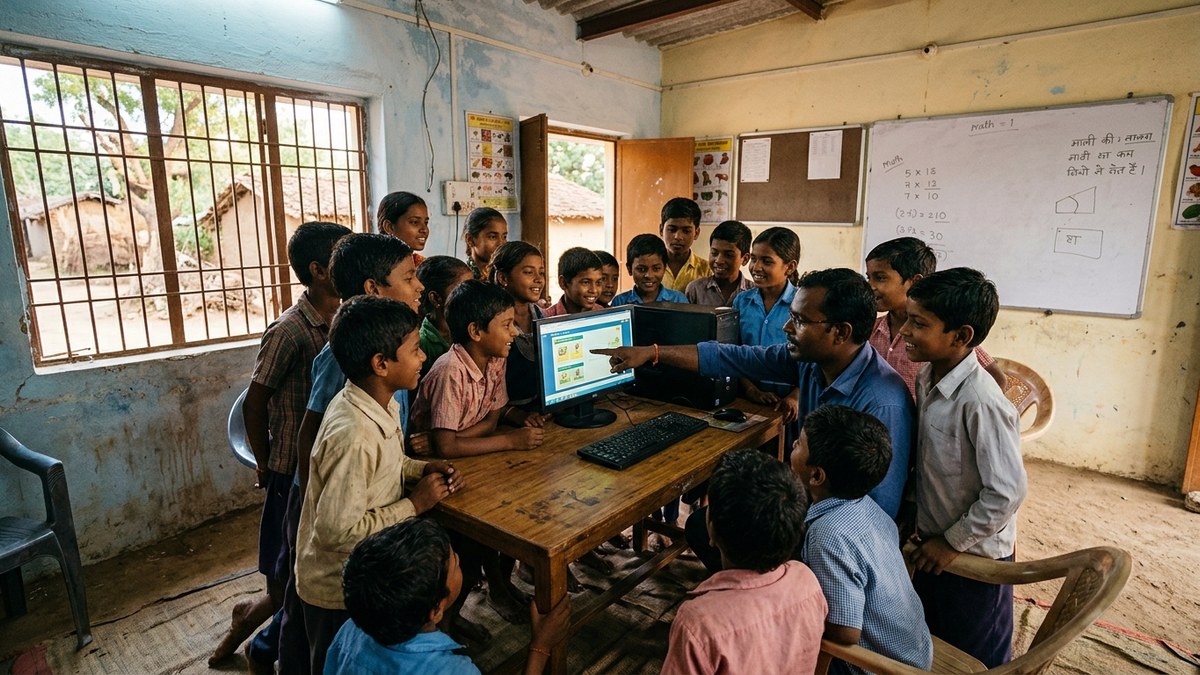
- Tier 3: Government and rural schools with zero AI infrastructure. Cost: Nearly nothing. Result: Everything.
This gap is not acceptable. It’s not inevitable either.
The APNA PC Solution: AI Education India Gets Practical
Here is what works: a complete bundle designed for educators, not corporations. The APNA PC home computer training center bundle costs Rs.30,000. That’s one month’s salary for many teachers. Inside that investment: Mini PC i3 7th Gen processor, 8GB RAM, 128GB SSD, monitor, keyboard, mouse, webcam, headset, education software, 3-year warranty, and installation support.
This is not a toy. This is a teaching weapon.
With APNA PC, you run:
- DIKSHA content from the DIKSHA digital learning platform (free, government-backed, AI-enhanced)
- Adaptive quizzes that adjust difficulty based on student performance
- Video lessons at scale without internet bandwidth collapse
- Student progress tracking without manual spreadsheets
- Parent dashboards so families stay connected to learning
The hardware runs cool. The software runs smart. The results run deep.
From Classroom to Community: The POD Model
A Point of Digital Learning (POD) is what happens when you stop waiting for government to build infrastructure and start building it yourself. A POD is a home or community learning centre run by a trained educator. It serves 20-50 students. It operates on flexible hours. It costs a fraction of a private school.
The community digital library model proves this works. One trained educator. One APNA PC bundle. Unlimited potential.
A POD with APNA PC can:
- Deliver personalised learning paths using AI algorithms
- Run offline, then sync when internet returns
- Serve multiple age groups simultaneously
- Generate detailed progress reports for parents
- Scale to multiple locations without proportional cost increase
The Numbers Don’t Lie
India has 1.4 million schools. Less than 5% have meaningful AI integration. That is not a statistic. That is a crisis wearing a bureaucrat’s suit.
But here is the counter-truth: you don’t need to fix the entire system to change a child’s life. You need one educator. One APNA PC bundle. One community willing to invest Rs.30,000 in their children’s future.
The ROI is not financial. It is human. A student who learns coding at 12 instead of 18. A rural child accessing the same content as a Delhi private school student. A teacher who stops writing on a blackboard and starts mentoring with data.
What Stops You?
Not cost. Not technology. Not capability. What stops most educators is permission. The permission to believe that artificial intelligence in schools doesn’t require a multinational corporation and a venture capital cheque. That it requires imagination and grit.
The infrastructure exists. DIKSHA is free. APNA PC is affordable. The training is available. What remains is your decision.
Start your POD. Launch your AI education India initiative. Stop waiting for someone else to fix the classroom.
Get your APNA PC bundle today and begin transforming your learning space.
Frequently Asked Questions About AI in Indian classrooms
Is AI actually being used in Indian classrooms right now?
Yes, but unevenly. Premium schools use full adaptive learning platforms and real-time analytics, mid-range schools use AI mostly for administration, and many rural or government schools have none of this yet. The technology exists; access is the real problem.
Why haven’t rural schools adopted AI tools yet?
The main barrier is infrastructure, not awareness. Many rural schools lack reliable computers, stable internet and staff trained to use digital tools, so AI remains out of reach even when teachers are willing to try it.
Does using AI in a classroom require an expensive setup?
No. Many useful AI education tools are free or low-cost. The real cost is a dependable computer that can run them without crashing, along with basic training for teachers. A complete bundle at a fixed, modest cost can cover this for a small centre.
Can one Point of Digital Learning really serve many students with AI tools?
Yes. A single well-equipped setup with adaptive software and a trained educator can serve 50 or more students across batches, since AI handles repetitive practice and tracking while the educator focuses on direct teaching time.
What is the first realistic step for a school wanting to close the AI gap?
Start with one reliable computer setup and basic AI-enabled education software rather than waiting for a full school-wide rollout. This gives a starting point to train teachers and show results, which makes a stronger case for further investment later.
India’s National Education Policy 2020 and the Digital India initiative both call for bringing AI and technology into schools, though implementation still varies sharply between well-funded and under-resourced schools.