Your child’s job doesn’t exist yet. AI skills do.
Here’s the truth: By 2027, AI won’t be a “nice to have” skill in India. It will be the baseline. Every competitive exam, every college entrance test, every job interview will assume your child knows how to work with artificial intelligence. Not as a programmer. As a user. As a thinker. As someone who can leverage AI to solve real problems.
If your child doesn’t have AI skills for students right now, they’re already three years behind.
Let’s be honest. Most Indian parents are still thinking about AI the way they thought about computers in 1995. Distant. Technical. “Not for my child.” Meanwhile, students in urban metros are already using AI to write essays, solve math problems, design projects, and prepare for competitive exams. The gap isn’t closing. It’s widening.
Why 2027? Why now?
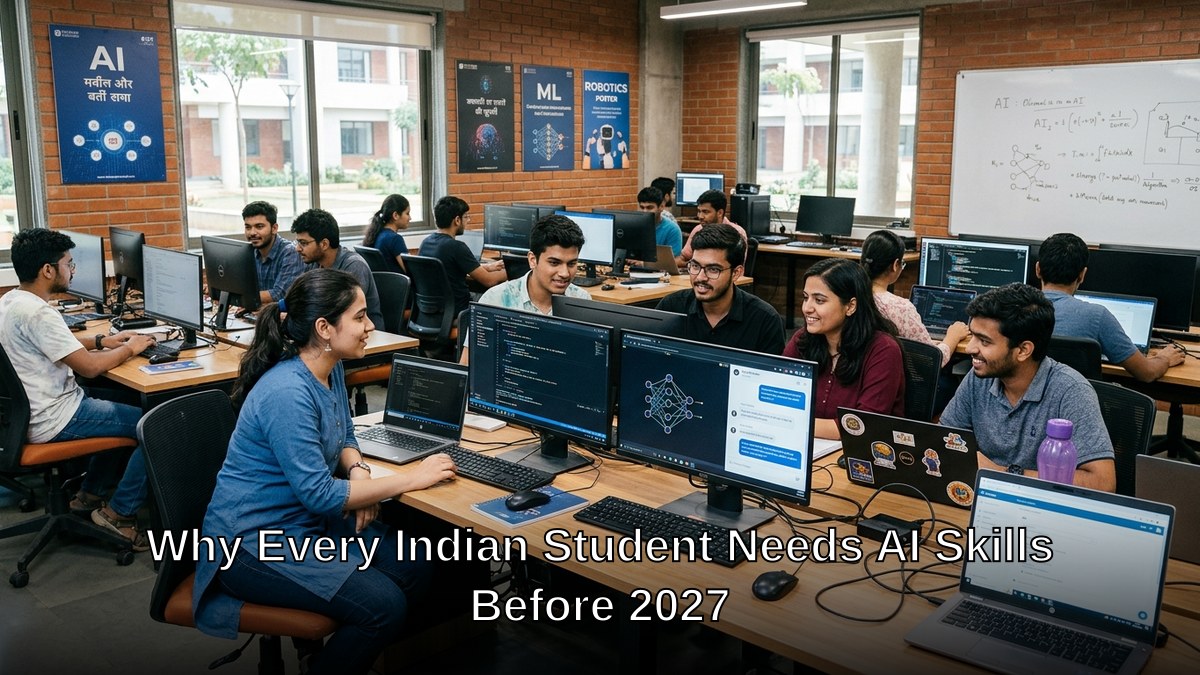
The Ministry of Education India has already started integrating AI into school curricula. CBSE boards are quietly introducing computational thinking. JEE and NEET exams are shifting toward problem-solving that rewards AI-aware students. By 2027, this won’t be optional chapters in textbooks. It will be mainstream.
But here’s what most people don’t realise: artificial intelligence education India isn’t just about coding or complex algorithms. It’s about:
- Using ChatGPT and similar tools to research and learn faster
- Understanding how AI works (without being a data scientist)
- Recognizing AI bias and ethical issues
- Creating content with AI assistance
- Solving real-world problems using AI tools
- Building confidence to experiment and fail safely
These are skills a 10-year-old can learn. A 15-year-old should master. A college student must own.
The three groups who must act now
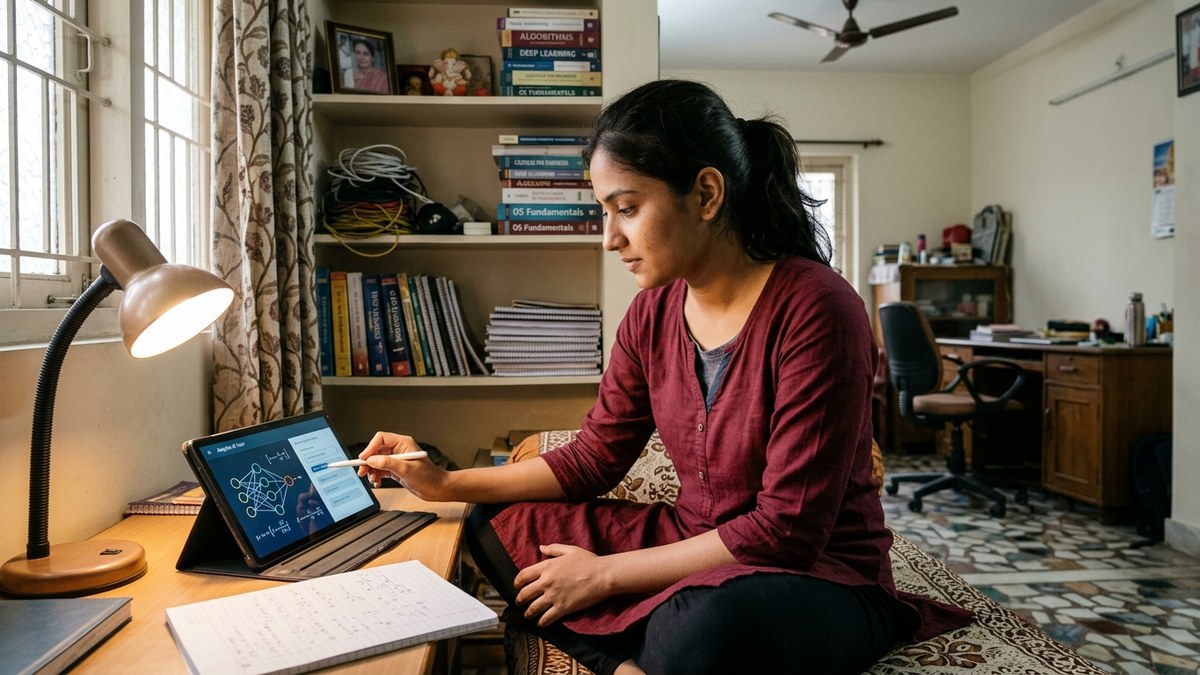
Parents and homemakers: Stop waiting for schools to teach this. They won’t, not comprehensively. Your responsibility isn’t to become an AI expert. It’s to create an environment where your child can explore, experiment, and learn AI without fear. That starts with access to proper tools and guidance.
Tuition teachers and edupreneurs: The AI tools for teachers are already here. Your students expect you to know them. Your competitors are already teaching AI skills to students. If you’re not, you’re becoming irrelevant. The tuition market in India is shifting. Those who adapt will thrive. Those who don’t will fade.
Senior citizens and community leaders: You might think this doesn’t apply to you. You’re wrong. If you’re running a learning pod, a community centre, or mentoring young people, AI literacy is now your responsibility. You don’t need to understand every detail. You need to create the space and support for others to learn.
The real barrier: access, not ability
Most Indian students don’t lack intelligence. They lack access. They don’t have a computer at home. They don’t have internet stability. They don’t have someone to guide them through their first steps with AI tools.
That’s where APNA PC changes everything.
APNA PC is a complete bundle designed for Indian homes and community learning centres. You get a Mini PC (i3 7th Gen, 8GB RAM, 128GB SSD), monitor, keyboard, mouse, webcam, headset, installation, and 3 years warranty. All for Rs.30,000. Not a subscription. Not a monthly fee. One investment. Full ownership.
Pair this with a Point of Digital Learning (POD) run by a trained educator, and suddenly, every student in your community has access to learn AI skills. In their neighbourhood. In their language. At their pace.
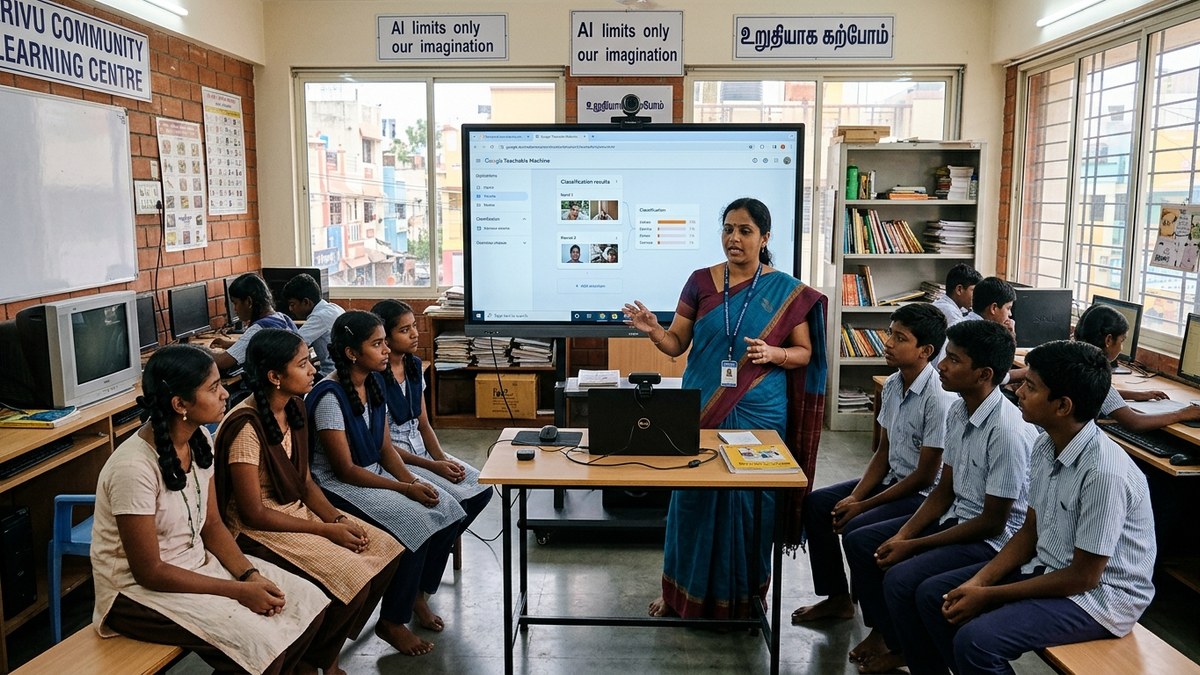
This isn’t theoretical. This is happening right now in small towns across India. Homemakers are setting up PODs and earning. Teachers are adding AI curriculum to their classes. Students who couldn’t afford coaching are learning skills that will change their futures.
What your child will miss without AI skills
Competitive exams are evolving. Research is evolving. Job markets are evolving. The students who understand how to use free AI tools for students will have an unfair advantage. Not because they’re smarter. Because they’re equipped.
Meanwhile, students without AI literacy will struggle to keep up. They’ll spend twice as long on assignments. They’ll miss opportunities because they don’t know the tools exist. They’ll watch their peers move ahead and wonder why.
The Education in India overview shows us that access and quality remain the biggest challenges. But technology is finally making a dent. APNA PC plus community-based learning is closing that gap.
Your move
You can wait. You can hope schools figure this out. You can assume your child will catch up eventually.
Or you can act now. Set up a learning environment. Get the right tools. Find a trained educator. Start teaching AI skills to students in your community.
By 2027, artificial intelligence education India won’t be an option. It will be an expectation. The question is whether your child, your students, or your community will be ready.
Ready to start? Learn how to launch your own learning POD today.