Your child sits in a classroom of 60 students. The teacher cannot see half of them. Nobody asks questions. Everyone memorises. Everyone forgets.
This is traditional schooling in India. It works for some children. It crushes others.
Microschooling vs traditional schooling is not a debate anymore. It is a choice. And most Indian parents do not realise they have one.
Here is the truth: microschooling and traditional schooling solve different problems. One size does not fit all children. A microschool is a small learning group, usually 8-15 students, run by a trained educator in a home or community space. We call this a Point of Digital Learning, or POD. Traditional schooling is what you know: large institutions, standardised curriculum, formal infrastructure.
The question is not which is better. The question is which fits your child.
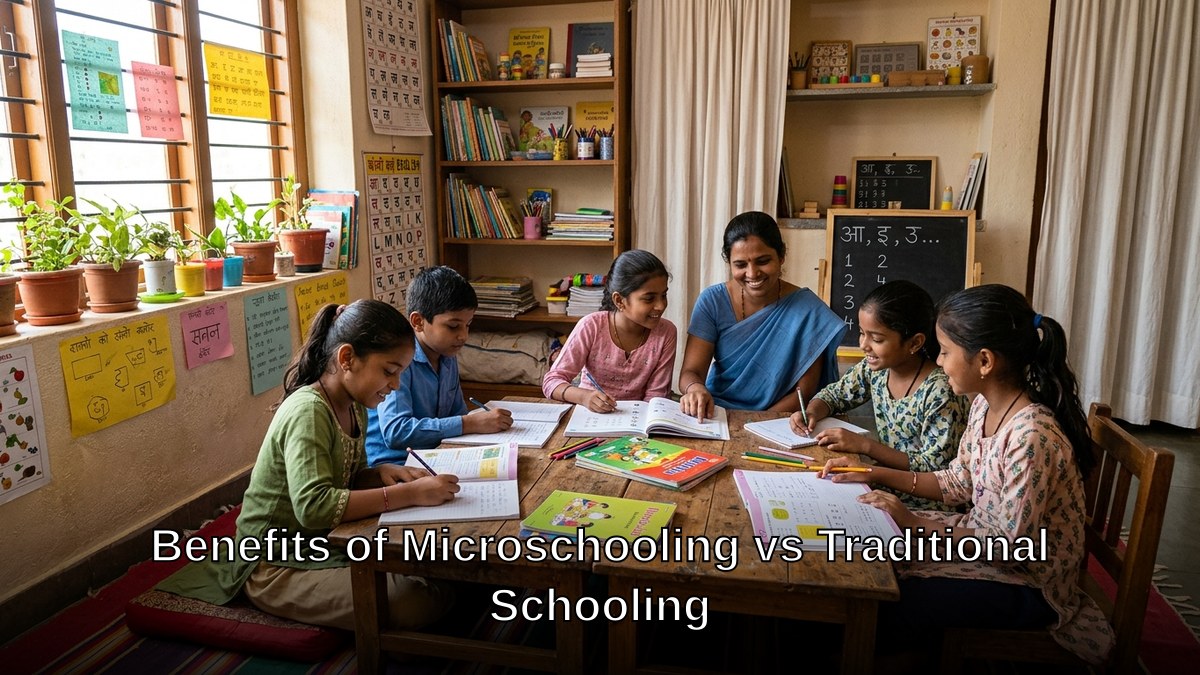
Why Microschooling Works Better For Many Indian Children
Let us be honest: traditional schooling problems are real and they are systemic.
Large classrooms mean large problems. A teacher with 50 students cannot know each child’s learning speed, strengths, or fears. Weak students fall behind. Bright students get bored. Average students float through, learning nothing deeply.
Microschool advantages are direct and measurable:
- Personalised attention: A teacher with 12 students sees every hand. Knows every struggle. Adjusts teaching on the spot. Not after a term ends.
- Flexible pace: Your child does not wait for the slowest or fastest. Learning moves at their speed. Mastery happens before moving forward.
- Real relationships: The educator knows your child as a person, not a roll number. Trust builds. Learning accelerates.
- Community focus: A POD is often in your neighbourhood. Parents are involved. Learning happens in real life, not just textbooks.
- Customised curriculum: Microschools can adapt. They can blend CBSE standards with local context, skills, and interests. Traditional schools cannot.
Most people do not realise: microschools are not “less rigorous.” They are differently rigorous. A child in a microschool learns deeper, not just wider.
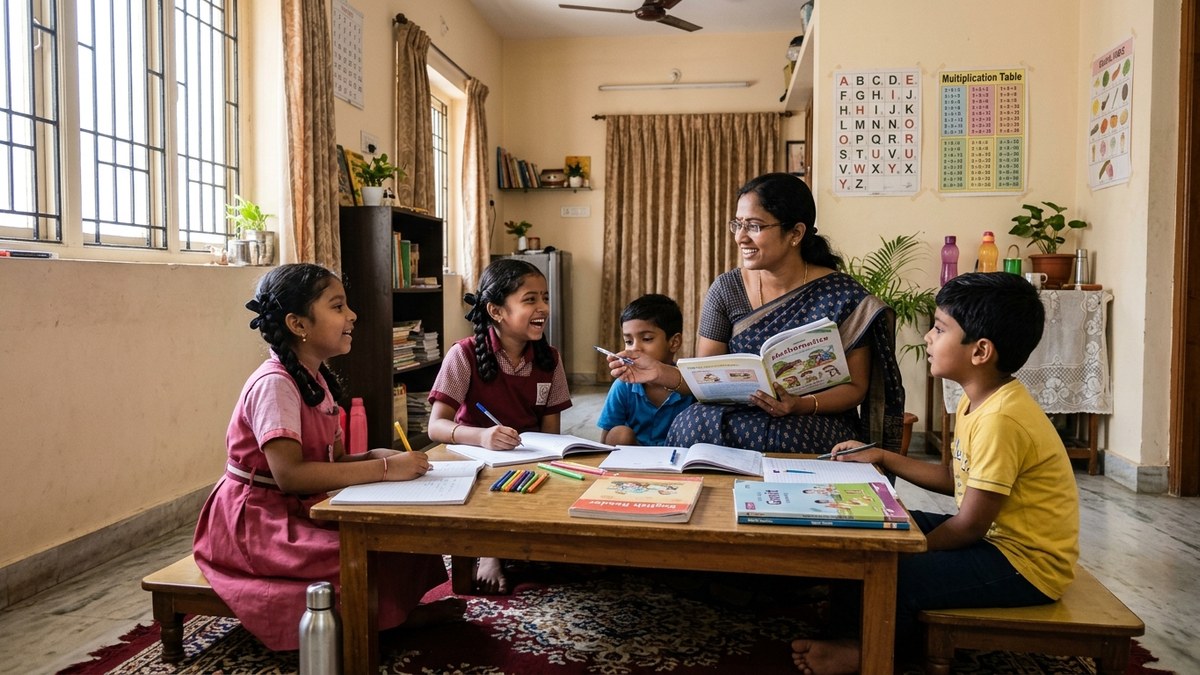
The Real Problems With Traditional Schooling In India
Traditional schooling in India was designed for a different era. It still works that way.
The system prioritises standardisation over understanding. Every child learns the same thing, at the same speed, in the same way. This is efficient for institutions. It is terrible for children.
Here are the costs:
- Rote learning replaces thinking. Children memorise answers, not concepts.
- Anxiety peaks. Board exams create fear, not curiosity.
- Bullying thrives. Large groups, limited supervision, weak relationships.
- Creativity dies. There is no space for questions or exploration.
- Dropout rates stay high. When a child cannot keep pace, they quit. The system does not bend. They do.
According to UNESCO global education research, India’s learning outcomes remain weak despite high enrollment. Children sit in classrooms but do not learn.
Microschooling addresses this. It is not a rejection of traditional education. It is an evolution.
Microschooling vs Traditional Schooling: The Real Comparison
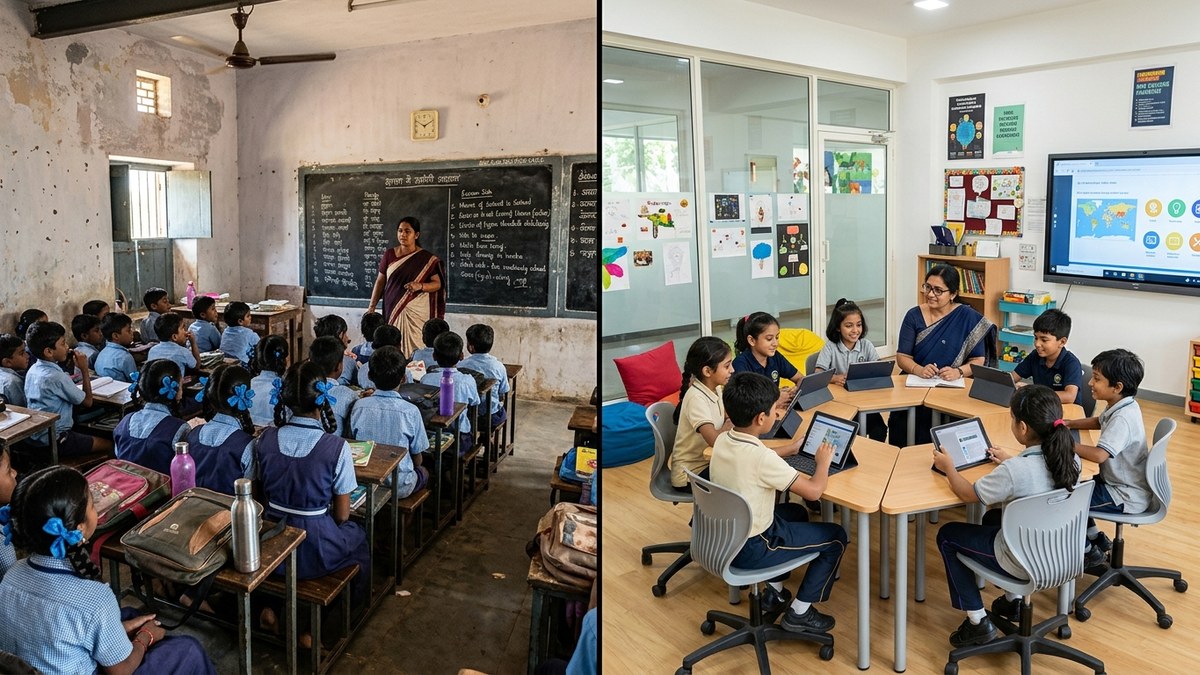
Let us compare what matters:
Class size: Traditional schooling averages 45-60 students per teacher in India. Microschools average 10-15. The difference is not just a number. It is the difference between invisibility and recognition.
Curriculum flexibility: Traditional schools follow Central Board of Secondary Education (CBSE) or state board standards. These are rigid. Microschools can blend curriculum with local skills, entrepreneurship, and real-world projects. Your child learns math through business. Science through farming. Language through storytelling in their community.
Cost: Traditional private schooling costs Rs.1.5 to 3 lakhs per year. Microschools cost Rs.30,000 to 60,000 annually. A trained educator running a POD needs minimal infrastructure. A computer, internet, and teaching materials. The APNA PC bundle at Rs.30,000 provides everything: education software, a Mini PC with i3 7th Gen processor, 8GB RAM, 128GB SSD, monitor, keyboard, mouse, webcam, headset, plus 3 years warranty and installation. This is the entire tech backbone a microschool needs.
Learning outcomes: Microschooling produces deeper understanding. Traditional schooling produces higher test scores. These are not the same thing. Your child may score 85% in a traditional school and understand nothing. They may score 70% in a microschool and own the concept forever.
Emotional safety: Microschools build trust fast. Teachers know struggles early. Intervention happens before a child breaks. Traditional schools discover problems after damage is done.
Is Microschooling Right For Your Child?
Microschooling works best if your child:
- Learns at a different pace than peers (faster or slower).
- Struggles with anxiety or social pressure in large groups.
- Needs hands-on, project-based learning, not just lectures.
- Thrives with personal relationships and direct feedback.
- Is creative but bored by standardised curriculum.
Traditional schooling still works if your child:
- Learns well in structured, large-group settings.
- Wants formal credentials and board exam validation.
- Needs sports, clubs, and large peer networks.
- Performs well with standardised teaching methods.
Most children fall somewhere in between. The real answer: a hybrid approach. Some families start with traditional school and move to a microschool POD for specific subjects or learning gaps. Others do the reverse. Some run a POD themselves and use traditional school for credentials.
Learn more about starting your own POD in our guide on microschool 101 start a small school. Or explore homeschooling with a computer guide for at-home learning strategies.
The Future Is Not One Size Fits All
Here is what is changing: Indian parents are waking up. They see their children unhappy in traditional schools. They see rote learning. They see anxiety. They see no real learning happening.
They are choosing differently. Microschools are growing. PODs are opening in neighbourhoods across India. Trained educators are running small learning communities. Children are learning deeper. Families are saving money. Communities are strengthening.
Microschooling vs traditional schooling is not a war. It is an expansion of choice. Your child deserves to learn in a way that fits them, not in a way that fits the institution.
If you are ready to explore microschooling, start here. If you want to run your own POD and serve your community while earning, we have the framework, software, and hardware you need. The APNA PC bundle gives you everything to launch. The training and support give you confidence.
Ready to start? Begin your POD journey today or get your APNA PC bundle and transform how children learn in your area.