
Your Child’s Future Depends on This One Decision
Here’s the truth: coding for kids India isn’t a luxury anymore. It’s survival.
In 2026, a child without basic programming skills will be like a child in 2010 without email. Left behind. Confused. Unemployable. Most parents don’t realise that kids programming has already become the baseline skill, not the bonus skill. Your child’s peers are learning it. The question isn’t whether they should. It’s whether you’ll let them fall behind while others race ahead.
Let’s be honest. You’re reading this because you sense something. You know the job market has shifted. You’ve heard the numbers about tech salaries. You’ve watched your own child zone out from traditional subjects while lighting up at anything digital. That instinct is correct. Act on it.
Why 2026 Is the Critical Year for Kids Programming
The window is closing. Not because coding will disappear. The opposite. It’s becoming so fundamental that waiting another year means your child starts from further back.
Consider this timeline:
- Children who start coding at 7-8 have a 5-year head start by age 12-13
- By age 15, early starters have built real projects, not just dabbled
- By age 18, they’re not learning basics in college. They’re learning advanced concepts
- By age 22, they’re competing for premium roles, not entry-level positions
Your child doesn’t need to become a software engineer. But they need to understand programming fundamentals. Why? Because every field now needs this. Finance. Healthcare. Agriculture. Design. Even teaching. The kids who understand code will have options. The kids who don’t will have limitations.
The Real Investment: Not Just Software, But Opportunity
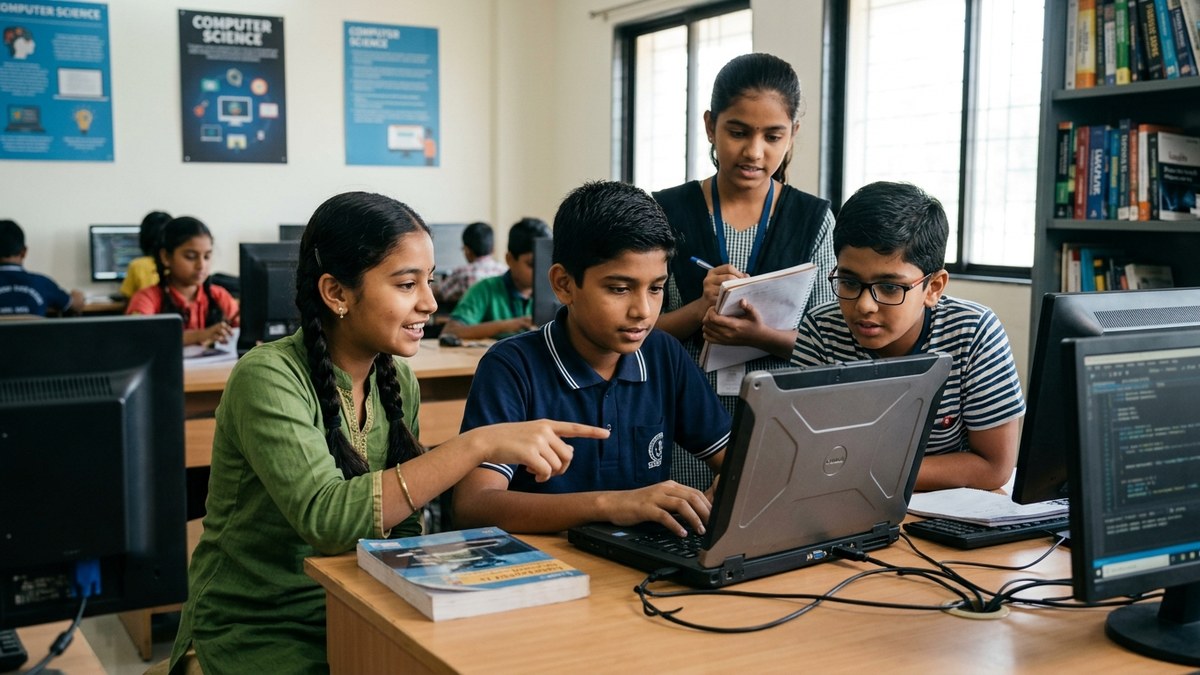
Most people don’t realise that investing in coding for kids isn’t about buying software. It’s about buying your child’s agency in the future.
Think about what coding teaches beyond syntax and loops. It teaches logic. Debugging. Breaking problems into smaller pieces. Persistence when something fails. These aren’t tech skills. These are life skills. A child who learns to code learns to think differently. They learn that problems have solutions. That failure is data, not defeat.
This is why we created APNA PC. Not as a computer bundle. As an access point. A complete system designed for Indian families and learning centers. Rs.30,000 gets you hardware that actually works (Mini PC i3 7th Gen, 8GB RAM, 128GB SSD, monitor, keyboard, mouse, webcam, headset), education software pre-loaded, 3-year warranty, and professional installation. No hidden costs. No “you need to buy this separately” surprises.
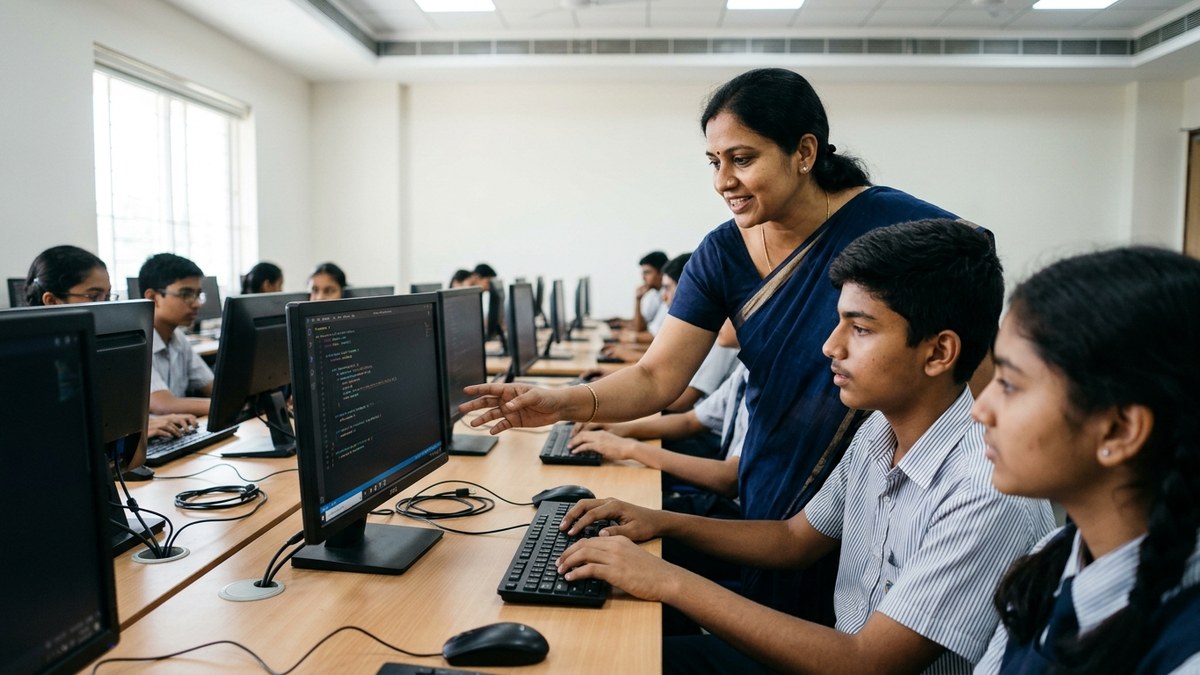
But here’s what matters more than the specs: APNA PC works in a Point of Digital Learning (POD). That’s a home learning space or community center run by a trained educator. Not a chaotic tuition class. Not a screen in front of a child with no guidance. Real learning. Real mentorship. Real progress.
The Economics Make Sense (Even If Your Budget Is Tight)
Rs.30,000 sounds like money. Until you do the math.
A year of online coding courses for kids: Rs.5,000 to Rs.15,000. Hardware separately: Rs.25,000 to Rs.50,000. Installation and support: Rs.3,000 to Rs.5,000. Total: Rs.33,000 to Rs.70,000. Scattered. Unreliable. No warranty. No accountability.
APNA PC bundles it. One investment. One system. Three years of protection. Software that grows with your child from absolute beginner to intermediate projects. This is why teachers and edupreneurs are setting up PODs. The numbers work. Parents see value. Kids see results.
More importantly, this investment pays back. A child with coding skills has options at 16. Internships. Freelance projects. Scholarships to better schools. By 22, they’re earning premium salaries or starting their own ventures. By 30, they’re leading teams or building companies. That Rs.30,000 becomes the best money you ever spent.
What Your Child Actually Learns (And When)
Month 1-2: Visual programming. Drag-and-drop logic. Kids see cause and effect immediately. They’re not typing code. They’re thinking like programmers.
Month 3-4: Python basics. Simple games. Interactive projects. They’re building things. Real things. Things they can show friends and family.
Month 5-6: Problem-solving projects. Real-world scenarios. They’re not just learning syntax anymore. They’re learning to think in code.
Year 2: Web development or app building. They’re creating things people actually use. Confidence skyrockets.
Year 3: Advanced projects. Portfolio building. They’re not just learning anymore. They’re producing.
This is why digital literacy for students matters now, and why understanding AI skills every student needs will matter even more by 2027.
The Parent’s Role (It’s Simpler Than You Think)
You don’t need to understand coding. You don’t need to teach it. That’s what trained educators at PODs do. Your job is simpler and more important.
Show up. Enroll your child. Create the habit. Check in weekly. Celebrate progress. That’s it. The system handles the rest.
Parents who do this see kids transform. Kids who were glued to YouTube suddenly excited about projects. Kids who struggled with math suddenly engaged with logic. Kids who seemed lost suddenly discovering something they’re genuinely good at.
The Decision Point
You can wait. Maybe your child will pick it up later. Maybe they’ll find their way. Or maybe they’ll be the teenager who feels left behind. Who doesn’t understand what their peers are talking about. Who realizes at 16 that they’re three years behind and panics.
Or you can decide now. APNA PC plus a POD near you. Rs.30,000. Three years of learning. A completely different trajectory for your child.
The investment isn’t really about the computer. It’s about betting on your child’s future when the odds are in their favor.
Ready to start? Set up a POD or enroll your child today.