
Communication Skills for Students: The Hard Truth
Your degree won’t get you the job. Your communication skills will. Most people don’t realise this until they’re sitting in an interview, stammering through answers, watching the interviewer’s face go blank. By then it’s too late. Indian students spend years mastering textbooks but graduate unable to articulate a single idea clearly. This gap between knowledge and expression costs careers.
Communication skills for students aren’t optional extras. They’re the foundation everything else sits on. Whether you’re applying to college, interviewing for an internship, or pitching a business idea, how you speak and present determines your outcome. Yet schools treat communication skills development like an afterthought, squeezed into English classes and forgotten.
Here’s the truth: you don’t need to wait until graduation to fix this. You can start building strong communication skills right now, in your final years of school or college. The window is open. Most of your peers won’t walk through it. That’s your advantage.
Why Indian Students Struggle With Communication Skills
Let’s be honest about what happens in most Indian classrooms. Teachers lecture. Students listen. Questions are discouraged. Mistakes are punished. This system produces people who can regurgitate facts but can’t defend an opinion or explain a concept to someone who doesn’t understand it.
The problem runs deeper than just classroom culture. Many Indian students grow up in environments where speaking up is seen as disrespectful. Asking questions means questioning authority. Disagreeing means being difficult. By the time they reach college, the damage is done. They’ve learned to stay silent.
Add to this the pressure of competitive exams and board marks, and you get students optimised for memorisation, not communication. They can solve complex math problems but can’t describe their solution to another person. They know history but can’t discuss it. This isn’t their fault. The system failed them.
But you can choose differently. You can build soft skills for Indian students that actually matter in the real world.
Five Concrete Ways to Develop Communication Skills Before Graduation
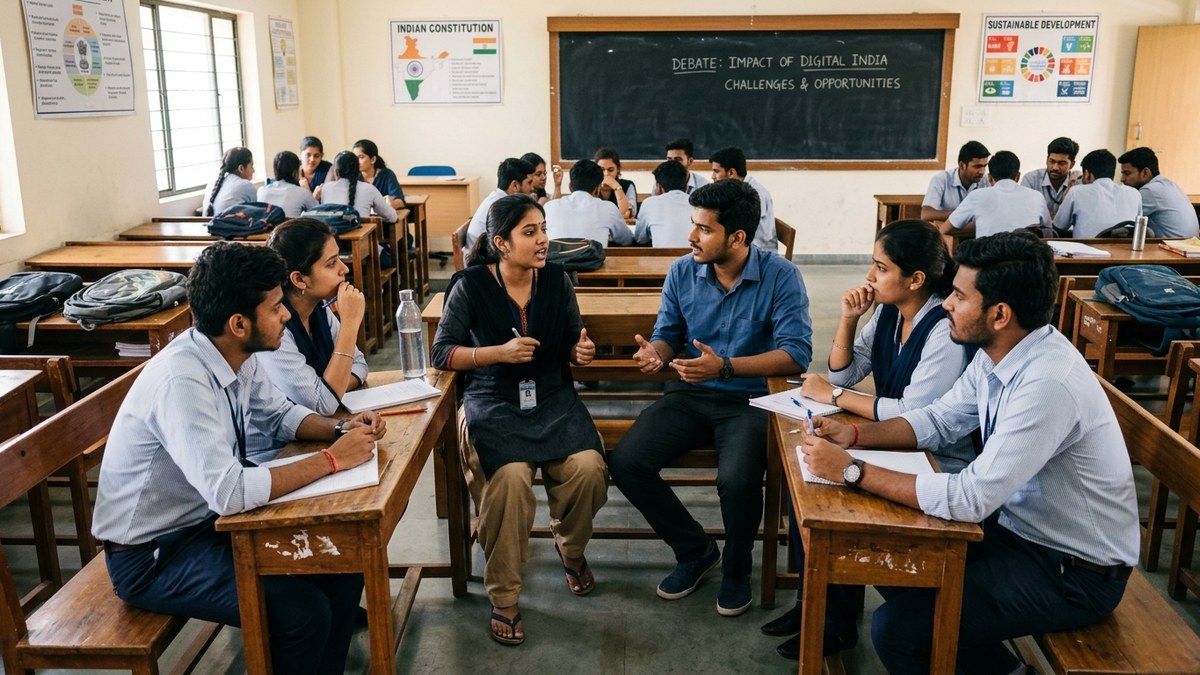
- Join or start a debate club. Not the formal debate competition kind, though that helps too. Start a casual group where students discuss real issues: politics, technology, social problems. Argue. Disagree. Learn to defend your position without getting emotional. This trains your brain to think on your feet and express complex ideas clearly.
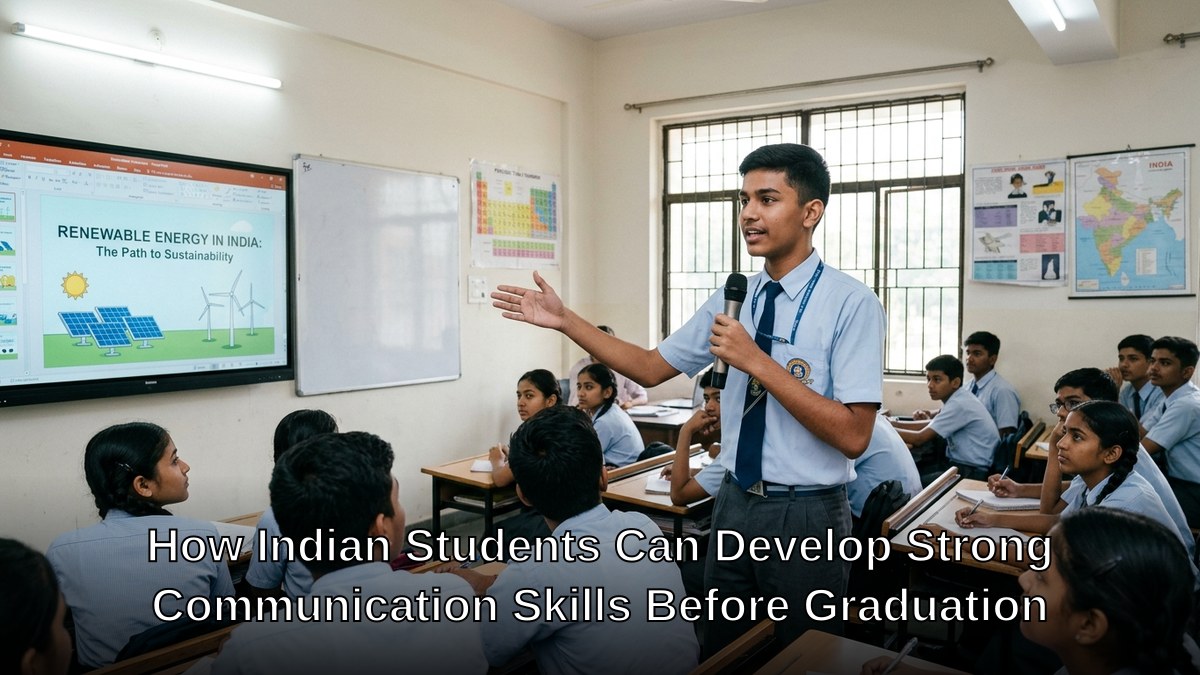
- Present in every class possible. Volunteer for presentations. Offer to present group projects. Start small if you’re nervous. A five-minute talk on any topic is better than zero talks. Each presentation makes the next one easier. Your brain builds the neural pathways for public speaking through repetition, not through watching YouTube videos about it.
- Record yourself speaking. This feels awkward. Do it anyway. Listen back. You’ll hear filler words, unclear explanations, rushed pacing. Hearing yourself is the fastest way to improve. After three or four recordings, you’ll notice dramatic changes in clarity and confidence.
- Practice with real audiences. Family doesn’t count. They’re biased. Find a study group, a community centre, a local club. Speak to people who will give you honest feedback. Soft skills for Indian students develop fastest when you’re slightly uncomfortable, speaking to people who matter to you but don’t have emotional investment in protecting your feelings.
- Read out loud daily. Newspapers, articles, books. This trains your mouth and brain to work together. It improves pronunciation, pacing, and confidence. Ten minutes a day compounds into genuine speaking skills development over months.
The Role of Environment in Building Communication Skills for Students
Most students try to develop communication skills alone, in their rooms, without feedback. This doesn’t work. You need an environment that pushes you, supports you, and gives you real practice with real people.
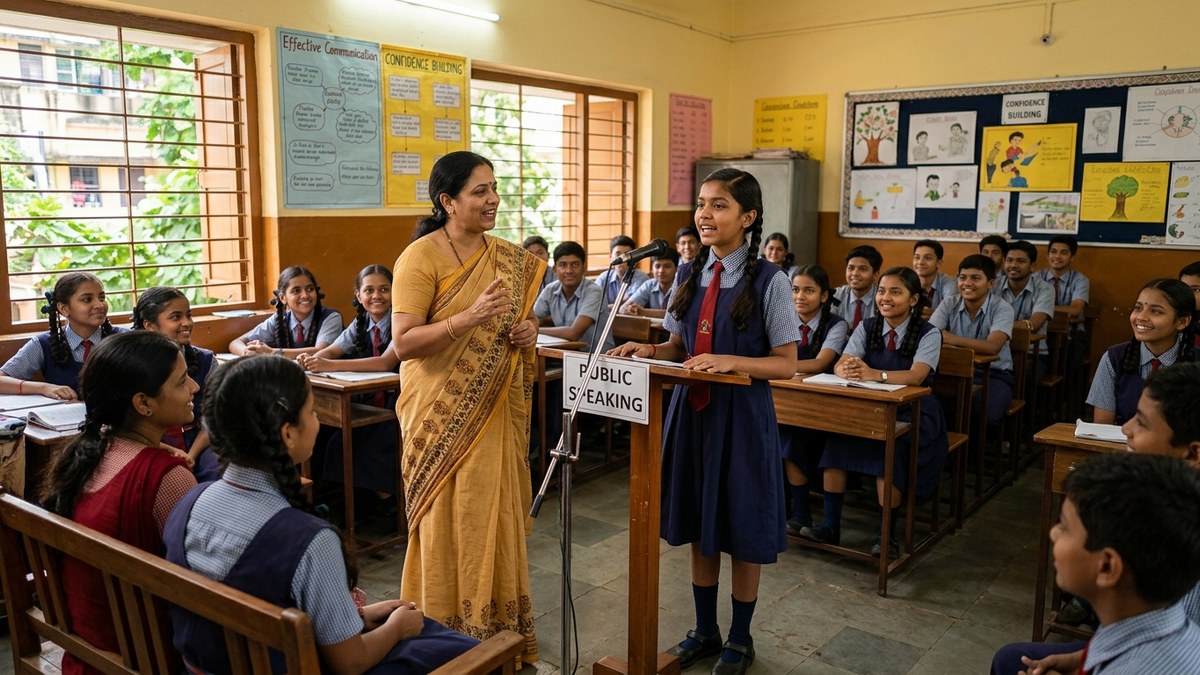
This is where structured learning matters. A trained educator can identify what’s holding you back. Are you afraid of judgment? Do you lack vocabulary? Is it nervousness or unclear thinking? Different problems need different solutions. A good teacher spots this in minutes and adjusts the approach.
Consider a Point of Digital Learning, or POD. A POD is a community learning centre run by a trained educator where small groups of students work together. This environment forces communication. You can’t hide. You have to speak, listen, and engage. Students in PODs develop communication skills faster than isolated learners because they’re getting constant practice and feedback.
If you’re a parent or tuition teacher, you can start a home tuition business focused specifically on soft skills development. You can also teach coding to kids at home and integrate communication skills training into the curriculum. Students who learn to explain their code develop communication skills without even realising it.
Tools That Actually Help Communication Skills Development
You need the right setup to practice effectively. A decent microphone, camera, and screen make a difference. When you can see yourself presenting, hear yourself clearly, and record for review, your improvement accelerates.
APNA PC is a complete bundle designed exactly for this. It includes a Mini PC with i3 7th Gen processor, 8GB RAM, 128GB SSD, monitor, keyboard, mouse, webcam, and headset. Everything you need to record presentations, join online group discussions, and practice speaking skills. The full package costs Rs.30,000 and includes three years warranty plus installation. This is the infrastructure that supports communication skills development.
Whether you’re recording practice presentations, joining online debate groups, or taking online coaching for soft skills, APNA PC gives you the hardware you need without breaking the bank.
Start Now, Not Later
Your graduation date is fixed. The time to build communication skills is now. Every month you wait is a month your peers might be catching up. Every presentation you skip is practice you’re not getting.
If you’re an educator or parent wanting to help students develop these skills systematically, the answer is clear. Create structured opportunities for practice, feedback, and growth. A learning pod with trained educators beats isolated study every single time. Check parent-teacher meetings as a starting point for structured engagement, and explore UNESCO global education research for evidence-based approaches to communication skills for students.
Communication skills for students aren’t innate talent. They’re developed through deliberate practice in supportive environments. You can start today.
Start your learning pod now and help students build the soft skills that actually matter.