Your Retirement Doesn’t Have to Be Idle. Start a Computer Coaching Class After Retirement.
Here’s the truth: Millions of Indian senior citizens retire with decades of experience, sharp minds, and zero income. Meanwhile, millions of young people need basic computer skills. The gap between supply and demand is enormous. You could fill it.
A computer coaching class after retirement isn’t a pipe dream. It’s a legitimate business model that works in India right now. You don’t need to be a tech wizard. You don’t need a fancy office. You don’t even need to invest your life savings. What you need is clarity, the right tools, and the willingness to start small.
Let’s be honest: most people don’t realise that senior citizen computer teaching is in high demand. Parents want their kids to learn from patient, experienced educators. Young professionals want foundational skills without the corporate training price tag. Your neighbourhood needs what you can offer.
Why a Computer Coaching Class Works for Retirees
You’ve spent 30, 40, or 50 years in the workforce. You know how to manage people, time, and expectations. You understand discipline. You have credibility. These aren’t tech skills, but they’re the actual skills that make a coaching class succeed.
- Low startup cost: Unlike opening a restaurant or retail shop, you can start from your home with minimal investment.
- Flexible hours: Teach when you want. Evening batches for working professionals. Weekend sessions for school kids. You’re the boss.
- Recurring income: Monthly fees create steady cash flow. Not a one-time transaction.
- Community impact: You’re solving a real problem. Digital literacy matters in modern India.
- Scalable: Start with 5 students. Grow to 20. Hire another trainer. Expand to multiple locations.
The retirement computer business isn’t glamorous. But it pays. And it matters.
The Real Numbers: What You Actually Need to Start
Forget the fantasy of starting with Rs.5,000. That won’t work. But you don’t need Rs.5 lakhs either.
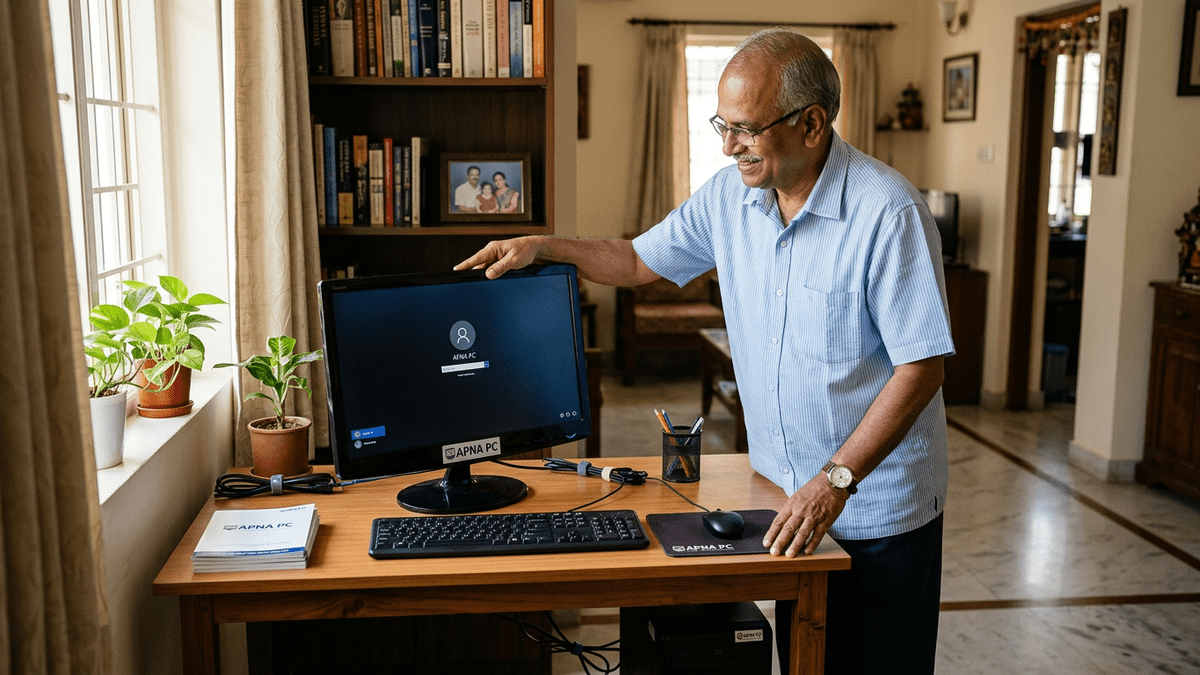
Here’s what a proper setup costs: You need a computer. You need education software. You need a space. You need basic furniture. That’s it.
The APNA PC bundle handles most of this. It’s Rs.30,000 and includes everything: a Mini PC with i3 7th Gen processor, 8GB RAM, 128GB SSD, monitor, keyboard, mouse, webcam, headset, education software, 3-year warranty, and installation. This isn’t a cheap laptop that breaks in six months. This is a professional machine built for a coaching class.
Add Rs.5,000 for basic furniture (desk, chair, whiteboard). Add Rs.2,000 for registration and admin setup. You’re looking at Rs.37,000 to launch. That’s your total investment before your first student pays a single rupee.
Charge Rs.1,500 per month per student. Get 10 students. That’s Rs.15,000 monthly. Your investment recovers in 2.5 months. Everything after that is profit.
Where to Teach: Home, Community Centre, or POD Model
You have options. Your living room works. A spare bedroom works better. A community centre works best.
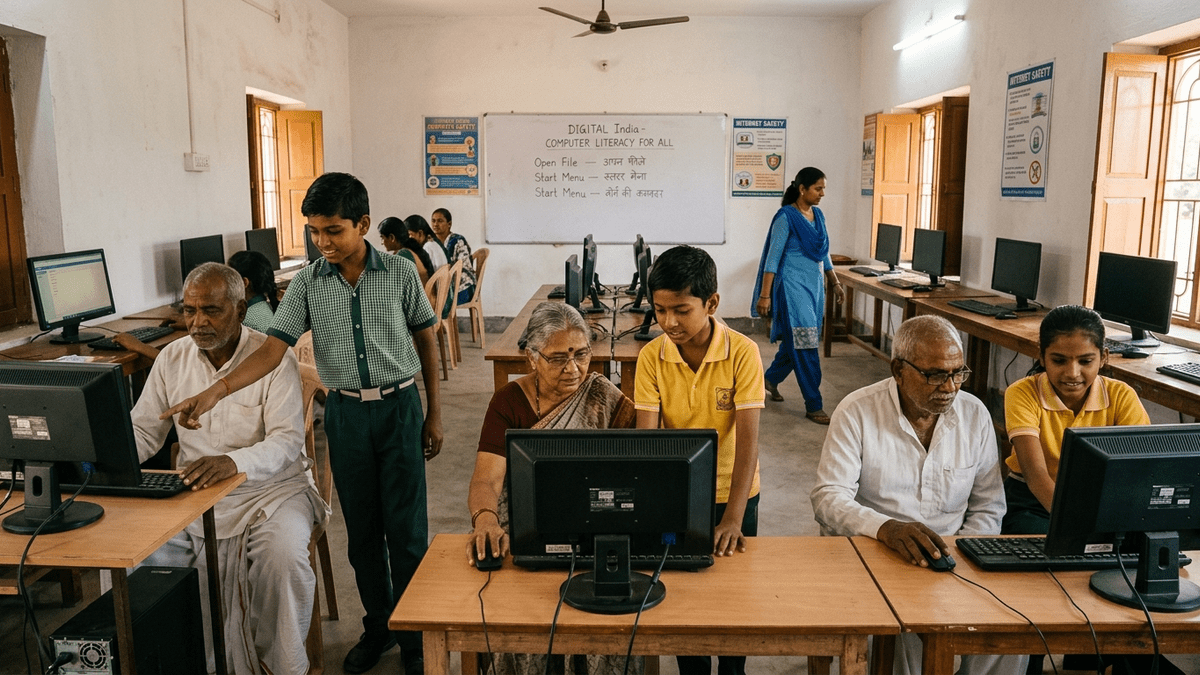
The POD model (Point of Digital Learning) is gaining traction across India. It’s a home or community learning centre run by trained educators like you. No fancy infrastructure. No corporate overhead. Just you, your APNA PC, and students who want to learn.
You can start a learning pod at home and operate it as a proper business. Many retirees are doing exactly this. They teach in their homes, earn Rs.30,000 to Rs.50,000 monthly, and help their community gain digital literacy for senior citizens and younger generations.
What You’ll Actually Teach
Most students need basics. Operating systems. Internet browsing. Email. Word processing. Spreadsheets. Online safety. That’s 80% of the demand.
You don’t need to teach advanced programming or graphic design. You need to teach what people actually use every day. What you probably already know from your career.
The education software included with APNA PC handles the curriculum. It’s structured, tested, and designed for Indian learners. You’re not building the course from scratch. You’re delivering it.
Understand digital literacy at its core: it’s not about being a tech expert. It’s about helping people use technology confidently. You can do that.
How to Get Your First Students
This is where your experience matters. You know how to sell. You’ve negotiated deals, managed relationships, and built trust. Apply those skills here.
- Tell everyone: Your family, neighbours, friends, your children’s friends. Word of mouth is your best marketing channel.
- Use WhatsApp: Create a group. Share simple updates about batches, timings, fees. No fancy marketing needed.
- Visit schools and colleges: Talk to principals and counsellors. Many institutions refer students to local coaching classes.
- Partner with NGOs: Many NGOs in your area run skill development programs. They’re always looking for instructors.
- Online platforms: Register on local classifieds. Post on community Facebook groups. Be visible.
Your first batch will be the hardest to fill. After that, referrals take over. Students tell their friends. Parents recommend you to other parents. Growth becomes organic.
The Certification Path: Making It Official
You don’t need a degree in computer science. But you do need credibility. Consider getting certified through government programs like DIKSHA digital learning platform or NASSCOM’s training programs.
A simple certificate shows parents and students that you’re serious. It takes 2-4 weeks and costs Rs.2,000 to Rs.5,000. Worth every rupee.
Better yet, many states offer free training for senior citizens who want to teach. Check with your state’s skill development authority. Some even provide small grants.
The Real Challenge: Staying Committed
The hardest part isn’t the technology or the money. It’s showing up consistently. Teaching the same basics to different batches. Answering the same questions repeatedly. Handling difficult students and impatient parents.
Retirement can feel like endless free time. But running a business requires discipline. You’ll need to work 4-6 hours daily, 5-6 days a week. That’s not retirement. That’s a second career.
But here’s what makes it worth it: You’re building something. You’re earning money. You’re staying mentally sharp. You’re helping people. You’re proving that retirement doesn’t mean irrelevance.
Next Steps: From Idea to Action
Stop thinking about it. Start planning it.
- Decide where you’ll teach (home, community centre, or POD model).
- Calculate your investment and monthly expenses.
- Get certified or trained in basic computer teaching.
- Set up your APNA PC and education software.
- Create a simple fee structure and batch schedule.
- Tell people about it.
You can start a learning pod and begin earning today. The infrastructure exists. The demand exists. What’s missing is you taking the first step.
Your retirement doesn’t have to be a full stop. It can be a comma. A new chapter. A computer coaching class after retirement might be exactly what you need and exactly what your community needs.