
Your Child’s Study Schedule is Probably Broken. Here’s Why.
Most parents create a study timetable for children and then wonder why their kids resist it like it’s punishment. They copy templates from Pinterest. They impose rigid 9-to-5 routines. They ignore what actually works for their child’s brain. Then they blame the child for being “lazy” or “unfocused.”
Here’s the truth: a daily study schedule for kids at home isn’t about filling every hour. It’s about creating rhythm. Predictability. Space for learning to actually happen. And it’s completely different from how schools structure learning.
If you’re homeschooling, running a learning pod, or supplementing school with home study, you need a study routine that works with your child’s energy, not against it. This guide will show you exactly how.
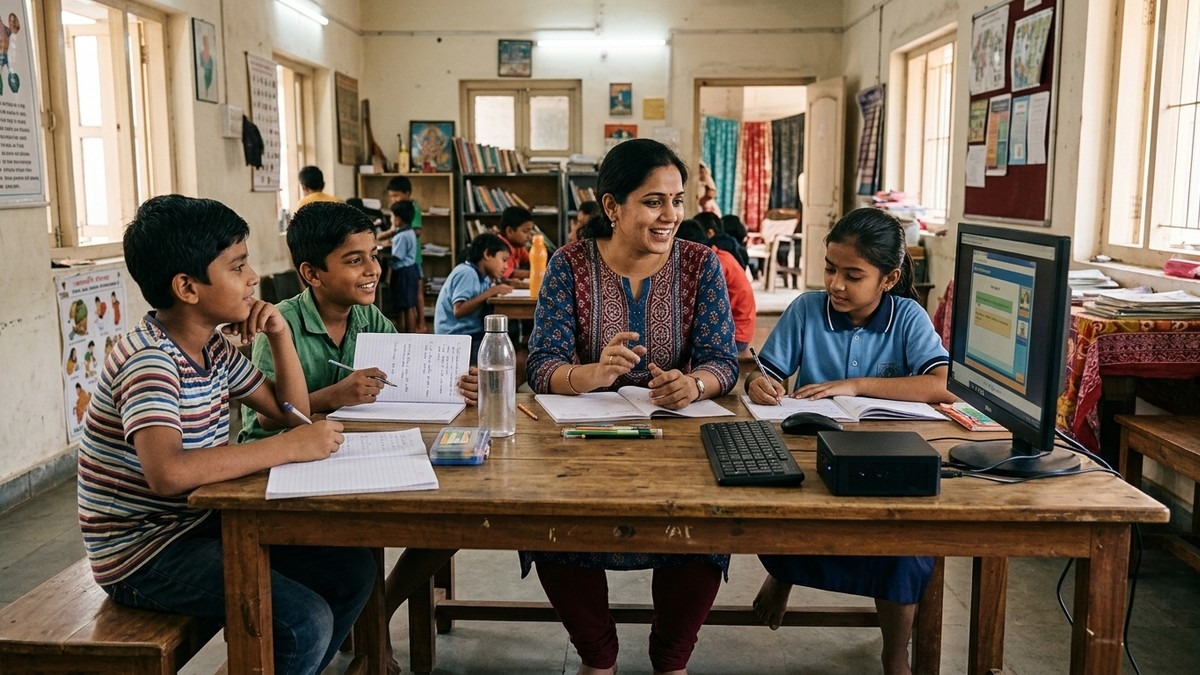
The Three Rules of a Real Study Schedule
Rule 1: Start with energy, not subjects. Your child has peak focus hours. Usually between 7-9 AM for younger kids. Maybe 10 AM-12 PM for older ones. Place your hardest subjects there. Math before lunch. Languages after. Not the other way around.
Rule 2: Time blocks beat minute-by-minute planning. Don’t say “9:00-9:15 math, 9:15-9:30 English.” Say “9:00-10:30 focused academic work.” Let your child move between subjects naturally. Breaks happen when energy dips, not on a fixed schedule.
Rule 3: Routine beats motivation every single time. Motivation is unreliable. Some days your child wakes up excited. Other days they don’t. A solid home study routine doesn’t depend on how they feel. It just happens. Like brushing teeth.
Let’s be honest: most parents skip this step and jump straight to apps and worksheets. That’s backwards.
Building Your Home Study Routine: Step by Step
Step 1: Map your child’s natural rhythm. For one week, observe when they’re alert. When do they get hungry? Tired? Restless? Don’t change anything yet. Just watch. Write it down.
Step 2: List what needs to happen. If your child is in school, you’re probably supplementing. If you’re homeschooling, you’re covering everything. Write down subjects, not hours. Math. English. Science. Hindi. Art. Whatever matters.
Step 3: Assign time blocks, not minutes. Here’s a sample structure for a 6-year-old:
- 7:30-8:30 AM: Math and language (peak focus)
- 8:30-9:00 AM: Break (snack, play, movement)
- 9:00-10:00 AM: Science or social studies
- 10:00-10:30 AM: Creative work (art, writing, projects)
- 10:30 AM onwards: Free play or outdoor time
For a 12-year-old preparing for board exams or competitive tests, you might need longer blocks. Check our guide on board exam preparation for specific strategies.
Step 4: Build in flexibility without chaos. Your routine isn’t a prison. Some days your child will finish math early. Let them move to science. Other days they’ll need 90 minutes on one concept. That’s fine. The schedule gives structure. It doesn’t strangle learning.
Step 5: Use physical reminders, not nagging. A printed timetable on the wall. A visual timer. A checklist. Not your voice saying “time for studies” seventeen times. Kids respond to systems, not reminders.
What Tools Actually Help (And What’s Just Noise)
Most people don’t realise that expensive software and fancy apps aren’t what make a daily study schedule work. What works is:
- A quiet, dedicated space for learning
- A reliable computer or tablet (if needed)
- Good internet connection
- A trained educator if you’re running a learning pod at home
- Real books, notebooks, and writing materials
If you’re setting up a Point of Digital Learning (POD) at home or in your community, you need equipment that works reliably. The APNA PC bundle at Rs.30,000 gives you everything: Mini PC with i3 7th Gen processor, 8GB RAM, 128GB SSD, monitor, keyboard, mouse, webcam, and headset. Plus 3-year warranty and installation. No surprises. No breakdowns mid-lesson.
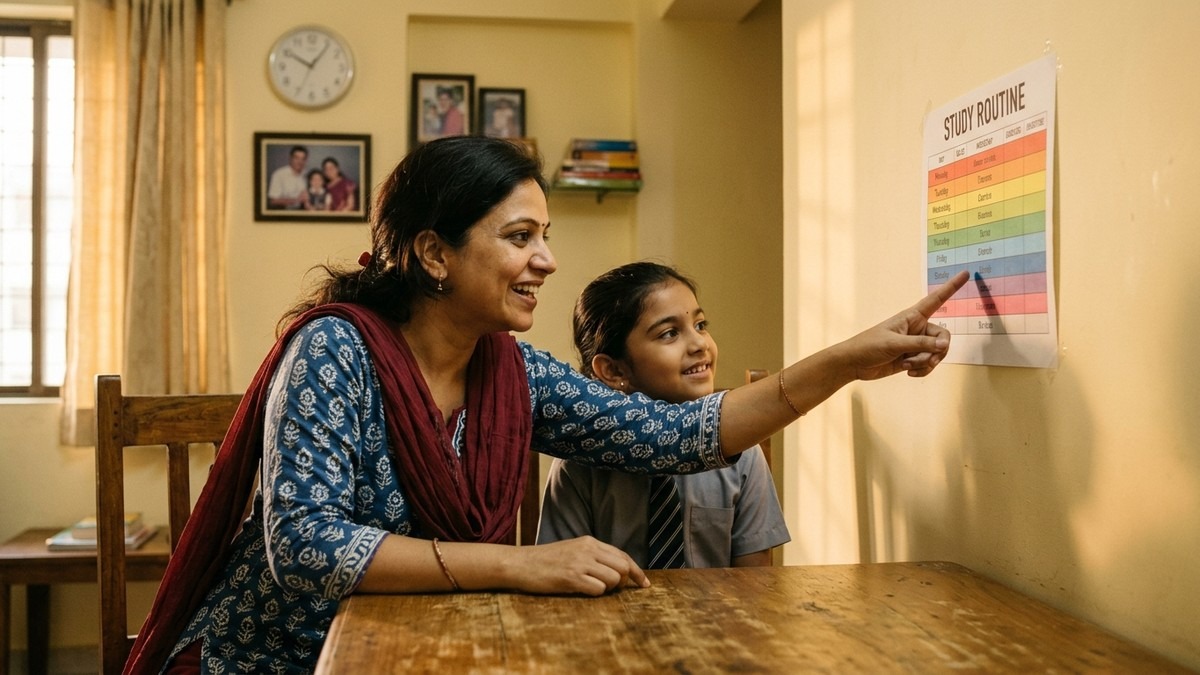
That’s the infrastructure. The study schedule is what makes it meaningful.
Common Mistakes Parents Make
Mistake 1: Copying someone else’s schedule. Your neighbor’s kid might thrive on a 6 AM start. Your child might not. Build around your child’s rhythm, not Instagram inspiration.
Mistake 2: Packing too much into one day. Five subjects, two hours each, plus extracurriculars. Your child will burn out. Aim for 2-3 hours of focused learning for primary kids. 3-4 hours for upper primary. That’s enough.
Mistake 3: Ignoring the break between school and home study. If your child is in school until 3 PM, don’t start home study at 3:30 PM. Give a real break. Physical activity. Food. Rest. Then study. Your child’s brain needs recovery time, not back-to-back academics.
Mistake 4: No accountability system. A schedule without tracking is just a wish. Use a simple checklist. A calendar with checkmarks. Your child sees progress. You see what’s working and what isn’t.
The Real Goal Here
A daily study schedule for kids isn’t about perfect compliance. It’s not about your child sitting at a desk for eight hours looking miserable. It’s about creating an environment where learning becomes normal. Where your child knows what to expect. Where they develop focus naturally, not through force.
If you’re running a learning pod or homeschooling multiple children, this becomes even more critical. You need a system that works for everyone, not a custom plan for each kid every day.
Start small. Test your schedule for two weeks. Adjust. Make it yours. Your child’s home study routine is the foundation for everything else. Get this right, and everything else gets easier.
Want to scale this into a real learning pod? We can help you start a learning pod with proper systems and training.