
Your Family’s Health Records Are Scattered Everywhere. Here’s Why That’s Dangerous.
Your mother’s diabetes reports are in a cupboard. Your father’s heart medication list is written on the back of an old prescription. Your child’s vaccination records are somewhere in your email. Your own health history exists only in your doctor’s filing cabinet.
This is not organisation. This is chaos waiting to become a crisis.
Most people don’t realise that fragmented health records cost lives. When you rush to the hospital, doctors waste precious minutes hunting for your medical history. When you switch doctors, critical information gets lost. When a family member falls ill and can’t communicate, nobody knows their allergies or existing conditions. Digital health records solve this. Not eventually. Now.
Here’s the truth: Indian families in 2026 can manage complete health records digitally without being tech experts. You don’t need complicated apps or expensive systems. You need the right tools, basic training, and a commitment to one place where everything lives.
Key Takeaways
- To manage family health records digitally in India, you need one organised system covering medical reports, prescriptions, vaccination records, doctor contacts, insurance details and allergy information for every family member.
- Fragmented paper records cause real problems: doctors waste time hunting for history in emergencies, duplicate tests get ordered, and medication errors happen when allergies are forgotten.
- A single home computer, rather than a phone or tablet, works best as the family health records hub because files stay backed up, organised and visible to whoever needs them.
- The MeitY Digital India initiative has pushed government health portals and digitisation forward, but connecting them into one usable family system is still something each household has to do itself.
- Many families need basic training to scan documents, organise files and use government health portals safely, which a local trained educator can usually teach in a single session.
Why Digital Health Records Matter for Indian Families Right Now
The MeitY Digital India initiative has pushed health digitalisation forward. But most Indian families haven’t caught up. They’re still living in the paper era while their doctors are slowly moving online.
Let’s be honest: your family needs digital health records for these specific reasons:
- Emergency situations don’t wait for paperwork. When your elderly parent collapses, paramedics need instant access to their medical history, not a treasure hunt through your home.
- Multiple doctors need the same information. Your cardiologist shouldn’t repeat tests your general physician already did. Digital records prevent duplicate procedures and wasted money.
- Medication errors kill people. When records are scattered, drug interactions go unnoticed. Allergies get forgotten. Digital records keep everyone safe.
- Insurance claims move faster. Digital documentation means faster reimbursements and fewer rejected claims.
- You can actually track your family’s wellness. Instead of guessing about blood pressure trends or weight patterns, you see real data over time.
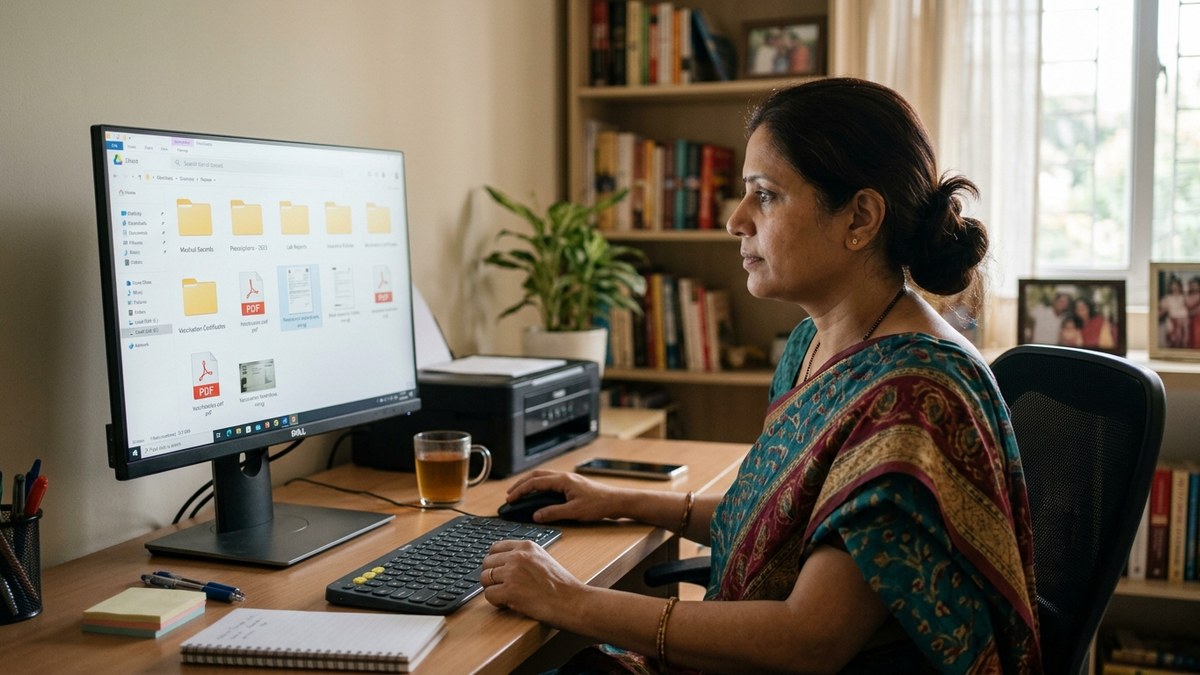
The Digital India initiative has created the foundation. Government health portals exist. Private hospitals offer digital records. But connecting them all into one usable system for your family? That’s your job. And it’s simpler than you think.
Building Your Family’s Digital Health Records System
Start with a single device. A computer in your home becomes your family health command centre. Not a phone. Not a tablet. A proper computer where everything is backed up, visible, and secure.
Here’s what goes into your system:
- Medical reports (blood tests, X-rays, ultrasounds, scans) as digital copies
- Prescription lists for every family member with dosages and frequencies
- Vaccination records and immunisation schedules
- Doctor contact information and appointment history
- Insurance policy details and claim documents
- Allergy information and adverse reactions
- Chronic condition management notes
- Emergency contact details and blood types
Most Indian families need training to do this properly. That’s where community learning pods make a difference. A trained educator can show your family how to scan documents, organise files, use government health portals, and maintain privacy. One session. That’s all it takes.
The barrier isn’t knowledge. It’s access to the right equipment and guidance. Many Indian families don’t have a reliable computer at home. Many don’t know where to start. Many are afraid they’ll make mistakes.
The Real Barrier: Equipment and Training
Let’s address what’s actually stopping Indian families from managing digital health records. It’s not laziness. It’s not resistance to technology. It’s practical obstacles:
- No dedicated computer at home
- Shared devices that aren’t reliable for sensitive health data
- No one to teach them how to do this properly
- Fear of making mistakes with important medical information
- Uncertainty about privacy and security
This is exactly why APNA PC exists. A complete bundle designed for Indian homes. Mini PC i3 7th Gen with 8GB RAM and 128GB SSD. Monitor. Keyboard. Mouse. Webcam. Headset. Installation included. Three-year warranty. All for Rs.30,000.
But equipment alone isn’t enough. You need training. You need to understand how to set up folders, scan documents, back up files, and use government health portals. You need someone to walk you through it. That’s where your digital skills development comes in. A trained educator at a community learning centre can teach your entire family in just a few sessions.
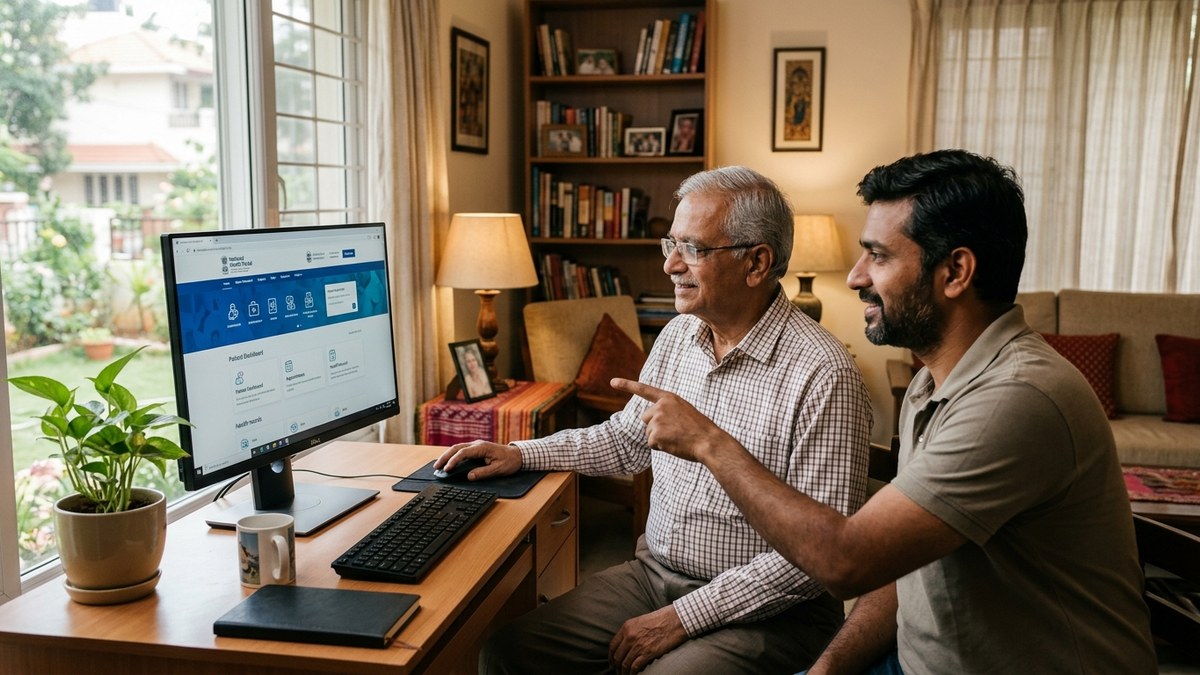
Your mother learns how to upload her blood pressure readings. Your father learns how to store his medication list. Your children learn how to help grandparents access records when needed. Everyone becomes part of the system.
Making This Happen in Your Family
Start today. Not next month. Not when you have more time. Today.
Step one: Gather all your family’s scattered health records. Every report. Every prescription. Every vaccination card. Put them in one place.
Step two: Get a reliable computer. One that stays in your home. One that’s backed up regularly. One that becomes your family’s health hub.
Step three: Get trained. Find a community learning pod near you. Or get training online. Learn how to scan, store, and access these records safely.
Step four: Build your system. Start with one family member’s complete health record. Then expand to others. Make it a family project.
Your family’s health is too important for scattered papers and lost information. Digital health records aren’t a luxury. They’re essential. And they’re possible for every Indian family right now.
Get APNA PC today and start building your family’s digital health system.
Frequently Asked Questions About Manage family health records digitally in India
How do I start managing my family’s health records digitally?
Begin with one dedicated computer as your family health records hub and scan in existing paper reports: blood tests, prescriptions, vaccination records and insurance documents. Organise them by family member and date, and add doctor contact details and allergy information so everything is in one searchable place.
Why are digital health records safer than paper records for a family?
Paper records get lost, damaged or scattered across cupboards and email accounts, which wastes critical time during emergencies and increases the risk of forgotten allergies or repeated tests. A digital system backed up on a dedicated computer keeps everything in one place that any family member can access when needed.
Is a phone enough to manage family health records, or do I need a computer?
A phone works for quick lookups, but a computer is far better for scanning documents, organising years of records by family member, and backing everything up reliably. Tasks like filling government health portal forms are also easier on a full screen and keyboard.
What should a family’s digital health record system include?
At minimum it should include medical reports and scans, prescription lists with dosages, vaccination and immunisation records, doctor contact and appointment history, insurance policy and claim documents, and allergy or chronic condition notes. Having all of this in one place prevents dangerous gaps during emergencies or doctor changes.
Where can Indian families get help setting up digital health records?
Government health portals built under the Digital India initiative provide a starting foundation, and many private hospitals now offer digital records too. For hands-on help organising it all into one working family system, a local trained educator or community learning pod can usually walk a family through the basics in a single session.
India’s MeitY Digital India initiative has driven the digitisation of government health portals and records, providing the foundation Indian families can build their own digital health record systems on.