The Digital Literacy Mission India: What You Need to Know Right Now
Most Indian students still cannot send an email properly. They cannot create a document. They cannot troubleshoot a basic computer problem. This is not a failure of intelligence. This is a failure of access. The Digital Literacy Mission India exists to fix exactly this problem, and if you are a student, teacher, or parent reading this, you need to understand what it means for your future.
Here is the truth: digital literacy is no longer optional in India. The government knows this. That is why free government courses under the digital literacy mission are being rolled out across states, districts, and villages. These are not fancy online programs you watch passively. These are structured, hands-on courses designed to take you from zero computer knowledge to genuine competence.
Let us be honest. Most families cannot afford expensive computer training institutes. A single month of coaching can cost Rs.5,000 to Rs.15,000. For a student from a middle-class or working-class family, that is a real barrier. The digital literacy mission removes that barrier entirely. Free. No fees. No hidden costs.
Free Government Courses: What Exactly Are They Teaching?
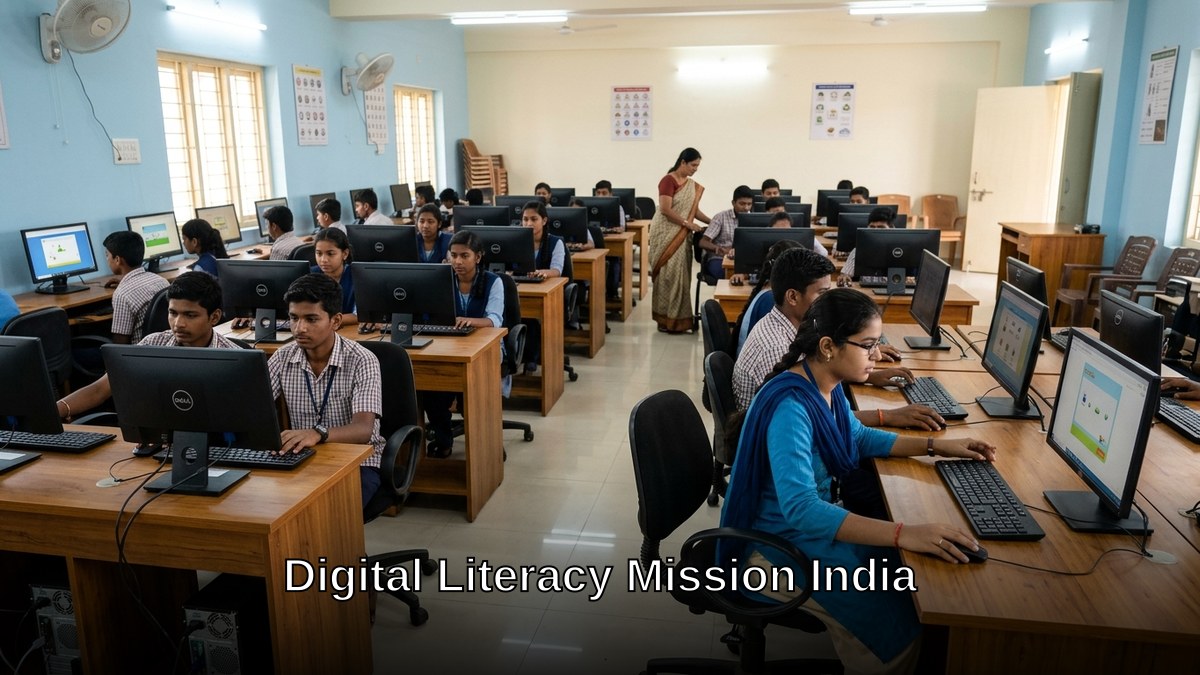
The digital literacy mission offers courses across multiple levels. Beginners learn operating systems, basic software, internet navigation, and email. Intermediate students move into productivity tools like word processors, spreadsheets, and presentations. Advanced learners explore digital security, online safety, and professional skills.
Most people do not realise that these courses are not theoretical. They happen at Points of Digital Learning (POD). A POD is a physical space, either a dedicated government centre or a community learning centre run by a trained educator. You sit at a real computer. You use real software. You learn by doing, not by watching videos.
The structure matters. Each course typically runs for 20-40 hours spread over weeks. Classes are small, usually 15-25 students. Teachers are trained specifically to teach digital literacy, not just IT professionals who happen to be teaching. Your pace is considered. Your questions matter.
Which government agencies run this? The Digital India initiative coordinates most programs. State governments implement them. The Central Board of Secondary Education has integrated digital literacy into school curricula. The DIKSHA digital learning platform provides supplementary resources for students and teachers.
Why This Matters for Your Future
Here is what employers actually look for: basic computer competence. Not coding. Not advanced graphics design. Just the ability to use a computer confidently for work. Digital literacy mission courses teach exactly this.
Students who complete these courses gain real advantages. They can apply for jobs that require computer skills. They can pursue higher education in technology fields without fear. They understand online safety, which protects them from fraud and scams.
Teachers benefit too. Understanding digital tools helps you teach better, especially if you want to explore online or hybrid teaching methods. Read more about the digital skills every teacher needs to stay relevant in 2026.
Parents need to understand this as well. If your child completes a digital literacy mission course, they are not just learning a skill. They are gaining confidence. They are opening doors to opportunities that would otherwise remain closed.
Where to Find These Courses in Your Area
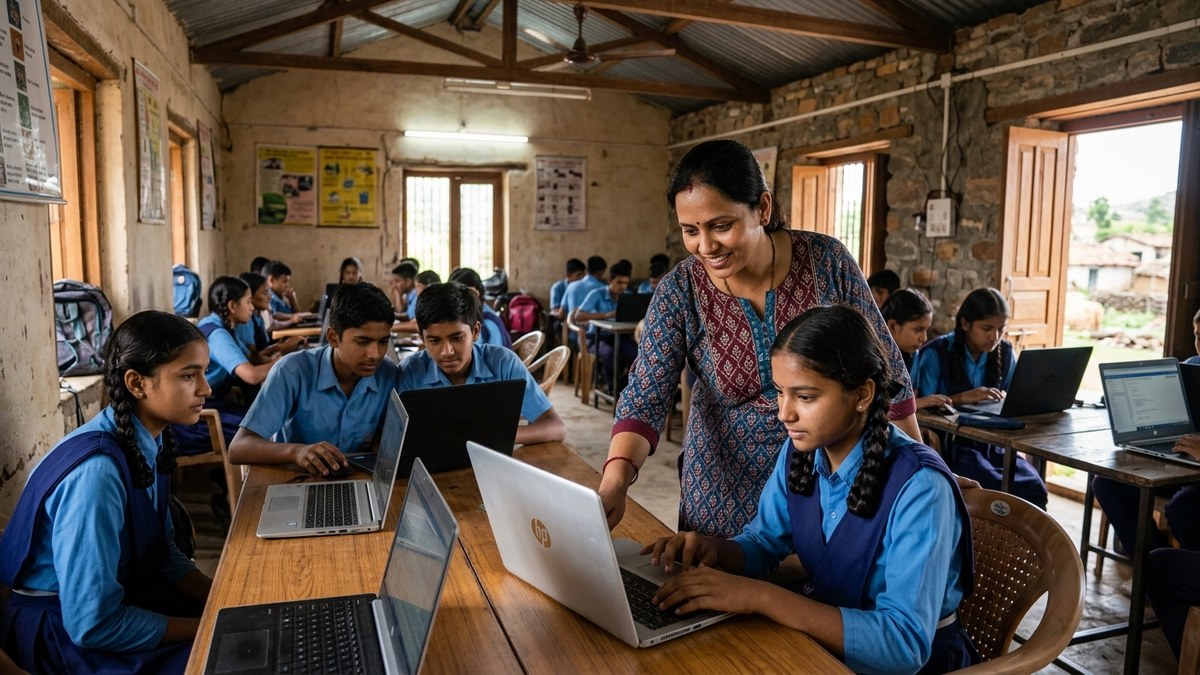
The digital literacy mission operates through multiple channels. Check your state government’s official website for digital literacy programs. Many state IT departments list POD locations and course schedules. Local government offices, particularly block development offices, can provide information about nearby centres.
Schools increasingly offer these courses to students during school hours or after-school programs. If your school does not offer them, ask your principal why not. Demand matters. Schools respond to demand.
Community centres, libraries, and youth clubs often host POD programs. Check community notice boards. Ask your local councillor or sarpanch about digital literacy initiatives in your area.
Understand this: why digital literacy matters is no longer a theoretical question. It is a practical necessity for every student in India.
Beyond Government Courses: The APNA PC Solution
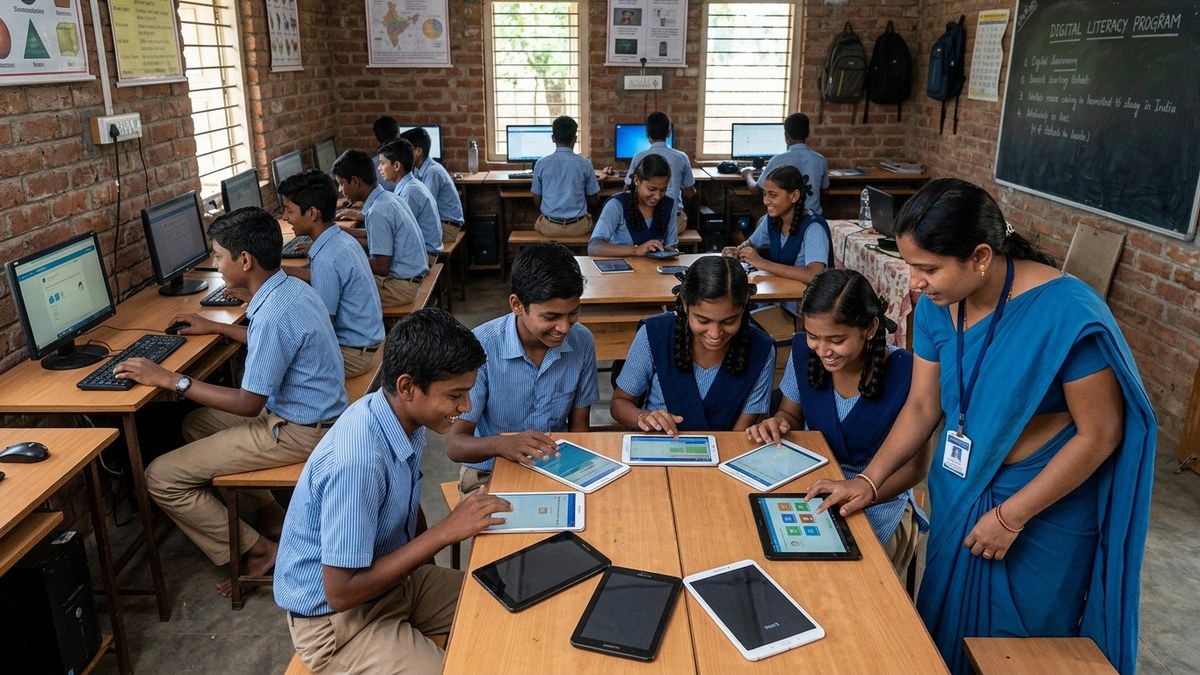
Free government courses are excellent. They are your starting point. But here is what many students discover: they want to continue learning at home. They want to practice on their own device. They want to deepen their skills beyond the basic course.
This is where having your own computer setup becomes critical. Most students do not have access to a personal computer at home. That is a massive limitation. You learn at a POD, but then you go home to a smartphone. You cannot practice. You cannot build real competence.
The APNA PC bundle changes this equation entirely. For Rs.30,000, you get a complete system: a Mini PC with i3 7th Gen processor, 8GB RAM, and 128GB SSD. This is genuine computing power, not a toy. Add the monitor, keyboard, mouse, webcam, and headset. Add three years of warranty and professional installation. Add education software pre-loaded and ready to use.
Think about the math. A used desktop computer alone costs Rs.15,000 to Rs.20,000. A monitor is another Rs.5,000. Peripherals add more. Warranty and support cost extra. Software licenses cost money. The APNA PC bundles everything into one affordable package designed specifically for students and educators.
You complete your free digital literacy mission course. You understand the basics. Then you take your learning home. You practice on your APNA PC. You build real skills. You become genuinely competent, not just course-certified.
This is how you move from digital literacy to digital mastery.
Ready to take the next step? Explore the APNA PC bundle and see how it can accelerate your digital learning journey.