Rural India Is Being Left Behind. Here’s How You Fix It.
Let’s be honest: 258 million Indians still can’t use a computer. Most of them live in villages. Most of them are women, homemakers, and seniors who’ve accepted that digital skills “aren’t for them.” That’s the lie we need to stop telling.
A digital literacy program for rural India isn’t a charity project. It’s an economic necessity. When you build a proper digital literacy program in your village or community, you’re not just teaching people to click a mouse. You’re opening doors to income, independence, and relevance in a world that’s moving online whether they’re ready or not.
Here’s the truth: the infrastructure exists now. The will doesn’t. This guide shows you exactly how to build a digital literacy program rural India actually needs, using tools and methods that work on the ground.
Why Most Digital Literacy Programs Fail in Villages
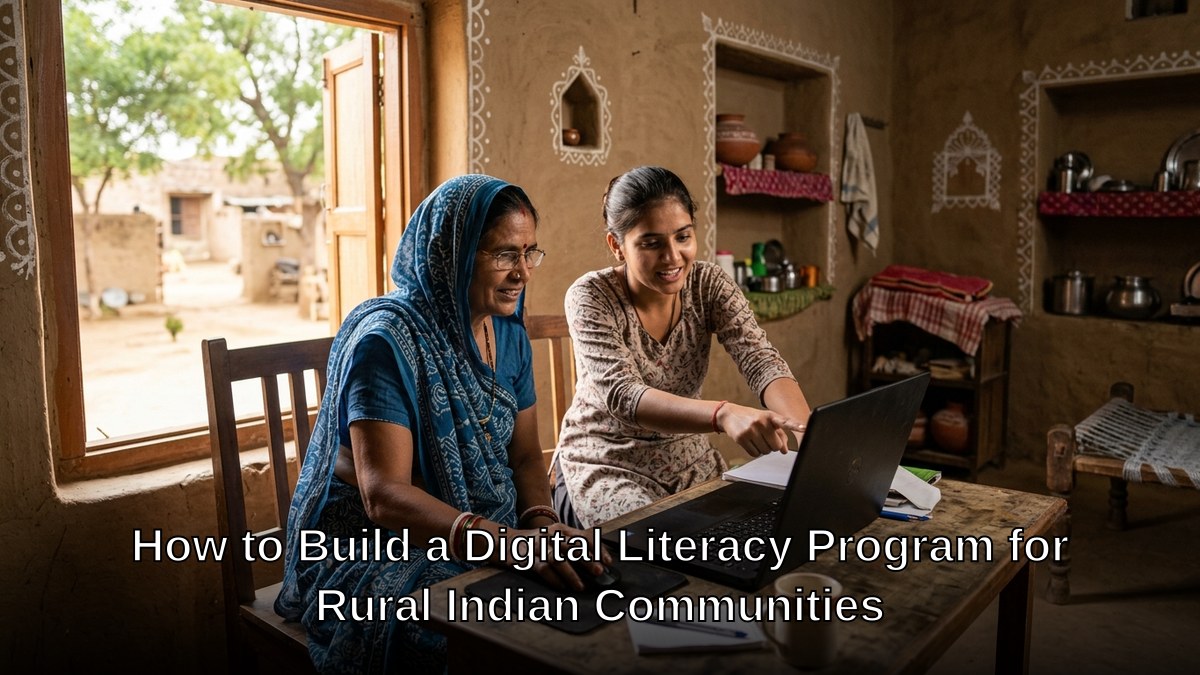
Most people don’t realise why government computer labs sit empty in rural areas. It’s not because villagers don’t want to learn. It’s because:
- The programs are designed by people who’ve never lived there
- Teachers are trained in Delhi but teach in villages they don’t understand
- The hardware breaks and there’s no one to fix it
- Classes happen at times that don’t match village life rhythms
- There’s no connection between learning and actual income opportunities
A real digital literacy program rural India needs must be hyperlocal. It must be run by someone the community trusts. It must have backup support when things break. And it must show immediate, visible results.
That’s where the Point of Digital Learning model comes in.
Build Your POD: The Point of Digital Learning Model
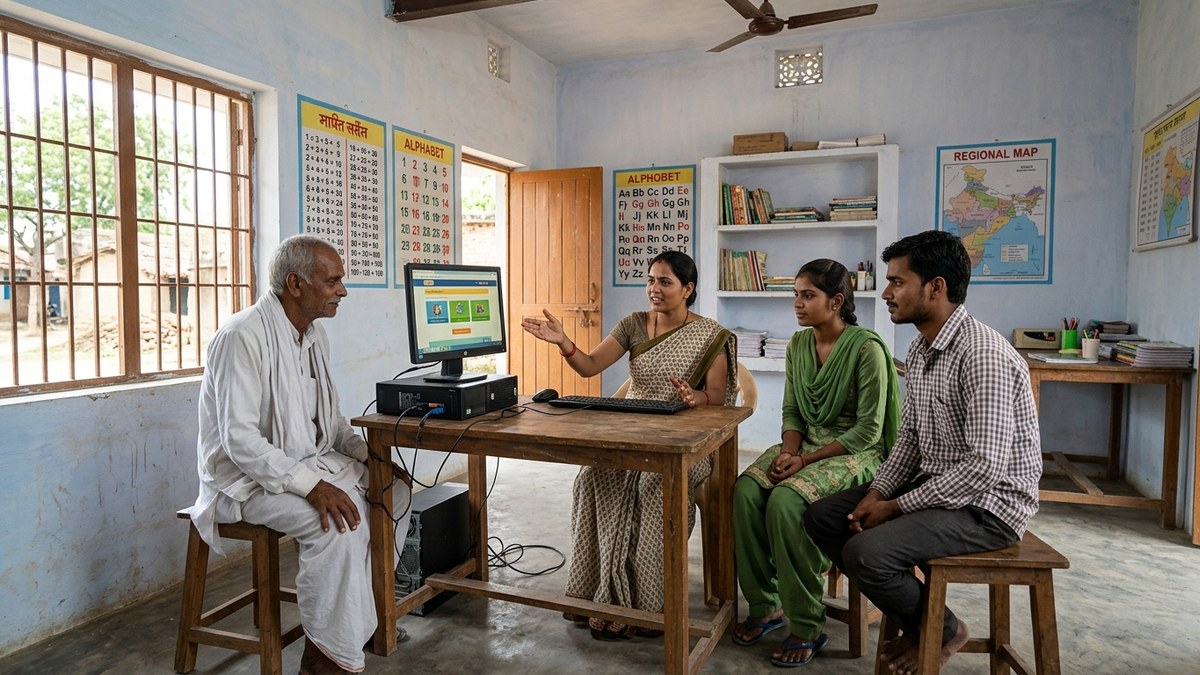
A POD is simple: it’s a home or community learning centre run by a trained educator from that village. Not an outsider. Not a franchise. A real person teaching real neighbors in a real space they can reach on foot.
You need three things to start:
- The right hardware: APNA PC is built for this. Rs.30,000 complete bundle with Mini PC i3 7th Gen, 8GB RAM, 128GB SSD, monitor, keyboard, mouse, webcam, headset, education software, 3-year warranty, and installation. No surprises. No breakdown. No “we’ll send someone from the city next month.”
- Structured curriculum: Not generic computer classes. Real skills: email, basic internet safety, how to access government portals, how to use WhatsApp for business, how to take online payments. Then move to digital literacy for Indian students frameworks if you’re teaching younger learners too.
- A trained educator: Someone from the village. Someone who speaks the language. Someone who understands that a 60-year-old homemaker needs patience, not speed.
This is how village computer training actually works. Not from above. From within.
Who Should Run a POD (And Why You Might Be Perfect)
The best POD educators aren’t always the most tech-savvy people. They’re the people the community listens to. That could be you if you’re:
- A tuition teacher looking to expand into digital skills training
- A homemaker who wants to earn without leaving the village
- A retired person with time and credibility
- An edupreneur ready to build something real
- A school teacher wanting to run evening classes
You don’t need to be a tech expert. You need to be trustworthy. You need to show up. You need to care if your students actually learn.
The start coding classes from home model works because it removes the barrier of “I need a fancy office.” Your living room works. Your community center works. A rented space works.
The Curriculum That Actually Sticks
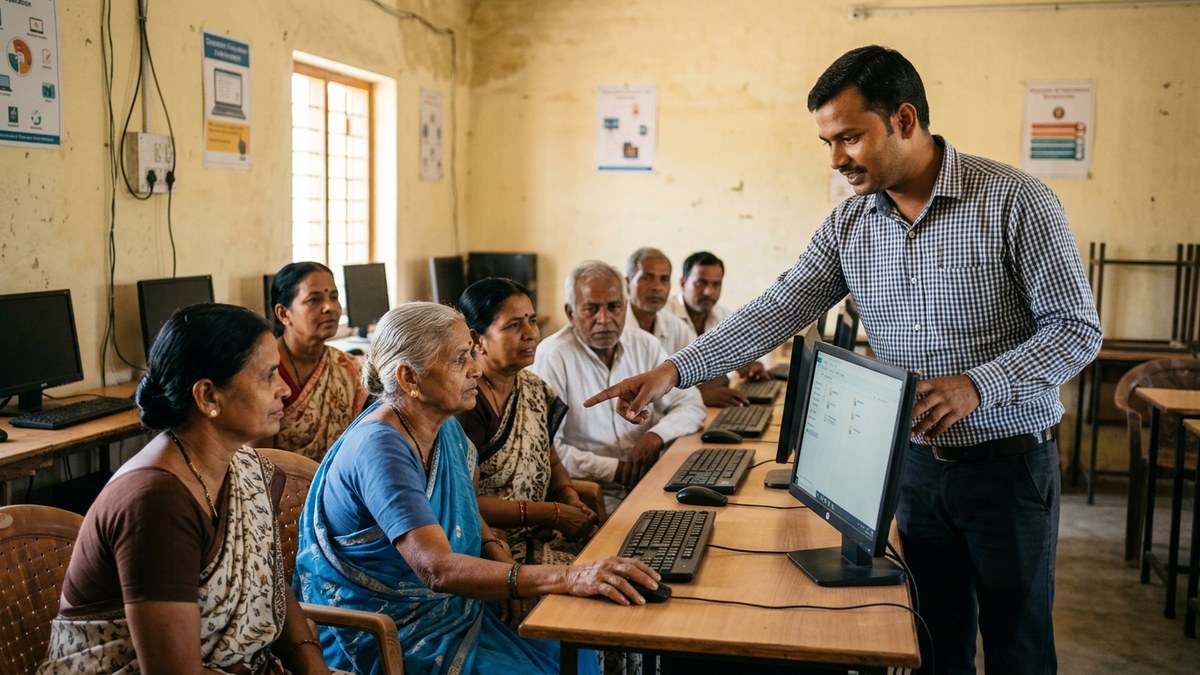
Most people don’t realise that rural learners need a completely different teaching approach. Here’s what works:
- Start with problems they face: “How do I video call my son in the city?” teaches camera and microphone setup better than “Introduction to Hardware.”
- Teach in their language: If they speak Marathi, Hindi, Tamil, teach in that language. English is a barrier, not a bridge.
- Use their own phones first: Before touching a computer, show them what they can already do on their smartphones. Build confidence.
- Show the money: If they learn online payments, show them how a local shopkeeper uses it. Make it real.
- Repeat without shame: A senior citizen might need to learn how to click a mouse five times. That’s not failure. That’s learning.
The education software bundled with APNA PC is designed exactly for this. It’s not fancy. It’s clear. It’s practical. It works offline when internet cuts out (and it will).
Making Money From Your POD
Here’s the part most people avoid: you can’t run a POD on passion alone. You need revenue.
Charge Rs.500-1000 per student per month. In a village of 2000 people, if you get 20 students, that’s Rs.10,000-20,000 monthly. That’s real income. That’s why this works.
Your APNA PC investment (Rs.30,000) pays for itself in 2-3 months. The 3-year warranty means you’re not scrambling to fix broken hardware. The installation support means you’re not stuck figuring out cables.
Most people don’t realise this is scalable. Once your first POD works, you can train another educator and set up a second one. Now you’re earning from two centers. Now you’re building a network.
Start Now. Here’s How.
You don’t need permission. You don’t need a degree. You need a decision.
First, understand what Digital literacy (Wikipedia) actually means in rural context. Then look at what the Digital India initiative is trying to achieve. Now you know the gap.
Your POD fills that gap.
Ready to build a digital literacy program for your community? Start a TeachToEarn Learning POD today. Get APNA PC. Get trained. Get started. Stop waiting for someone else to fix rural digital education. Be that someone.
The villages aren’t waiting. Neither should you.