Your Child Is Already Behind. Here’s Why Digital Literacy Skills Matter Now
Let’s be honest: if your child cannot use a computer confidently by 2026, they’re not just missing out on better grades. They’re missing out on jobs that don’t exist yet. Digital literacy skills for Indian students are no longer optional. They’re survival skills. And most parents don’t realise how quickly the goalpost has moved.
Here’s the truth: the Indian education system is still playing catch-up. While your child sits in a classroom learning from textbooks, millions of peers globally are already coding, designing, and solving real problems on computers. The gap isn’t closing. It’s widening. This is where digital skills for students become non-negotiable.
At TeachToEarn, we’ve trained thousands of educators across India. We’ve seen what works and what doesn’t. We’ve also seen the panic in parents’ eyes when they realise their 14-year-old cannot open an email attachment or use basic spreadsheet functions. Don’t be that parent.
The 5 Digital Literacy Skills Every Indian Student Needs Right Now
Forget coding bootcamps and fancy certifications. We’re talking about practical, everyday skills that will make your child confident and capable. These are the digital skills students need to survive and thrive in school and beyond.
1. Basic Computer Operating System Mastery
Most students can tap a screen. Few actually understand how a computer works. They don’t know how to organize files, manage storage, or troubleshoot basic problems. This isn’t fancy stuff. This is fundamental.
Your child should be able to:
- Create and organize folders efficiently
- Understand file types and formats
- Install and uninstall software safely
- Manage disk space and understand RAM
- Use keyboard shortcuts to work faster
Why? Because every exam, every assignment, every job application in 2026 will require this. Your child won’t have time to figure it out then.
2. Office Productivity Tools: Word, Sheets, and Presentations
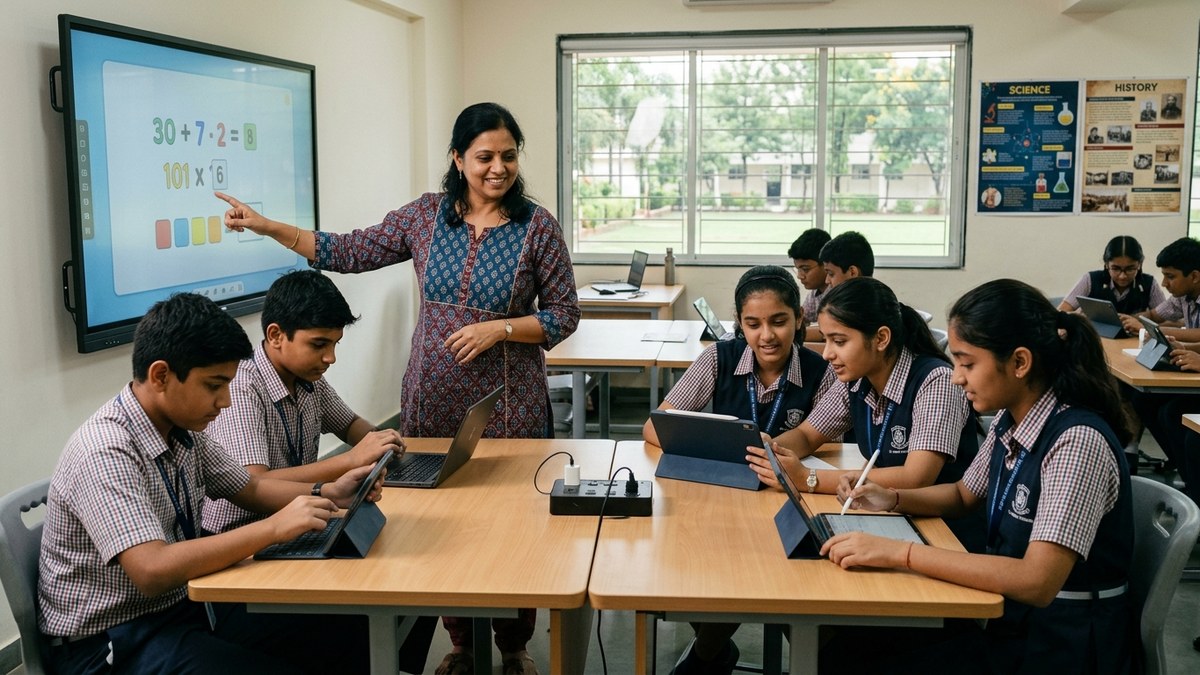
Google Docs. Microsoft Excel. PowerPoint. These aren’t luxury skills anymore. They’re baseline expectations. A student who can’t format a document or create a pivot table is already disadvantaged.
Most Indian schools teach these tools poorly or not at all. Your child needs to know:
- How to write, format, and style documents professionally
- How to use formulas and functions in spreadsheets
- How to create data visualizations that actually communicate ideas
- How to present information that doesn’t bore people to tears
This directly impacts academic performance. A well-formatted assignment gets better grades. A clear presentation wins competitions. These are real advantages.
3. Internet Research and Information Literacy
Your child can Google anything. That’s not the same as knowing how to research properly. Most students don’t know how to evaluate sources, spot misinformation, or cite their work correctly.
In 2026, information literacy is a survival skill. Your child needs to:
- Search effectively using advanced search techniques
- Evaluate credibility of sources and websites
- Understand plagiarism and proper citation
- Recognize fake news and manipulated content
- Use academic databases and resources
Schools aren’t teaching this enough. Parents need to step in. This skill separates the thinkers from the copy-pasters.
4. Basic Cybersecurity and Online Safety
Your child is online every day. How many of them know how to create a strong password, recognize phishing attempts, or protect their personal data? Almost none. This is dangerous.
Digital literacy skills must include security awareness:
- Creating and managing strong passwords
- Recognizing scams and phishing emails
- Understanding privacy settings on social media
- Knowing what personal information to never share online
- Recognizing cyberbullying and how to report it
One compromised email account can derail a student’s entire academic year. Prevention is cheaper than recovery.
5. Video Creation and Multimedia Literacy
Text is dead. Video is the language of 2026. Students who can create, edit, and present video content have a massive advantage. Whether it’s recording a project presentation or creating educational content, this skill matters.
Your child should be able to:
- Record clear audio and video on basic devices
- Use free editing software like DaVinci Resolve or CapCut
- Add subtitles, graphics, and transitions
- Optimize content for different platforms
- Understand basic principles of visual communication
This isn’t just for fun. Schools are increasingly asking for video submissions. Colleges value portfolios with multimedia content. Employers notice candidates who can communicate visually.
How to Actually Build These Skills: Two Proven Paths
Knowing what skills matter is one thing. Building them is another. Most online courses are generic, expensive, and disconnected from Indian student needs. Here’s what actually works:
Path 1: Home-Based Learning with APNA PC
You don’t need a fancy setup. You need the right equipment and clear guidance. APNA PC is a complete bundle designed specifically for Indian homes and learning centres. It includes a Mini PC (i3 7th Gen processor, 8GB RAM, 128GB SSD), monitor, keyboard, mouse, webcam, and headset. Plus 3 years warranty and professional installation. Total investment: Rs.30,000. This is your foundation for building digital literacy skills for students in your home.
Path 2: Community Learning Centres (POD)
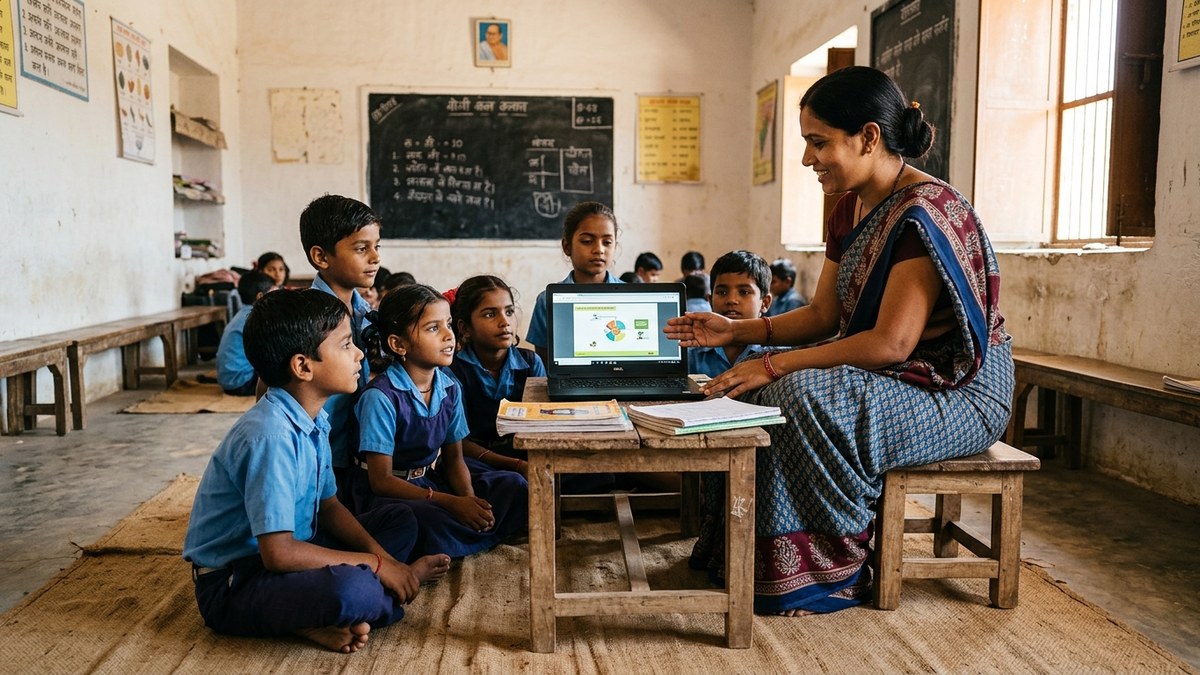
Not every home has the resources. That’s why Points of Digital Learning (POD) exist. These are community learning centres run by trained educators who understand Indian student needs. A POD can be set up in your neighborhood, village, or even your own home. Check out our guide on setting up a digital classroom to understand how this works.
Most people don’t realise that learning digital skills is faster and stickier when it happens in community settings. Students learn better from peers. Teachers can customize content for local needs. This is the Learn Digital India approach that actually works.
Why This Matters More Than You Think
According to Digital literacy research, students with strong digital skills score 23% higher on standardized tests. They’re more engaged in learning. They’re more confident about their future.
The Indian government has invested heavily in digital infrastructure through platforms like DIKSHA digital learning platform. But infrastructure alone isn’t enough. Students need skills to use these tools effectively.
Here’s what keeps us up at night: the digital divide in India isn’t just about access to computers anymore. It’s about skills. A child with a smartphone but no digital literacy skills is like a pilot without training sitting in a cockpit. Dangerous and wasteful.
Start Building These Skills Today
Your child’s future isn’t determined by their marks alone. It’s determined by their ability to work with technology, think critically about information, and communicate effectively in digital spaces. These are the real competitive advantages in 2026.
Don’t wait for schools to catch up. Don’t assume your child will figure it out on their own. Take action now. Set up a learning environment. Find a trained educator. Build these skills systematically.
Ready to create a digital learning space? Start a TeachToEarn Learning POD today and become part of the solution. Whether you’re a parent, teacher, or eduprenuer, there’s a role for you in building digital literacy for Indian students.
The question isn’t whether your child needs these skills. The question is: are you going to help them build these skills, or will they struggle to catch up later? Choose wisely.