
Your students are waiting. Your competition is not. And you are still teaching the way you did five years ago.
Let us be honest: most Indian teachers have not updated their digital skills for online teaching since the pandemic forced them online. You learned Zoom. You figured out Google Meet. You uploaded PDFs to WhatsApp. And then you stopped.
But 2026 is different. Parents expect seamless online learning. Students demand interactive classes. Coaching centers that cannot deliver digital skills for teachers are losing students to those that can. If you run a tuition center, a coaching facility, or a Point of Digital Learning (POD), your survival depends on mastering the right digital skills for teachers right now.
Here is the truth: it is not about being tech-savvy. It is about being intentional.
Key Takeaways
- Digital skills for Indian teachers now go beyond Zoom and Google Meet to breakout rooms, screen sharing, recording and repurposing content for later use.
- Content creation tools like Canva and OBS Studio matter because talking-head lessons bore students, while visual, engaging content holds their attention.
- Assessment tools such as Google Forms and real-time polling tell a teacher whether students are actually learning, not just whether they attended.
- Basic cybersecurity, including password management and protecting student data, is now a non-negotiable digital skill for any teacher working online.
- None of these skills matter on a laptop that crashes every twenty minutes, so a stable computer is as much a part of digital skills for teachers as the software itself.
Digital Skills for Teachers: What Actually Matters
Most people do not realise that teaching online is not the same as teaching offline with a camera pointed at you. The skills are different. The tools are different. The mindset must be different.
Let us break down what you actually need:
- Learning Management Systems (LMS): Platforms like DIKSHA digital learning platform allow you to organize content, track student progress, and deliver structured courses. Not optional anymore.
- Video conferencing with engagement: Zoom and Google Meet are table stakes. But can you use breakout rooms? Can you screen share effectively? Can you record and repurpose content? Most teachers cannot.
- Content creation tools: Canva, OBS Studio, simple video editors. You need to create visual, engaging content. Talking heads bore students. Period.
- Assessment and feedback software: Google Forms, Quizzes, real-time polling. You need to know if students are learning, not just if they are present.
- Basic cybersecurity: Password management, data privacy, protecting student information. Non-negotiable in 2026.
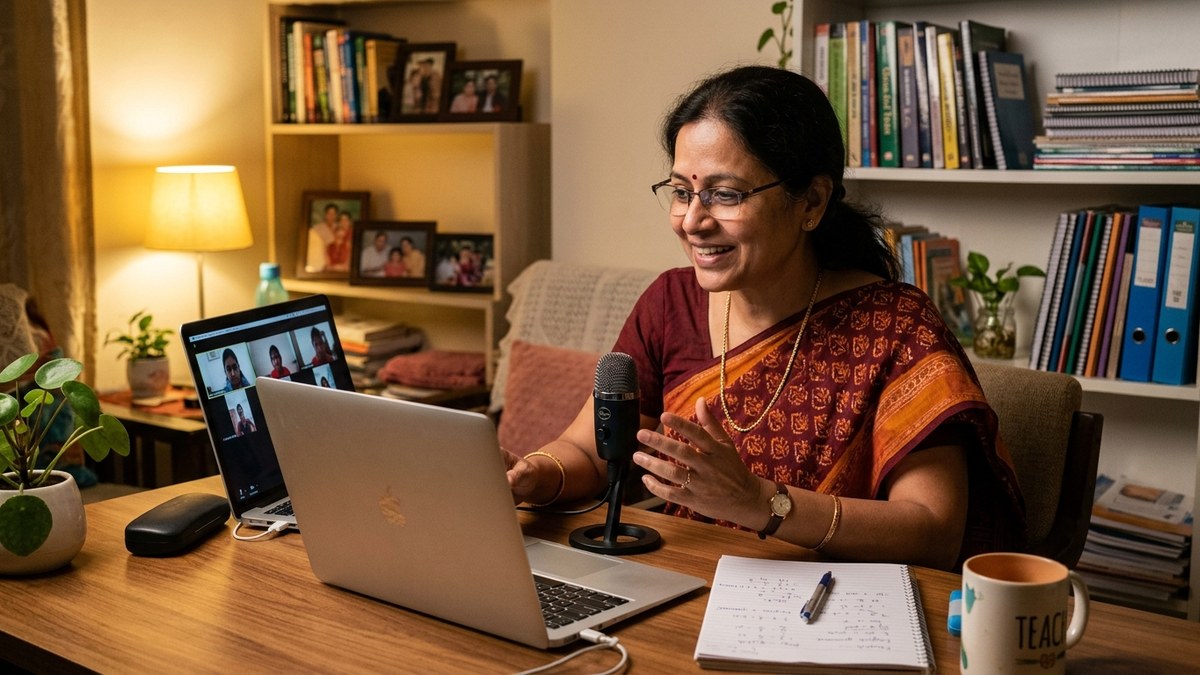
Why Teacher Digital Literacy Is Your Competitive Advantage
Your competition is not other teachers in your city. It is the online academy that charges half your fees. It is the YouTube channel with 500,000 subscribers. It is the AI tutor available 24/7.
So what do you have that they do not? You have presence. You have accountability. You have the ability to adapt. But only if you have the digital skills to match.
When you master online teaching tools, three things happen:
- Students learn faster because content is clearer and more engaging.
- You can teach more students without burning out (recorded classes, async content, automated assessments).
- Parents see results and recommend you to others. Referrals replace marketing spend.
This is not theory. Coaching centers that invested in teacher digital literacy in 2024 are charging 30-40% premium fees in 2025. Their students score better. Their retention is higher. Their reputation is solid.
You can be that coaching center. But not without the skills and the infrastructure.
The Infrastructure Problem Nobody Talks About
Here is what most teachers get wrong: they think digital skills are just knowledge. They are not. They are skills plus infrastructure.
You can watch 100 YouTube videos on how to use Canva. But if your laptop crashes every 20 minutes, if your internet cuts out during live classes, if your monitor is too small to see student faces, you will fail.
Most Indian teachers are still working on 5-year-old laptops with 4GB RAM. Try running a live class with screen sharing, recording, and a chat window open on that machine. It will not work.
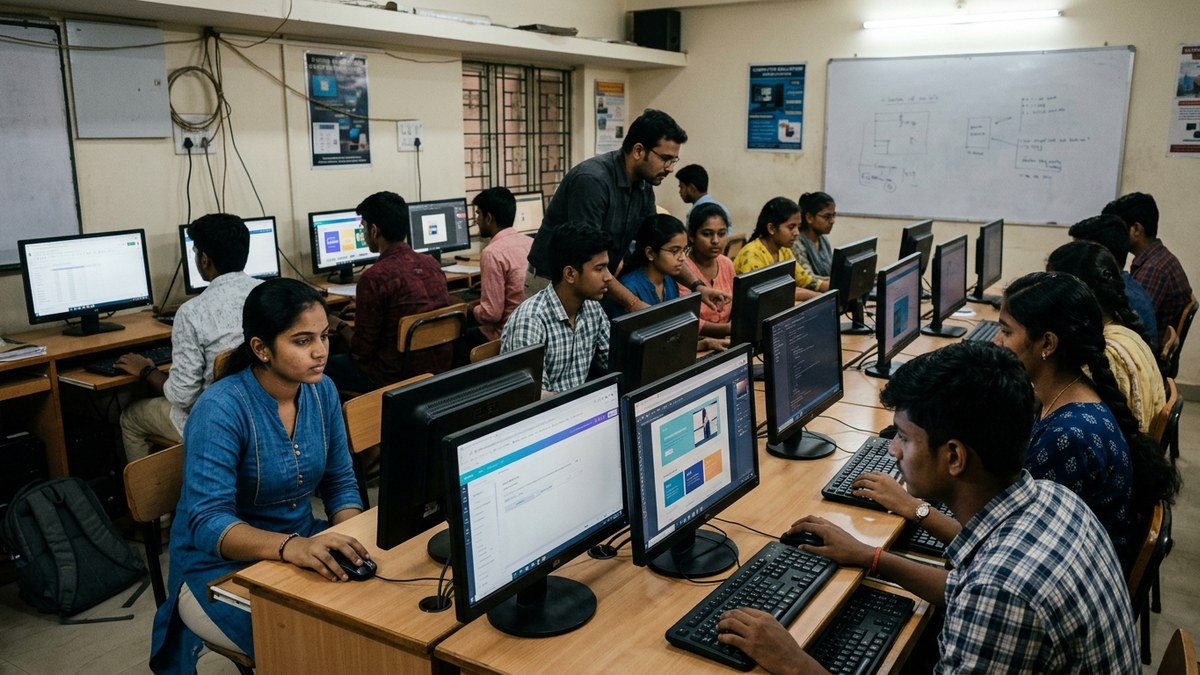
This is why we created APNA PC. A complete bundle built for educators. Rs.30,000 gets you:
- Mini PC with Intel i3 7th Gen processor, 8GB RAM, 128GB SSD (no lag, no crashes)
- Monitor, keyboard, mouse, webcam, headset (everything you need, nothing you do not)
- Education software pre-installed and configured
- 3-year warranty and on-site installation
This is not a gaming PC. It is not overkill. It is exactly what you need to teach online without worrying about your equipment.
Building Your Digital Skill Stack
Start here. Do not try to master everything at once.
Month 1: Master one video conferencing platform. Learn screen sharing, recording, and breakout rooms. Practice until it is muscle memory.
Month 2: Set up a basic LMS. Upload your course content. Learn how to track student progress.
Month 3: Create one piece of visual content per week. A slide deck. A short video. An infographic. Get comfortable with Canva or similar tools.
Month 4: Add assessment tools. Start using quizzes and polls in your live classes.
Month 5: Explore content repurposing. Take your live class recording and turn it into smaller, focused videos.
Month 6: Optimize and scale. Now that you have the basics, start thinking about reaching more students.
This is not a sprint. It is a deliberate climb. And you do not have to do it alone. Build your digital skill stack with structured guidance and community support.
What Happens If You Do Nothing
Let me be direct. If you do not invest in digital skills for teachers and the right infrastructure by mid-2026, you will lose students. Not all of them. But enough.
Parents are comparing you to online options. Students are expecting interactive, engaging classes. Coaching centers that cannot deliver this are becoming commodity businesses with razor-thin margins.
The teachers who invested early (2024-2025) will have a three-year head start by 2027. They will have built systems. They will have trained their teams. They will have reputation. You will be playing catch-up.
This is not about being trendy. This is about survival and growth.
Your Next Step
If you run a tuition center, a coaching facility, or a community learning space, you have two options:
Option 1: Continue as you are. Hope your reputation holds. Watch margins shrink.
Option 2: Invest in digital skills and infrastructure now. Start small. Build systematically. Emerge as a leader in your market by 2026.
The choice is yours. But the time to decide is now.
If you are ready to build a sustainable, scalable learning business, start a Teach to Earn learning POD with our support. We handle the training. You handle the teaching.
Or if you need the right equipment first, order your APNA PC today. Stop fighting with your laptop. Start teaching the way 2026 demands.
The future of teaching is digital. The question is: will you lead it or follow it?
Frequently Asked Questions About Digital skills for Indian teachers
What digital skills do Indian teachers need most in 2026?
Confident use of video conferencing beyond basic calls, such as breakout rooms and screen sharing, along with content creation tools like Canva, assessment tools like Google Forms, and basic cybersecurity practices. Together these cover running a class, engaging students and protecting their data.
Can teachers learn these digital skills without a formal course?
Yes, largely through free tutorials and regular practice. The bigger barrier for most teachers is not knowledge but reliable hardware, since a laptop that lags or crashes mid-class undermines even strong digital skills.
Why do digital skills matter more for teachers now than during the pandemic?
Parents and students now expect smooth, interactive online classes rather than basic video calls with PDFs shared over WhatsApp. Coaching centres that have upgraded their teaching skills and tools are charging premium fees because students see better results.
What hardware do teachers need to use these digital skills well?
A computer that runs video calls, screen sharing and recording together without lagging, ideally with at least 8GB RAM and a recent processor. Many Indian teachers are still working on old laptops with 4GB RAM, which cannot handle a live class properly.
Do digital skills really affect how much a tuition teacher earns?
Yes. Teachers who master online teaching tools can teach more students without burning out, through recorded classes and automated assessments, and parents who see better results refer more students. This directly raises what a teacher can charge.
India’s National Education Policy 2020 calls for ongoing teacher training in technology use as a core part of improving classroom quality across the country.