
Amit graduated from a tier-2 college in UP last year. He knows how to use a computer. But he cannot get a job. Why? Because 87% of Indian graduates lack the digital skills employers actually need.
This is not a personal failure. This is a systemic crisis. The digital skills gap in India is not just an education problem. It is an economic emergency that is silently destroying career prospects for millions of young Indians.
And here is the uncomfortable truth: The gap is not closing. It is widening. While the world moves to AI, cloud computing, and data analytics, most Indian youth are still struggling with basic computer operations. The mismatch between what schools teach and what the job market demands has never been larger.
But there is a solution. And it starts with educators like you.
The Real Numbers Behind the Digital Skills Gap
Let me give you the facts. No sugarcoating.
- India produces 1.5 million engineers every year. Only 20% are employable in tech roles.
- 65% of Indian students in rural areas have never used a computer for learning.
- The average Indian graduate spends 18 months looking for their first job. Most never find one matching their qualifications.
- By 2027, India will need 30 million digitally skilled workers. We currently have 10 million.
These numbers are not just statistics. They represent real people. Real families. Real dreams being crushed because nobody taught them the skills they needed.
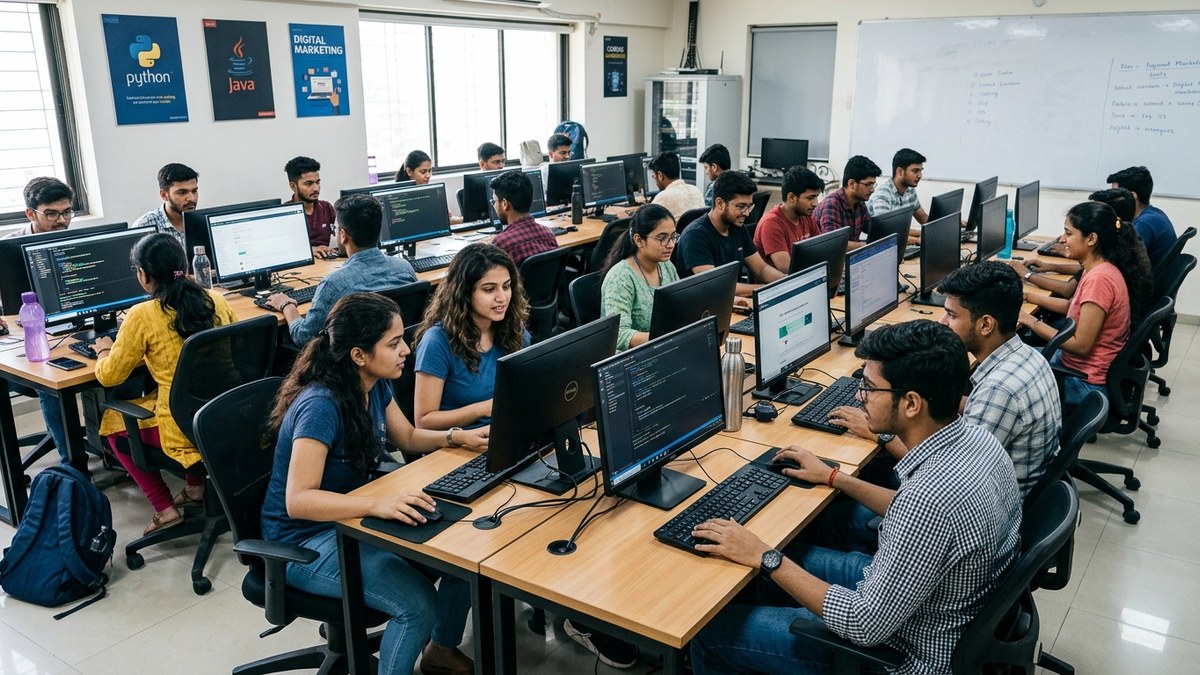
The Digital India program built the infrastructure. But infrastructure without skills is useless. You can have the fastest internet in the world. If people do not know how to use it productively, it means nothing.
This is where the real battle is being fought. Not in policy rooms. Not in corporate boardrooms. In small learning centers. In homes. In communities where educators are stepping up to close this gap.
Why Traditional Education Is Failing
Here is the problem with traditional education in India: It was designed for a different era. Schools still teach from textbooks. Colleges still focus on theory. The curriculum changes every decade while the job market changes every six months.
A student graduates knowing Shakespeare but cannot create a professional email. They can solve calculus equations but cannot use Excel for data analysis. They have a degree but no practical digital skills that job seekers actually need.
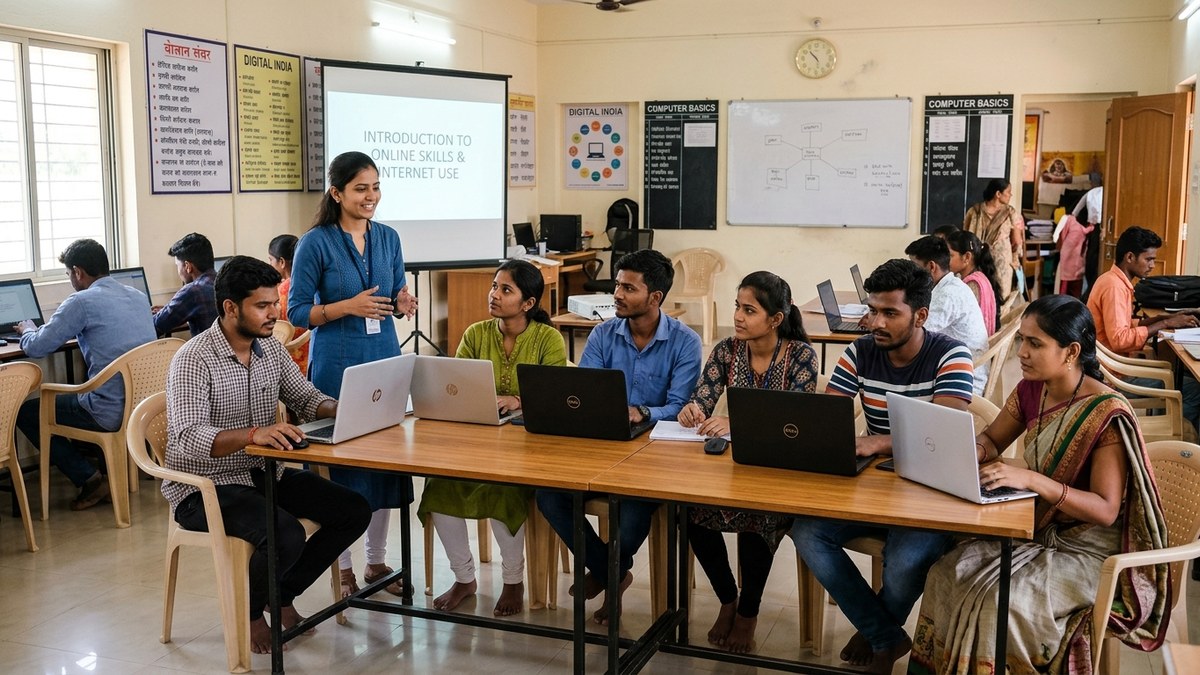
The result? A generation of educated unemployed. Youth with degrees who cannot compete in the global marketplace. Young people who are technically qualified but practically useless.
This is not their fault. This is a failure of the system. But the system can be fixed. One educator. One learning center. One student at a time.
How Educators Are Closing the Gap
Lets be honest: Waiting for the government to fix education is not a strategy. Waiting for schools to update their curriculum is not a plan. The gap needs to be closed now. Today. By people who care.
This is where educators using AI tools and modern teaching methods are making a real difference. They are not waiting for perfect solutions. They are building practical ones.
Here is what works:
- Short, focused courses: 3-month programs teaching specific digital skills (data entry, Excel, basic coding, digital marketing)
- Hands-on training: Students learn by doing, not by reading. Real projects. Real tools. Real skills.
- Job-oriented curriculum: Every skill taught has a direct application in the job market
- Small batch sizes: 10-15 students per batch. Personal attention. Customized learning paths
The educators running these programs are not just teaching. They are creating employable graduates. They are giving youth the tools to compete. They are solving India’s employment crisis one student at a time.
The Business of Closing the Gap
Here is what most people do not realize: Closing the digital skills gap is not just a social mission. It is also a viable business.
A POD (Point of Digital Learning) educator can charge Rs.2,000-5,000 per student monthly for skill development courses. With 20-30 students, that is Rs.40,000-1,50,000 monthly revenue. Overhead is minimal. Profit margins are 60-75%.
The APNA PC bundle makes the technology barrier disappear. For Rs.30,000, you get a complete setup: education software, 3-year warranty, installation, and hardware that can serve 50-100 students per month. This is not an expense. This is an investment that pays for itself within the first batch of students.
You are not just earning money. You are creating value. Every student you train becomes more employable. Every skill you teach has a direct impact on someone’s career. Every batch of graduates strengthens the local economy.
Ready to close the gap? Start your learning POD today and help Indian youth access the digital skills they need to succeed in the modern economy.
The digital skills gap is costing Indian youth their future. But it does not have to. Not if educators step forward. Not if we make digital education local, affordable, and accessible. The time to wait is over. The time to act is now.