
Your Job Interview Will Fail Without These Digital Skills
You walk into that job interview. The interviewer asks you to send a file via email. You freeze. You don’t know how. This isn’t a hypothetical. It’s happening to thousands of Indian job seekers right now. The gap between what employers expect and what candidates can actually do has become a chasm. And it’s costing people real opportunities.
Here is the truth: digital skills for job seekers are no longer optional. They’re the price of entry. Whether you’re a fresh graduate in Bangalore, a homemaker re-entering the workforce, a tuition teacher pivoting to online education, or a senior citizen looking to stay relevant, you need these skills. Not next year. Now.
The Digital India initiative has pushed technology into every corner of the economy. But technology alone doesn’t guarantee jobs. You do. And you need to know how to use it.
Key Takeaways
- Digital skills for job seekers have become the baseline expectation across Indian hiring, not an optional extra anymore.
- Basic computer navigation, like using a browser, creating folders, and sending files by email, is foundational, not advanced.
- Employers across roles now expect comfort with email, messaging apps, and simple office documents from day one.
- The Digital India initiative has pushed technology into most sectors, but candidates still need to prove they can actually use it.
The Core Digital Skills Every Job Seeker Must Have in 2026
Lets be honest: most people don’t realise that computer basics are foundational. Not advanced. Basic. If you can’t navigate Windows, open a browser, or create a folder, you’re already behind. These aren’t skills. They’re survival tools.
Here’s what employers actually look for:
- Email and communication tools – Gmail, Outlook, messaging apps. You need speed and professionalism here. No typos. No confusion about attachments.
- Microsoft Office or Google Workspace – Word, Excel, PowerPoint. Every office job expects this. Every single one. Even if you don’t use it daily, you’ll be tested on it.
- Internet research and information verification – Finding reliable information fast. Separating fact from noise. This saves employers money and time.
- Video conferencing – Zoom, Google Meet, Teams. Remote work is permanent now. Your camera angle matters. Your background matters. Your internet connection matters.
- Basic cybersecurity awareness – Password management. Recognizing phishing. Not clicking suspicious links. Companies are paranoid about data breaches. You should be too.
- Google Sheets or Excel for data entry – Formulas, sorting, filtering. This skill opens doors in HR, finance, retail, and logistics.
Most job seekers think they know these things. They don’t. They think watching YouTube videos counts as learning. It doesn’t. Hands-on practice with someone guiding you? That works.
The real opportunity is in online learning at home with structured guidance. Not random tutorials. Not expensive corporate training. Real, affordable, step-by-step learning that builds confidence.
Why Online Courses Aren’t Enough And What Actually Works
You’ve probably tried online courses. You start with enthusiasm. By day three, you’re lost. By day seven, you’ve quit. The problem? No one’s there to answer your questions. No one’s checking if you actually understand. No one’s pushing you to finish.
Digital skills for job seekers need accountability. They need real-time feedback. They need someone who can say, “No, that’s not right. Try this instead.”
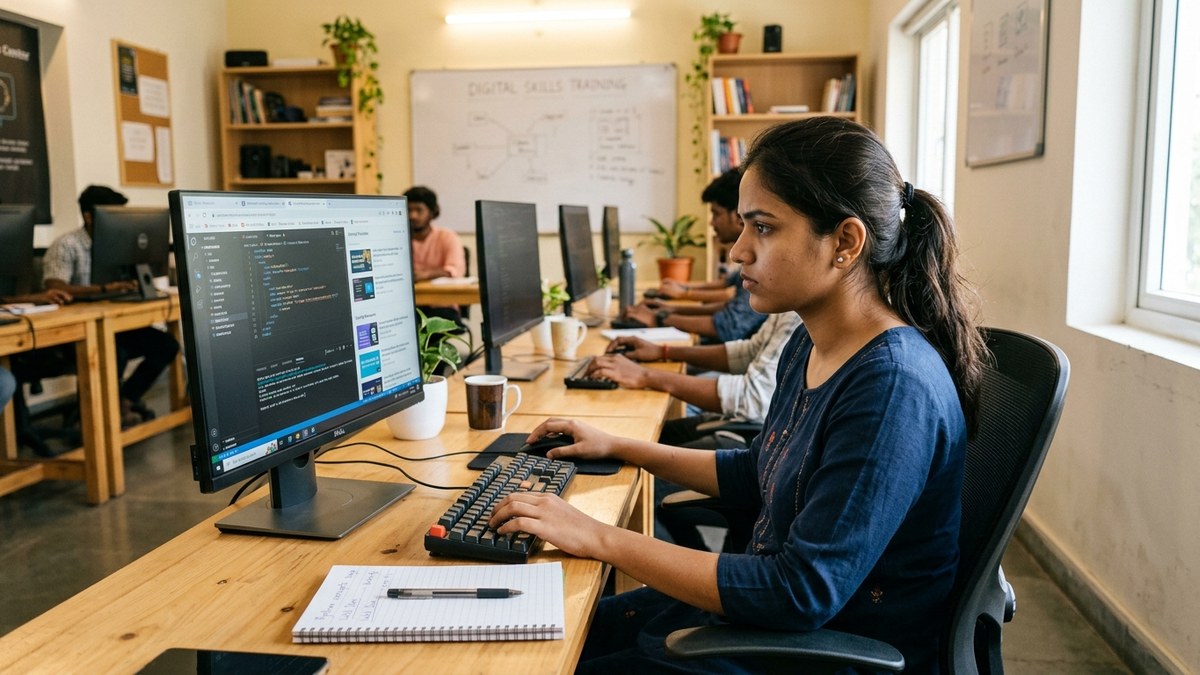
This is where a Point of Digital Learning (POD) changes everything. A POD is a community learning centre run by a trained educator. It’s not fancy. It’s not expensive. It’s local. It’s personal. It’s effective.
At a POD, you sit with others learning the same skills. Your trainer watches you work. Corrects you immediately. Answers your questions in your language. Makes sure you actually know how to do these things before you leave. This is digital literacy in rural India and urban India. It’s the same principle: learn by doing, not by watching.
The Ministry of Education knows this. That’s why they’re pushing for hands-on learning centers across the country. Because online courses have a 90% dropout rate. PODs have a 70% completion rate. The difference is human connection.
The Hardware Problem Nobody Talks About
Here’s what stops most job seekers from learning digital skills: they don’t have access to a computer. Not because they don’t want one. Because they can’t afford one. A decent laptop costs Rs.50,000 to Rs.100,000. That’s not an investment for someone earning Rs.15,000 a month.
This is where APNA PC enters. It’s not a laptop. It’s a complete solution. For Rs.30,000, you get everything: a Mini PC with i3 7th Gen processor, 8GB RAM, 128GB SSD, monitor, keyboard, mouse, webcam, headset, education software, and a 3-year warranty. Plus installation.
That’s not just affordable. That’s revolutionary. It means a job seeker in Nagpur has the same hardware as a job seeker in Mumbai. It means a homemaker in a village can learn the same digital skills as someone in a city. It means access stops being the barrier.
Pair APNA PC with a POD and you have a complete ecosystem. The hardware. The software. The training. The support. Everything a job seeker needs to compete in 2026.
What Happens When You Actually Have These Skills
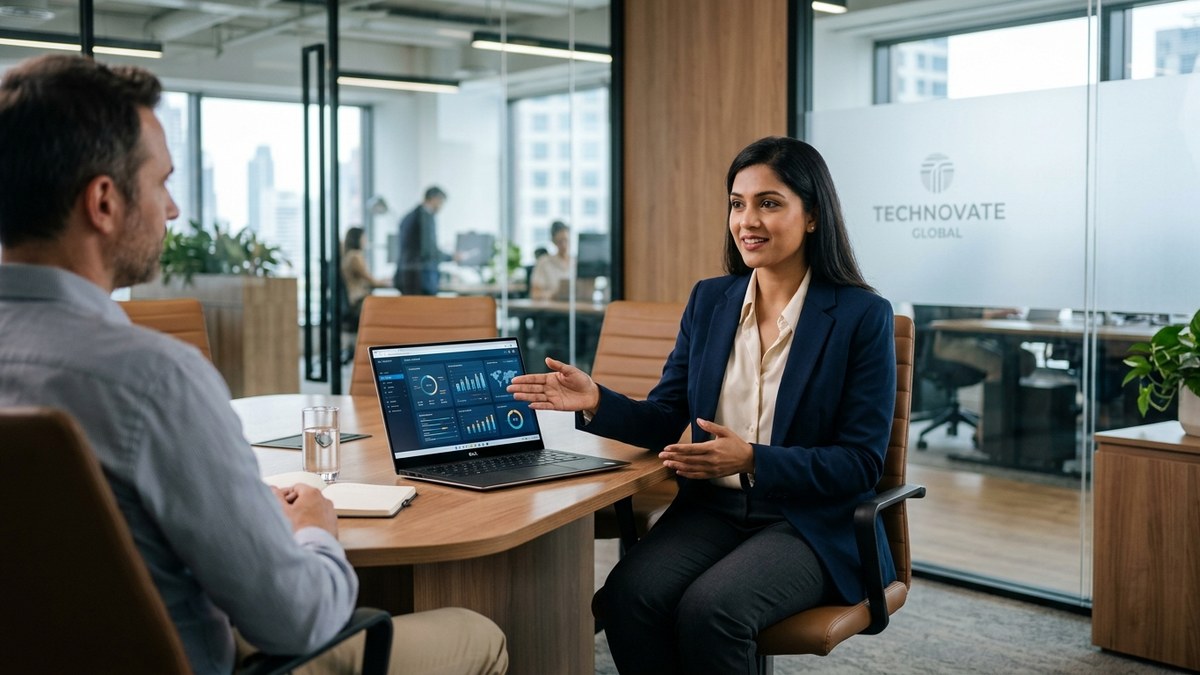
You walk into that next interview. The interviewer asks you to send a file via email. You do it in 10 seconds. They ask you to create a quick spreadsheet. You open Excel and build it in two minutes. They ask you to join a video call. Your camera is perfect. Your audio is clear. Your background is professional.
You’re not just qualified anymore. You’re confident. And confidence is contagious. It changes how people perceive you. It changes how you perceive yourself.
That’s the real value of digital skills for job seekers. It’s not about the skills themselves. It’s about what those skills unlock. Better jobs. Higher salaries. Remote opportunities. The ability to work from home. The ability to freelance. The ability to start your own business.
For a homemaker, it’s independence. For a senior citizen, it’s relevance. For a tuition teacher, it’s expansion into online education. For an edupreneurs, it’s the foundation of a scalable business. For a fresh graduate, it’s the difference between getting hired and being rejected.
The time to act is now. Not when you’re desperate. Not when you’ve already lost three job opportunities. Now. While you’re still thinking about it.
Ready to close the digital skills gap? Get APNA PC today and start learning the skills employers actually want. Rs.30,000. Complete bundle. 3-year warranty. No hidden costs.
Your next job interview is waiting. Make sure you’re ready.
Frequently Asked Questions About Digital skills for job seekers
What digital skills do Indian employers expect from job seekers in 2026?
Employers commonly expect comfort with email and messaging tools, basic file handling like attaching and sending documents, and simple office software such as spreadsheets and word processors. These are treated as baseline skills across most roles, not just tech jobs. Candidates who lack them often struggle even in early interview stages.
Can I learn digital skills for job hunting using just a phone?
A phone helps with basic browsing and messaging, but tasks like formatting a resume, filling detailed application forms, or managing multiple email attachments are far easier and faster on a computer. Employers often notice when a candidate is uncomfortable with computer-based tasks during practical tests. A shared computer for practice makes a real difference before interviews.
What is the fastest way for a job seeker to build digital skills?
Focusing on the core basics first, like email, file organisation, and one office software suite, gives the quickest return before moving to anything advanced. Free resources and structured short courses can cover these fundamentals within a few weeks of regular practice. Practical, hands-on repetition matters more than watching tutorials alone.
Do homemakers and senior citizens re-entering the workforce need the same digital skills?
Yes, the core expectations, email, basic file handling, and simple software, apply regardless of age or career gap. Homemakers and senior citizens re-entering the job market often need focused practice time on a computer to rebuild confidence quickly. Many catch up fast once they get consistent hands-on access to a proper setup.
How do digital skills affect job interview outcomes in India?
Interviewers increasingly test practical digital tasks directly, such as asking a candidate to send a file or fill an online form on the spot. Struggling with these basic tasks can cost a candidate the role even if their other qualifications are strong. Practising common digital tasks beforehand on an actual computer reduces this risk significantly.
The Digital India initiative has expanded digital infrastructure and services nationwide, raising the baseline digital skills expected of job seekers across sectors.
Explore start a TeachToEarn learning POD and how to POD economics and break-even.