
Your Child is Already Behind. Here’s Why.
Most people don’t realise this: the gap between children who learn digitally and those who don’t starts forming by age 8, not age 16. By the time your child reaches class 7, if they haven’t spent meaningful time learning on computers, they’re already struggling. Not because they’re slow. Because the world moved on without them.
The question isn’t whether your child needs a home learning POD India before age 12. The question is: can you afford to wait?
Here is the truth: traditional tuition centres are dying. Not because they’re bad. Because they’re slow. Your child sits in a classroom with 30 others, moves at the speed of the slowest learner, and forgets 70% of what they learned by next week. Meanwhile, children in learning pods are moving faster, retaining more, and actually enjoying the process.
Let’s be honest: you want your child to succeed. But you’re also confused about what that means in 2026. Is it marks? Is it confidence? Is it digital literacy? The answer is all three. And a home learning POD delivers exactly that.
What a Home Learning POD Actually Is (And Why It’s Not Tuition)
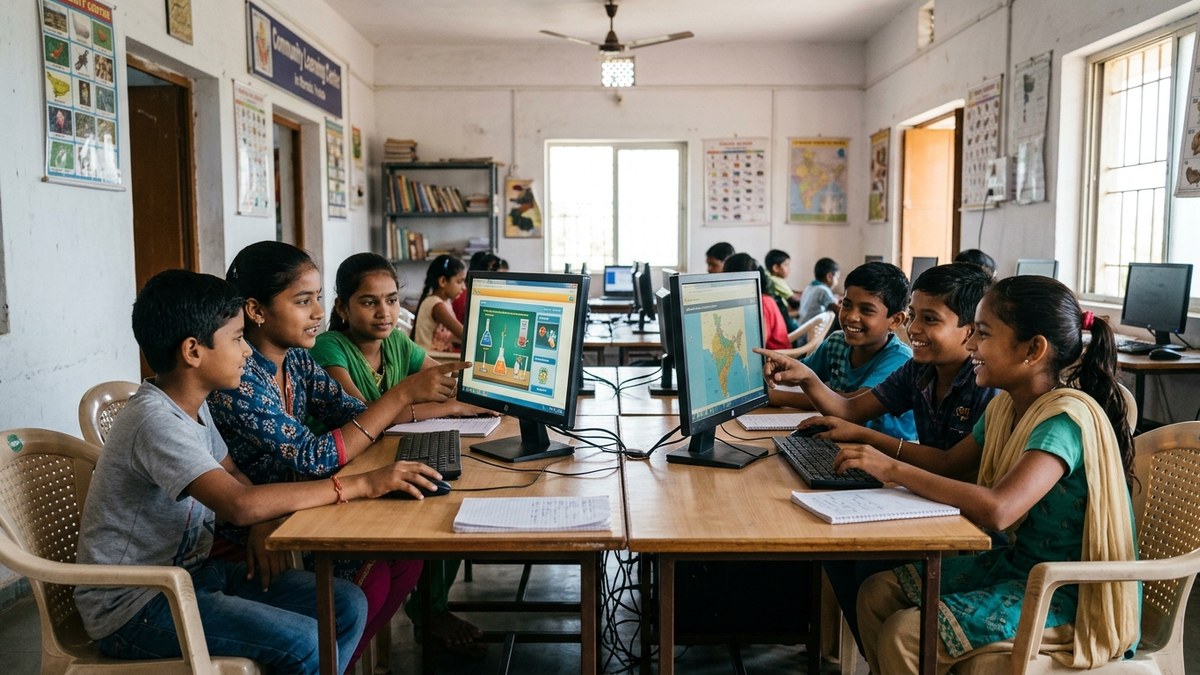
A learning pod for kids is a small group (3-8 children) learning environment run by a trained educator in a home or community space. It combines personalised attention with peer learning. Your child gets the best of both worlds: one-on-one support when they need it, and collaborative learning when they benefit from it.
This isn’t tuition. This isn’t school. This is something better.
The structure works like this:
- A trained educator guides learning using adaptive software
- Each child progresses at their own pace
- Digital tools track progress in real time
- Parents see exactly what their child is learning, not guesses
- Children develop study habits at home with a learning POD that stick for life
The learning pod for kids model is already working across urban India. Delhi. Bangalore. Mumbai. Pune. Parents are seeing results within 8 weeks. Not just in marks. In confidence. In how their children talk about learning.
But here’s what stops most parents: the setup cost. The technology barrier. The “I don’t know where to start” feeling.
That’s where APNA PC changes everything.
APNA PC: The Missing Piece for Home Learning Centre India
You don’t need to spend 1 lakh on fancy equipment to run a home learning centre India. You need one thing: the right setup.
APNA PC is a complete bundle. Rs.30,000. That’s it.
What you get:
- Mini PC (i3 7th Gen processor, 8GB RAM, 128GB SSD)
- Monitor, keyboard, mouse
- Webcam and headset for online classes
- Education software pre-installed and configured
- 3-year warranty
- Free installation and setup
This isn’t a budget option. This is a smart option. The processor handles adaptive learning software without lag. The RAM ensures smooth multitasking. The SSD means fast boot times and zero frustration. Your child sits down, logs in, and learns. No delays. No excuses.
Most parents spend more on a smartphone their child uses for games. APNA PC is an investment in their actual future.
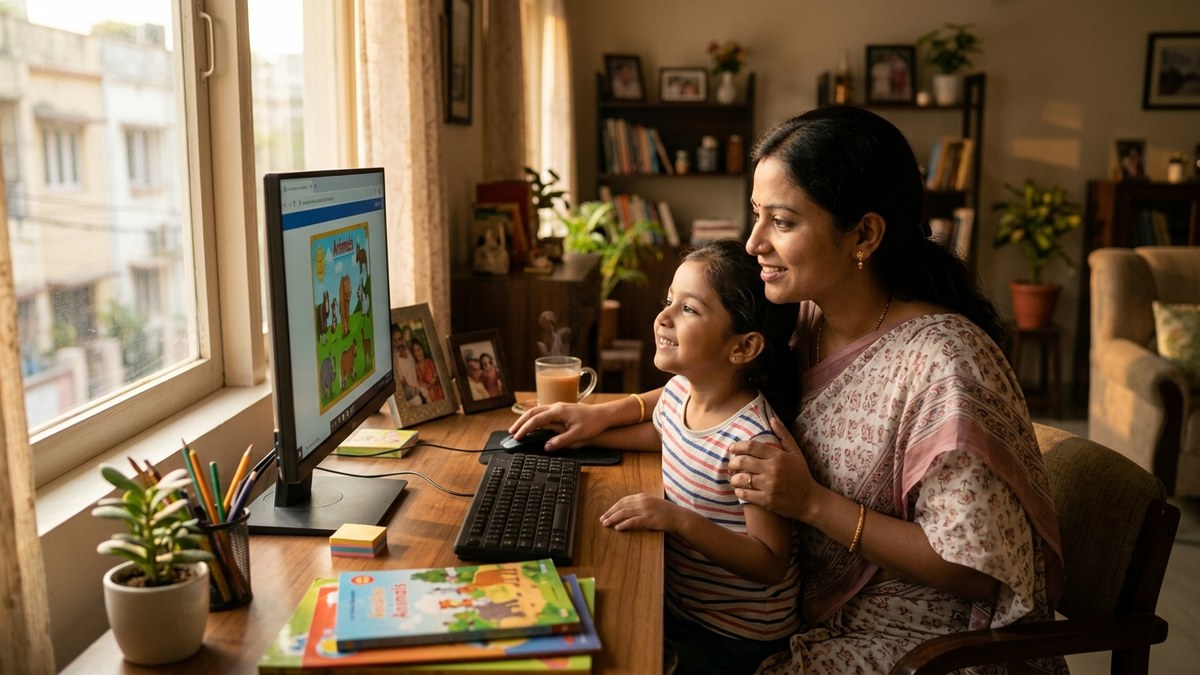
Why Age 12 is the Critical Window
Your child’s brain is most plastic before age 12. They form learning habits. They develop confidence with technology. They start to understand how to learn independently. After 12, changing these patterns is exponentially harder.
Children who start using learning pods before age 12 develop digital literacy naturally. They’re not intimidated by computers. They see technology as a tool for learning, not just entertainment. This mindset shift alone is worth the investment.
According to India Ministry of Education, digital learning readiness is now a core competency. Your state board recognizes this. Your child’s future employers will too.
The research backs this up. UNESCO education research shows that blended learning (combining digital and personal instruction) produces 23% better outcomes than traditional methods alone.
You’re not choosing between learning pods and traditional methods. You’re choosing between your child’s future and hoping it works out.
Parent Engagement Actually Matters
Here’s what separates successful learning pods from failed ones: parents who stay involved.
This doesn’t mean you need to be a tech expert. It means checking in. Asking questions. Celebrating progress. Understanding that parent engagement in learning pods is the actual driver of success, not the software or the educator alone.
When you set up APNA PC in your home, you’re creating a space where learning happens visibly. You can see what your child is doing. You can ask about their progress. You become part of the process.
The Real Cost of Waiting
Let’s do the math on what happens if you don’t act:
- Your child continues with traditional tuition (Rs.500-1,000 per class, 2-3 classes per week)
- They remain digitally anxious
- By age 14, they’re behind peers in online learning, coding, digital research
- By age 18, college entrance exams heavily weight digital readiness
- By age 22, job applications require digital portfolios and online assessments
The Rs.30,000 investment in APNA PC today saves you Rs.2-3 lakhs in lost opportunities and remedial learning later.
But the real cost isn’t money. It’s your child’s confidence. Their belief that they can learn. Their ability to adapt to a world that’s moving faster than any of us can predict.
Start Today. Start Small. Start Smart.
You don’t need a perfect plan. You need to start.
Set up APNA PC. Create a home learning centre India that works for your family. Join the network of educators and parents who are already seeing results. Help your child develop study habits at home with a learning POD that will serve them for the next 20 years.
The gap between children who have digital learning access and those who don’t isn’t closing. It’s widening. Every month you wait, that gap grows for your child.
Your child needs a home learning POD before age 12. Not eventually. Now.
Start your learning pod journey today. See how APNA PC can transform your child’s learning.