Priya didn’t plan to become a teacher. She had a postgraduate degree in commerce, three years of work experience, and then a baby. The job went. The degree stayed on a shelf. For seven years, she managed a home, helped her daughter with homework, and quietly wondered if her education would ever matter again. Then she heard about setting up a home learning POD. She thought it was for professional teachers. It isn’t.
What Running a Home Learning POD Actually Looks Like
Here’s the truth: a home learning POD is not a school. You don’t need a principal, a curriculum committee, or a separate building with a signboard. A POD is a small, organized learning space run from home or a community room, where children from the neighborhood come to study at an affordable cost.
PODs operate under the TeachToEarn model. You set a schedule. You pick an age group you’re comfortable with. You run sessions of two to three hours, usually in the afternoons. The children who attend are typically from families that can’t afford private tuition, don’t have a computer at home, or simply need a calm, focused place to study.
Priya started with four children. They sat on the floor of her living room. She had no whiteboard, no printed materials, no equipment. Within six months she had thirty students, a proper schedule, and a monthly income she hadn’t seen since her last job. That’s what your POD can become when you give it structure.
Why Homemakers Make Some of the Best POD Teachers
Most homemakers think they aren’t qualified to teach because they aren’t trained teachers. That thinking is exactly backwards.
A trained teacher in a school with forty students doesn’t have time to notice when a child is quietly lost. A homemaker running a POD with fifteen students does. That close attention is what children from under-resourced families are missing the most. They’re not falling behind because they’re less capable. They’re falling behind because nobody noticed soon enough.
Homemakers also bring something formal educators often can’t: patience, presence, and a genuine interest in each child. If you’ve been helping your own children with homework for years, you already know how to explain something three different ways until it clicks. That’s not a small thing. That’s the core skill of a good teacher.
According to the India Ministry of Education, over 250 million children are enrolled in school today, yet learning outcomes remain a serious gap across Tier 2 and Tier 3 cities. The problem isn’t attendance. It’s quality, focused attention at the right time. A POD with a committed, present educator fills exactly that gap.
TeachToEarn trains you, supports you, and connects you to a network of 50+ PODs running across 21 states. You’re not building this alone. Become an Edupreneur with TeachToEarn to see what this path looks like from day one.
How APNA PC Powers Your Home Learning POD
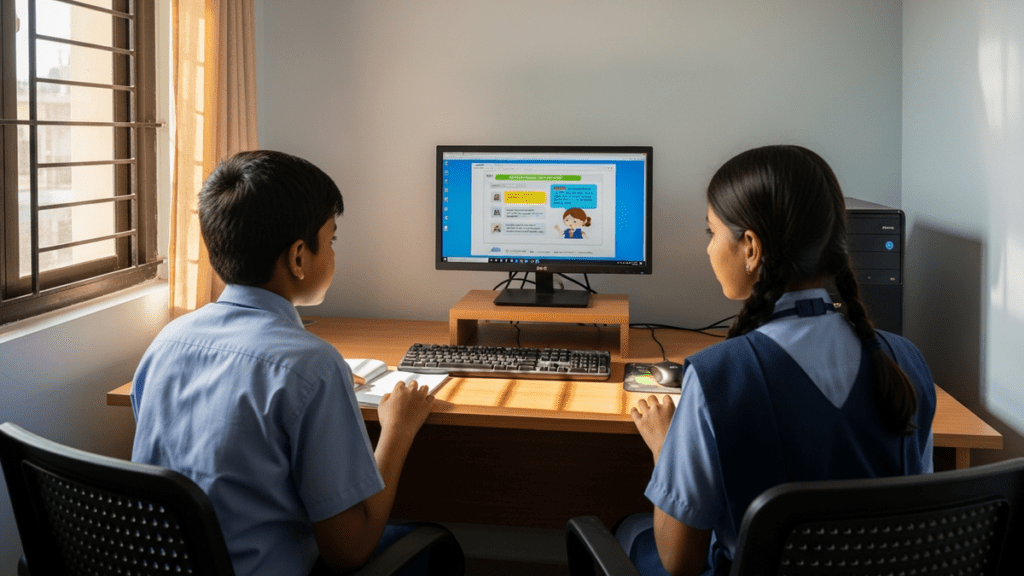
Priya’s first real problem was access. The children in her neighborhood had no computer at home. She had an old laptop that kept crashing mid-session. A POD without a reliable computer is like a kitchen without a stove. You can manage for a while. But everything stays limited.
APNA PC changed that for her. It’s an affordable computer bundle built specifically for Indian learning environments. At ₹30,000, you get a complete setup: a Mini PC (Intel Core i3 7th Gen, 8GB RAM, 128GB SSD), monitor, keyboard, mouse, webcam, and headset. It comes pre-loaded with LibreOffice, Scratch, Blender, VS Code, and Apni Prerna, a student monitoring and safety tool designed for home learning setups.
The system runs on Zorin OS, which is fast, stable, and doesn’t need the constant updates that older Windows machines require. For a POD running six days a week with multiple students depending on it, that reliability matters more than most people realize before they start.
With APNA PC, students can access DIKSHA, India’s national digital learning platform, alongside offline content during low-connectivity periods. They can practice Scratch programming, create their first presentations, and begin learning digital skills that government schools in many districts still don’t teach.
For Priya, the moment she brought APNA PC into her POD, the sessions changed completely. Children stopped waiting for her to explain everything. They started exploring. They made mistakes, corrected them, and asked better questions. That shift, from passive listener to active learner, is what every POD educator notices when the right technology enters the room.
Your First Three Steps Toward Teaching Income
You don’t need to figure this out alone. Here’s what getting started actually looks like.
Step 1: Register as a TeachToEarn Edupreneur. Go to the TeachToEarn website and fill in the POD application. The team reaches out with onboarding details, training schedules, and support materials. There’s no upfront fee. The application is free.
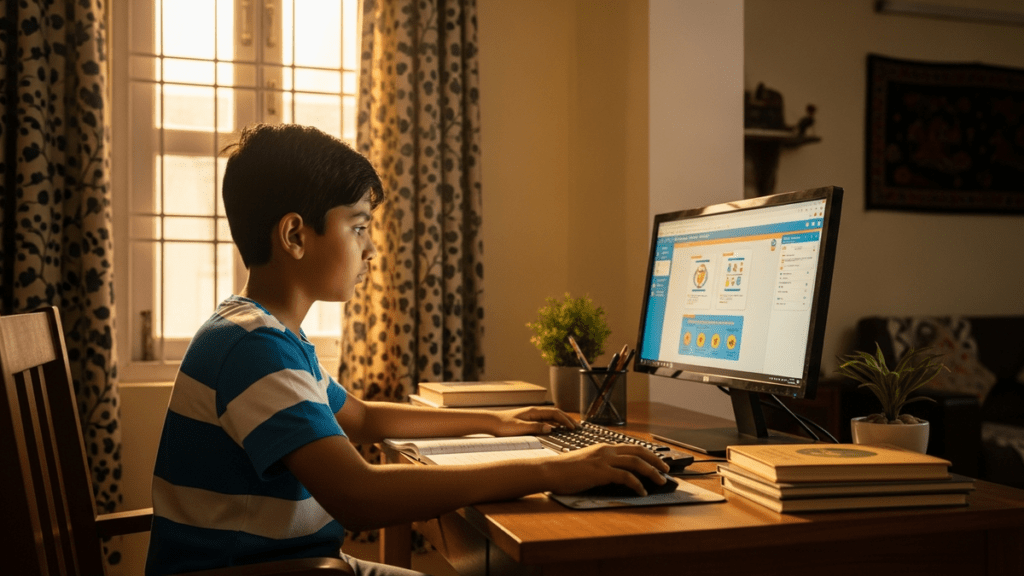
Step 2: Set up your space. You need a room with enough space for eight to fifteen students. A corner of your living room, a spare bedroom, or a common area in a building works. You don’t need school furniture. Low tables, floor seating, and a clear wall for a screen or whiteboard is enough to begin. The From One Room to Learning Hub: POD Setup Checklist walks you through exactly how to design this space.
Step 3: Get your APNA PC. Once your space is ready, a single APNA PC at ₹30,000 gives you everything you need to run sessions. TeachToEarn’s support team walks you through the software, the curriculum resources available, and how to use the system to track student progress over time.
Priya’s POD is now in its second year. She has a waiting list of students. Her income has grown every month. Her daughter, now older, sometimes helps her with the younger children on weekends. Two women in her building have started their own PODs, partly because of what they watched her build from nothing.
One spare room. One consistent effort. One home learning POD. That’s where it started for her. It can start exactly the same way for you.
Ready to take the first step? Explore the TeachToEarn POD program here and begin building your own teaching income from home today.