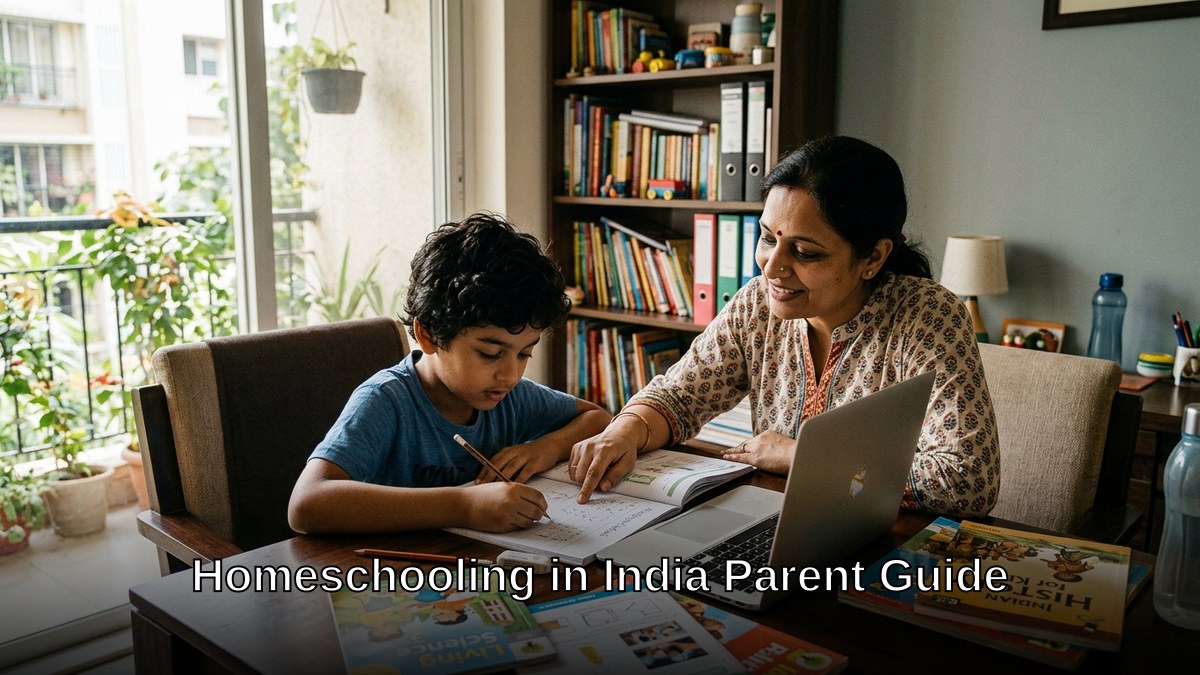
Homeschooling in India is not a fringe choice anymore. It is a real, viable, and growing alternative to traditional schooling.
Your child sits in a classroom with 50 other kids. The teacher cannot see them. The curriculum moves at someone else’s pace. Sound familiar? This is the reality for millions of Indian families. But here is the truth: homeschooling India has emerged as a legitimate path that parents, senior citizens, and educators are choosing with confidence.
Let us be honest. Most people do not realise that home education India is legal, structured, and increasingly supported by government digital platforms. The National Education Policy 2020 acknowledges alternative learning models. Parents are no longer choosing homeschooling out of desperation. They are choosing it because it works.
This guide walks you through what you need to know about homeschooling in India in 2026.
Key Takeaways
- Homeschooling in India for parents has moved from a fringe choice to a real, growing alternative, supported by the National Education Policy 2020’s recognition of alternative learning models.
- Parents choose homeschooling for personalized pace, flexible curriculum, lower stress without early board exam pressure, and more family involvement in learning.
- Cost savings matter too: no school fees, no uniforms and often less pressure to pay for expensive outside coaching on top of regular schooling.
- Grandparents, senior citizens and homemakers can meaningfully participate in a homeschool, turning education into a shared family activity rather than one parent’s sole job.
- Government digital platforms increasingly support homeschooling families with structured content, which a proper home computer makes far more usable than a shared phone.
Why Indian Parents Are Choosing Homeschooling
The reasons are simple and compelling:
- Personalised pace: Your child learns when they are ready, not when the bell rings.
- Flexible curriculum: You decide what matters. Classical education, skill-based learning, language focus, arts, or STEM.
- Lower stress: No board exam pressure in early years. No competition culture.
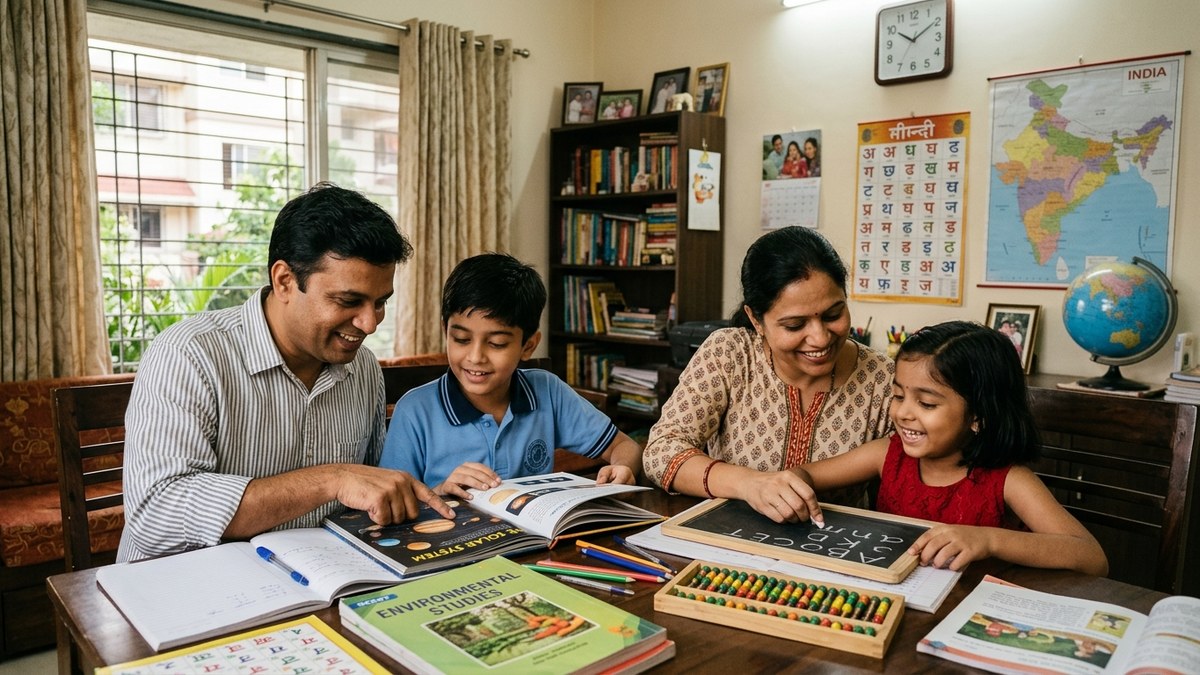
- Family time: Grandparents can participate. Siblings learn together. Education becomes a family activity.
- Cost savings: No school fees. No uniform. No pressure for expensive coaching classes.
- Real-world learning: Field trips, community projects, and practical skills become the classroom.
Senior citizens and homemakers find homeschooling deeply rewarding. You are not just teaching. You are building a legacy. Tuition teachers and edupreneurs see opportunity. You can scale your expertise through a Start a Microschool in India model or run a Point of Digital Learning (POD) from your community space.
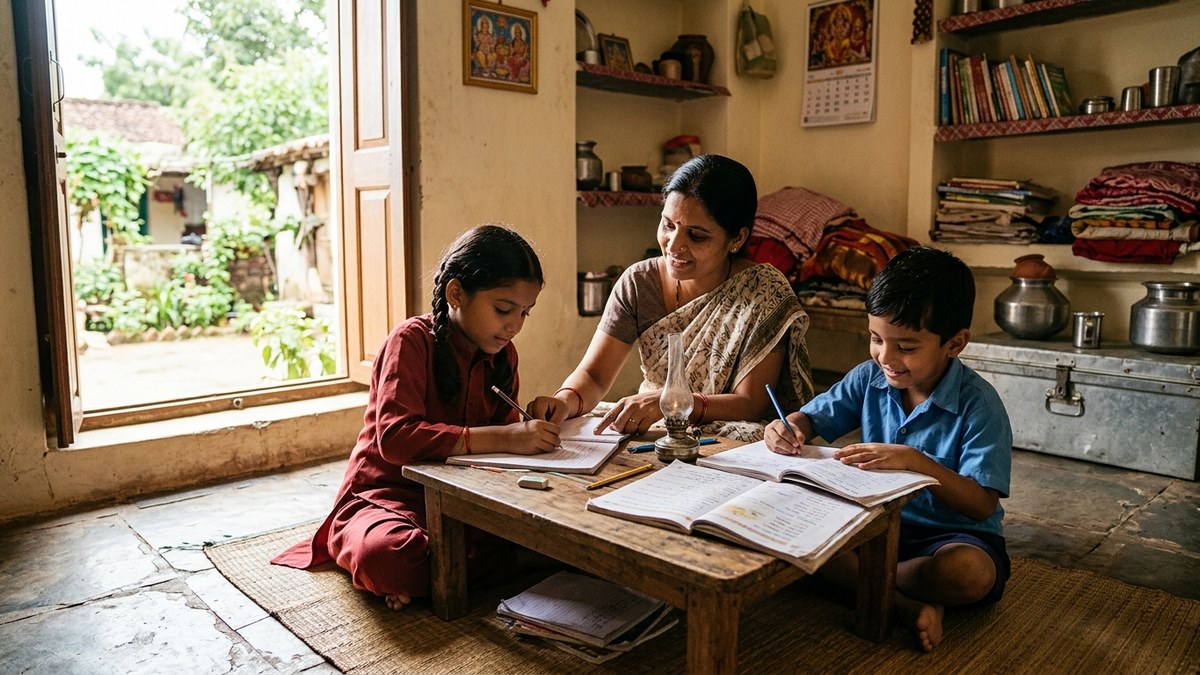
Setting Up Your Homeschooling Structure
Here is the truth: homeschooling without structure fails. You need a plan.
Step 1: Choose your framework. Will you follow a board curriculum (CBSE, ICSE, State Board)? Will you go unschooling or classical? Will you blend online and offline? Each choice shapes your daily rhythm.
Step 2: Access quality resources. The government has made this easier. The DIKSHA Digital Platform offers free, high-quality content aligned to national standards. The Digital India Initiative has expanded internet access to rural areas. Use these. They are designed for exactly this purpose.
Step 3: Invest in the right tools. A reliable computer is non-negotiable for homeschooling in India today. You need it for accessing digital content, video lessons, online assessments, and staying connected with mentors or tutors. This is where APNA PC changes the game. For Rs.30,000, you get a complete bundle: education software, 3-year warranty, installation, and a Mini PC (i3 7th Gen, 8GB RAM, 128GB SSD) plus monitor, keyboard, mouse, webcam, and headset. No hidden costs. No confusion. Just a ready-to-use learning station.
The Role of Community and Mentorship
Homeschooling does not mean isolation. Most people do not realise that the strongest homeschooling communities in India are built around mentorship and shared learning spaces.
A Point of Digital Learning (POD) is a trained educator running a small learning centre in their home or community space. Parents send children for 2-3 hours daily or a few days weekly. The educator guides, assesses, and mentors. Children interact with peers. Parents retain control over curriculum. This hybrid model is exploding in Indian cities.
If you are a tuition teacher or homemaker, running a POD is a natural next step. You can earn while serving your community. Many educators are already doing this through models like the Home Tuition Side Hustle.
Edupreneurs are building small schools with 20-50 students. Senior citizens are mentoring batches of neighbourhood children in specific subjects. The infrastructure is flexible. The demand is real.
Legal and Practical Considerations
Let us be honest: many parents worry about the legal status of homeschooling in India. Here is what you need to know.
Homeschooling is not explicitly banned in India. However, it is also not formally regulated at the national level. Some states have clearer frameworks than others. Before starting, check with your state education board. Many boards allow homeschooling under specific conditions. Some require periodic assessments or board exams at certain levels.
The National Education Policy 2020 opens doors for alternative learning. Digital literacy is now seen as essential. Government support for digital learning infrastructure is increasing.
Your best move: document your curriculum, maintain learning records, and stay updated with your state’s education department. Most homeschooling families face zero issues when they are organised and transparent.
Getting Started: Your Action Plan
Do not overthink this. Start with these steps:
- Decide your child’s learning goals for the next year.
- Choose a curriculum framework or blend resources from DIKSHA, YouTube, and offline books.
- Set a daily routine. Consistency matters more than perfection.
- Invest in a good computer setup. APNA PC makes this simple and affordable.
- Connect with local homeschooling groups or consider a POD model if you want peer interaction.
- Assess progress every term. Adjust as needed.
The future of homeschooling in India is bright. Parents are empowered. Technology is accessible. Communities are forming. The question is not whether homeschooling works. The question is whether you are ready to take control of your child’s education.
Ready to set up your home learning space? Start with the right tools. Explore APNA PC today and give your family the foundation they deserve.
Get APNA PC and start your homeschooling journey
Frequently Asked Questions About Homeschooling in India for parents
Is homeschooling legal in India?
India has no single national law banning or formally regulating homeschooling, and families across the country already do it. Parents choosing this path should still check board affiliation options for exams later, since a child homeschooled through the years will eventually need a recognized board for Class 10 or 12 certification.
Why are Indian parents increasingly choosing homeschooling?
Common reasons include letting a child learn at their own pace, choosing a flexible curriculum, reducing early academic stress, and involving the whole family including grandparents in daily learning. Cost savings on fees, uniforms and some outside coaching also factor in.
Do homeschooled children in India miss out on board exams?
No. Homeschooled students can register as private candidates for recognized board exams like CBSE or NIOS when the time comes. Planning for this registration in advance avoids last-minute confusion.
How much does homeschooling cost compared to private school?
Homeschooling typically costs less than private schooling since there are no school fees or uniform expenses, though families do spend on curriculum materials, a computer and sometimes outside tutors for specific subjects. Total cost varies widely by the resources a family chooses.
What do parents need at home to homeschool effectively?
A fairly reliable computer for structured lessons, research and online platforms, a chosen curriculum approach, and a consistent daily routine matter most. Senior citizens or other family members can help teach specific subjects, turning homeschooling into a shared effort rather than one person’s full-time job.
India’s National Education Policy 2020 explicitly acknowledges alternative and flexible learning models outside formal schooling, which gives homeschooling families a policy basis to point to.