Homeschooling India Guide: Everything Parents Need to Know
Your child doesn’t need a classroom to learn. Neither do you need a degree in education to teach them. Homeschooling in India is growing fast, and parents are discovering what educators have known for years: personalised learning works. This homeschooling India guide cuts through the confusion and shows you exactly how to start a journey that actually fits your family.
Let’s be honest: the traditional school system isn’t designed for every child. Some kids thrive in structured environments. Others need flexibility. Some parents want to preserve cultural values. Others simply can’t afford quality private schools. Whatever your reason, home education India is a valid and growing choice.
Here’s the truth: homeschooling is completely legal in India. You don’t need permission from the government. You don’t need to follow the CBSE or ICSE curriculum exactly. What you need is a plan, the right resources, and commitment. Most people don’t realise how simple this can be with proper guidance.
Legal Framework and Getting Started With Homeschooling
Before you panic about paperwork, understand this: India’s education system allows parents to educate children at home. Check the homeschooling legal rules in India for your specific state, as regulations vary slightly. The Ministry of Education India recognises home-based learning as valid.
Your first step is simple: register your child’s name with the local education authority if required by your state. Different states have different rules. Karnataka, Tamil Nadu, and Maharashtra have clearer frameworks. Others are more flexible. Do this before you start, not after.
Next, inform your previous school in writing. Request the transfer certificate and academic records. You’ll need these for future admissions or competitive exams. Keep everything documented.
Now comes the real work: curriculum selection. You have options here.
- Follow CBSE or ICSE curriculum independently using their recommended textbooks
- Use online platforms like Khan Academy or BYJU’S for structured learning
- Mix and match resources based on your child’s interests and pace
- Create a custom homeschool curriculum combining multiple sources
Most successful homeschooling families blend approaches. They don’t stick rigidly to one system. Your child learns mathematics from one source, science from another, and languages through immersion and practice.
Building Your Home Learning Setup
Here’s what you actually need to start: a quiet space, basic books, and a computer. That’s it. You don’t need an elaborate home school room or thousands of rupees in resources immediately.
The computer matters more than you think. Not for entertainment. For access to quality educational content, online tests, and communication with teachers if you hire tutors. This is where APNA PC comes in. For Rs.30,000, you get a complete bundle: education software, 3-year warranty, professional installation, and a Mini PC with i3 7th Gen processor, 8GB RAM, 128GB SSD, monitor, keyboard, mouse, webcam, and headset. Everything you need to run your home education centre properly.
Set up a dedicated learning space. It doesn’t have to be fancy. A corner of the living room with a table, chair, and good lighting works. Keep distractions minimal. Your child needs to understand that this space is for focused learning, not play.
Create a daily schedule. Homeschooling doesn’t mean no structure. It means flexible structure. You decide when to study, how long, and in what order. Most families find that 4-5 hours of focused academic work daily is sufficient for primary classes, and 6-7 hours for secondary.
Curriculum and Learning Resources for Homeschooling India
Your homeschool curriculum should cover core subjects: Mathematics, English, Science, Social Studies, and one regional language. Add physical education, arts, and life skills. This is standard across most educational boards in India.
For textbooks, buy CBSE or ICSE books from your local bookstore. They’re affordable and comprehensive. Supplement with workbooks and practice papers. Use free resources from education in India portals and government-approved websites.
Don’t buy everything at once. Start with core subjects. Add resources as you understand your child’s learning style. Some children prefer visual learning. Others learn by doing. Adjust accordingly.
Consider hiring a tutor for subjects where you feel weak. A tutor doesn’t mean traditional classes. It could be one hour per week for clarification. It could be online sessions. Many teachers now offer flexible tutoring for homeschooled children.
Community and Social Learning
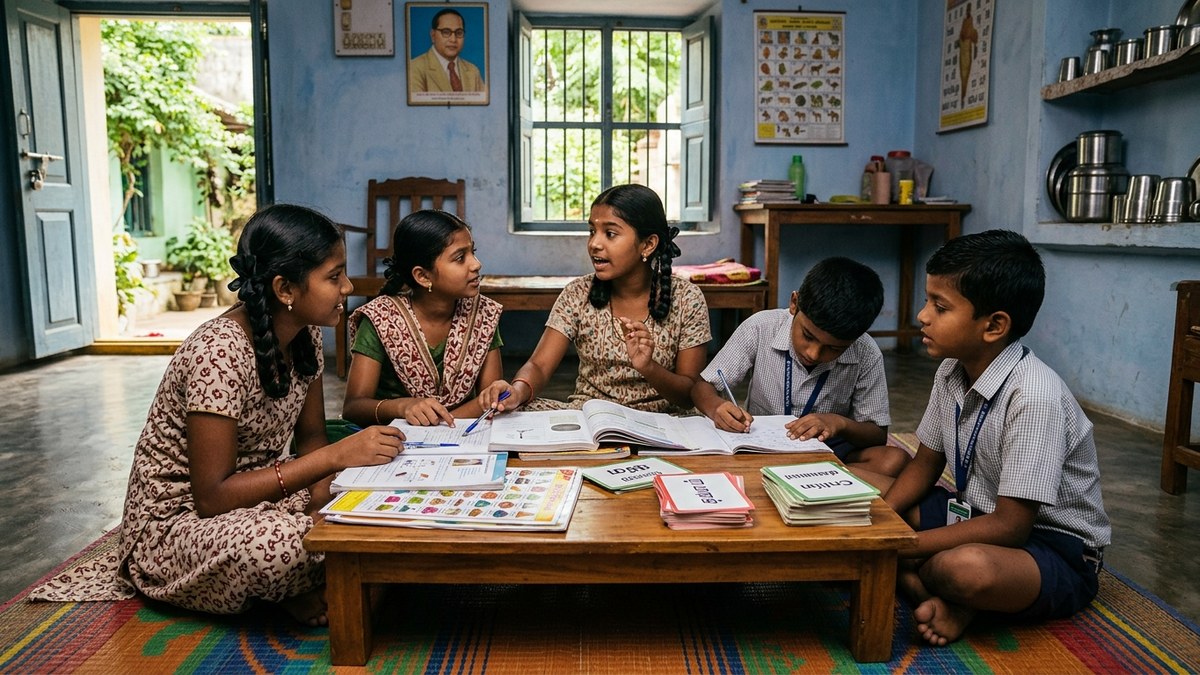
Homeschooling doesn’t mean isolation. Your child needs peer interaction, group activities, and community learning experiences. This is where a home learning pod India becomes valuable. A POD (Point of Digital Learning) is a community learning centre run by trained educators where homeschooled children gather for group activities, projects, and social interaction.
Look for homeschooling groups in your area. Many cities have active communities where families meet regularly. Children do projects together, attend field trips, and participate in group learning sessions. This gives them structure, social skills, and peer learning benefits.
Online communities are equally valuable. Join Facebook groups, WhatsApp communities, and forums for Indian homeschooling families. Share experiences, ask questions, and learn from others’ mistakes.
Monitoring Progress and Exams
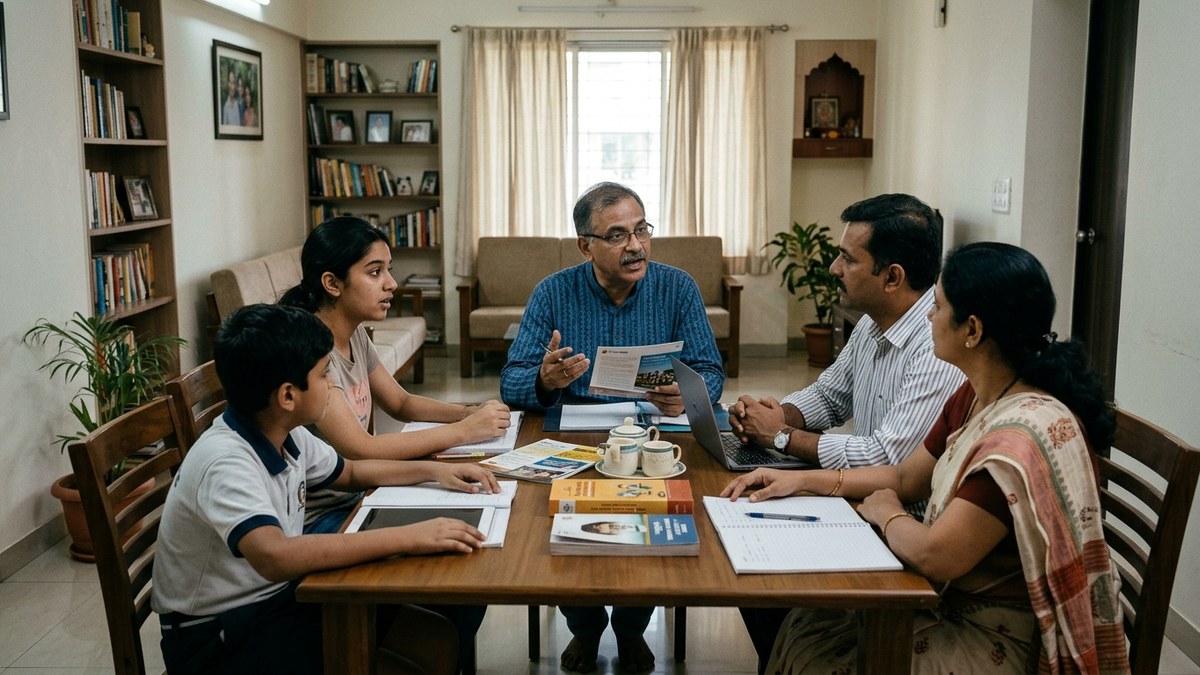
You need to track your child’s learning. Not obsessively. Regularly. Monthly tests, project submissions, and portfolio reviews help you understand what’s working and what isn’t.
For formal exams, your child can appear for board exams as a private candidate. Check with your state board for specific rules. Most states allow this. Your child studies at home and appears for exams at designated centres.
Keep records of everything: attendance, completed assignments, test scores, projects. These become important if you need to transition back to formal school or apply to colleges later.
Start Your Homeschooling Journey Today
Homeschooling in India works. It works for busy parents, for children with special needs, for families who want more control over what their children learn. This homeschooling India guide gives you the framework. The rest is up to you.
Get the right equipment. Set up your space. Connect with other homeschooling families. Start small. Adjust as you go. Your child’s education is in your hands now, and that’s exactly where it should be.
Start your learning pod today and give your child the education they deserve.