The Rs 30,000 Microschool Revolution Nobody is Talking About
You don’t need a fancy building, a board of trustees, or venture capital to start a microschool in India. You need courage, a room, and the right tools. That’s it.
Here is the truth: Millions of Indian children are trapped in a broken system. Overcrowded classrooms. Teachers who don’t care. Rote learning that kills curiosity. Parents are desperate for alternatives but believe they cannot afford them. They are wrong.
A microschool India model is not a new concept. What is new is that it has become genuinely accessible. Not someday. Not with a loan. Now. With Rs 30,000.
Key Takeaways
- You can start a microschool in India with as little as Rs 30,000, without needing a building, trustees, or outside investment.
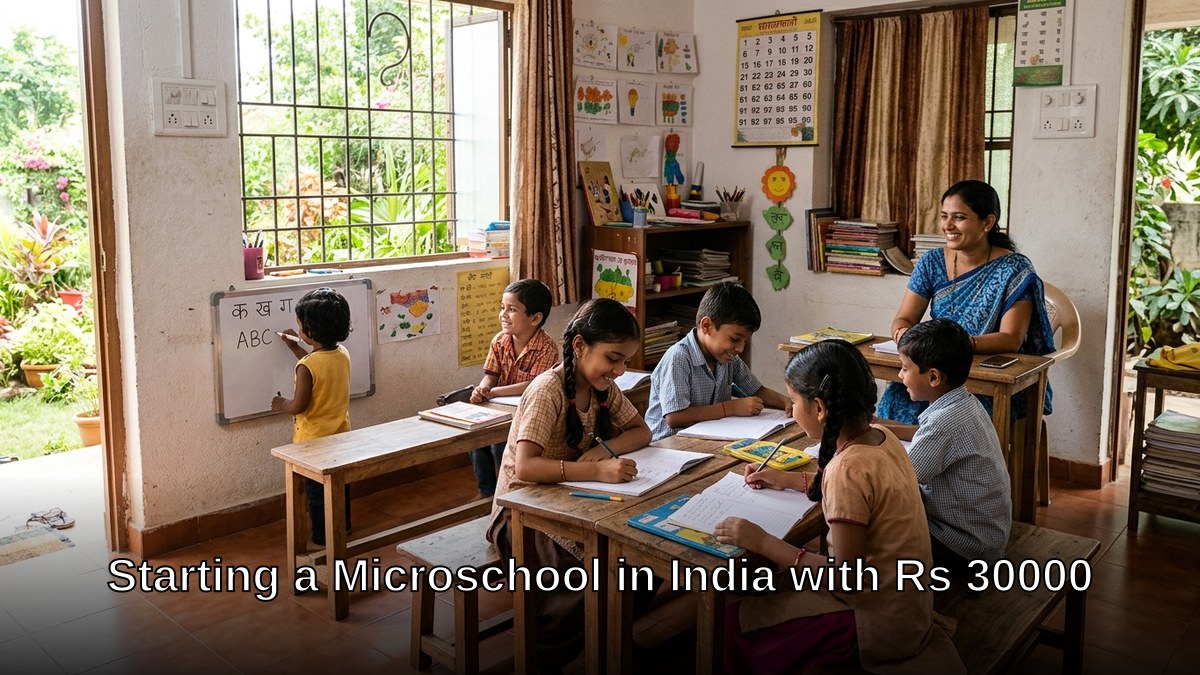
- A microschool is essentially a Point of Digital Learning run by a trained educator, serving 5-15 students with personalised attention.
- It differs from both homeschooling and a tuition centre by being structured, accountable, and focused on real learning outcomes.
- Parents frustrated with overcrowded classrooms and rote learning are actively looking for smaller, more attentive alternatives nearby.
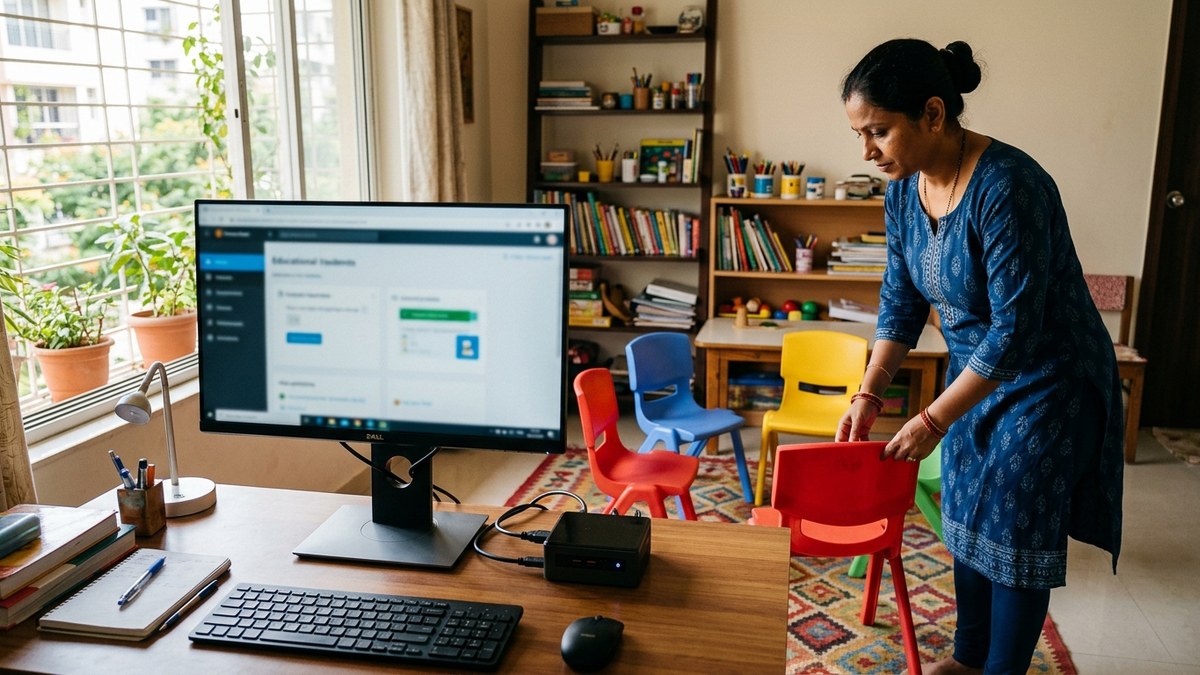
- A dedicated home computer setup supports the digital learning tools and record-keeping a microschool needs to run smoothly.
What Exactly is a Microschool and Why Should You Care?
Lets be honest: Most people do not realise that a microschool is simply a Point of Digital Learning (POD) run by a trained educator. It could be in your home. It could be in a community centre. It could be anywhere. What matters is that it serves 5-15 students with personalised attention, flexible curriculum, and actual learning outcomes.
This is not homeschooling. This is not a tuition centre. This is structured, accountable, affordable education.
The beauty of the microschool India model is that it works for:
- Homemakers looking to create income without leaving home
- Senior citizens with teaching experience wanting purpose and earnings
- Edupreneurs ready to challenge the status quo
- Parents who want better education for their own children first
When you start a microschool in India, you are not just building a business. You are building a community of learners who actually think, question, and grow.
The APNA PC Bundle: Your Complete Startup Kit
Here is what kills most microschool attempts: People underestimate what they actually need. A computer. Software. Reliability. Support.
The APNA PC bundle costs Rs 30,000 and includes everything:
- Mini PC with i3 7th Gen processor, 8GB RAM, 128GB SSD
- Monitor, keyboard, mouse, webcam, headset
- Complete education software built for Indian classrooms
- 3-year warranty
- Professional installation
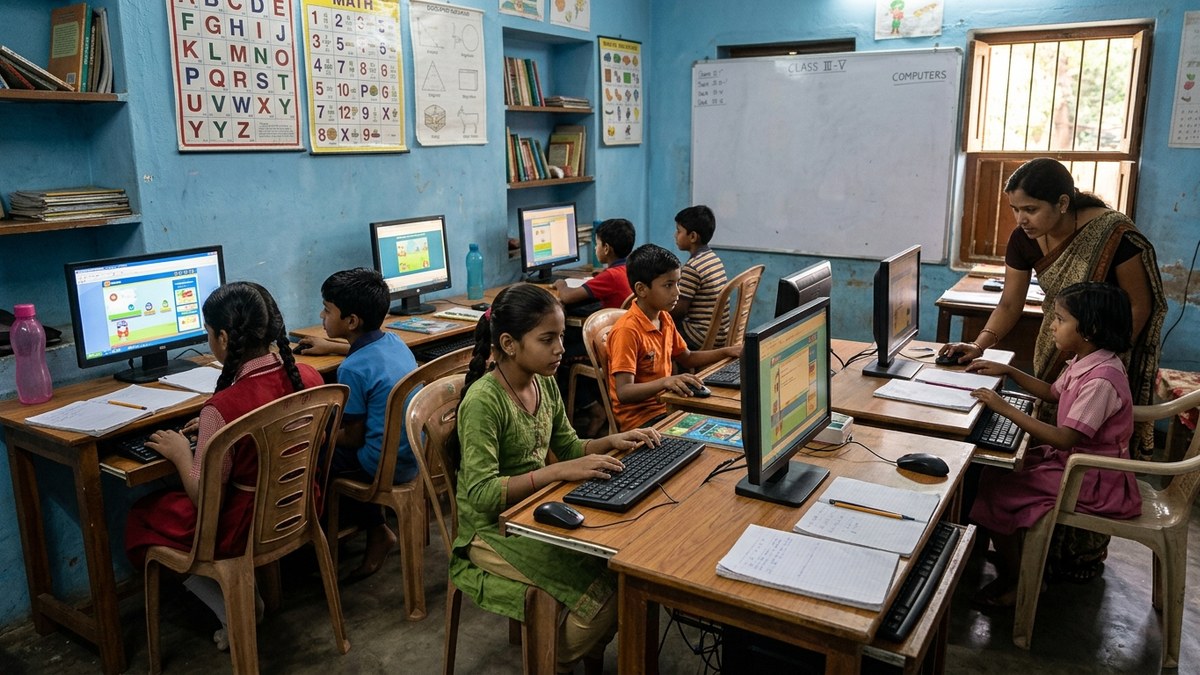
This is not a budget compromise. This is a smart choice. The processor runs your classroom management software, video calls, digital content, and assessments without lag. The SSD means fast boot times. The warranty means you are protected.
Most people do not realise that affordable homeschooling in India failed because people bought cheap computers that crashed. With APNA PC, you get industrial-grade reliability at a price that makes sense for a startup.
How to Actually Start Your Microschool with Rs 30,000
Step one: Get the APNA PC bundle. This is your infrastructure. Non-negotiable.
Step two: Complete your training as a POD educator. TeachToEarn provides this. You learn pedagogy, classroom management, digital tools, and how to work with mixed-ability groups.
Step three: Identify your space. A spare room works. A community centre works. A small shop works. What matters is that it has power, internet, and can fit 5-10 desks.
Step four: Register with the DIKSHA digital learning platform for formal recognition, or operate as an unregistered learning pod if you prefer flexibility. Both are legitimate.
Step five: Market to parents in your neighbourhood. Show them results. Show them happy children. Show them learning outcomes. Word of mouth will do the rest.
Your first month revenue: Rs 15,000-25,000 (5-10 students at Rs 2,000-3,000 per month). Your payback period: 2-3 months. Your annual profit potential: Rs 3-5 lakhs after expenses.
That is not a side hustle. That is a real business.
Why the Microschool India Model Works Right Now
Parents are tired. Teachers are burnt out. The government system is overwhelmed. The private school fees are insane. There is a massive gap between what families need and what they can afford.
The Digital India initiative has created the infrastructure. Internet penetration is at 45%. Smartphones are everywhere. Digital literacy is no longer optional.
You are not starting a microschool India business in 2015. You are starting it in 2024, when the ecosystem actually supports it.
Most people do not realise that this window will close. As more microschools open, competition will increase. Margins will compress. The first movers will own their markets. That could be you.
The Real Question: Are You Ready?
This is not for everyone. You need to be comfortable with:
- Working directly with children and their learning outcomes
- Managing small groups with different learning speeds
- Using technology confidently but not being a tech expert
- Building trust with parents who have been disappointed before
- Accepting that you will work hard in year one
If you are ready, the path is clear. The investment is low. The returns are real. The impact is immediate.
Stop waiting for permission. Stop waiting for the perfect moment. The perfect moment is now, and you have everything you need.
Start your microschool journey today and join the educators who are fixing India’s learning crisis, one pod at a time.
Frequently Asked Questions About Start a microschool in India
What exactly is a microschool and how is it different from a tuition centre?
A microschool is a small, structured learning setup serving 5-15 students with personalised attention, flexible curriculum, and tracked learning outcomes, often run from a home or community space. Unlike a typical tuition centre focused on exam prep for a single subject, a microschool covers broader, more consistent schooling. It is also different from informal homeschooling because it follows real structure and accountability.
How much money do I need to start a microschool in India?
A basic microschool can start with around Rs 30,000, covering essentials like a computer, teaching materials, and a simple learning space. This is far lower than the cost of renting a building or hiring a large staff, since the model relies on one educator serving a small group. Costs can grow later as the microschool adds students or resources.
Do I need formal certification to start a microschool in India?
Requirements vary, but many microschools operate as a Point of Digital Learning run by a trained, knowledgeable educator rather than requiring a formal teaching degree. What matters most to parents is proven ability to teach and manage a small group well. Checking local regulations for your specific setup and state is still worth doing before enrolling students.
How many students does a typical microschool serve?
Most microschools serve between 5 and 15 students, which is small enough to allow personalised attention but large enough to be financially sustainable. This size also keeps the model manageable for a single educator without needing additional staff. Growing beyond that usually means adding another educator or a second microschool.
What equipment does a microschool need to run smoothly?
A reliable computer is central for managing digital learning tools, tracking student progress, and preparing lesson materials, alongside basic classroom items like a whiteboard and seating. A dedicated APNA PC style setup handles this more consistently than relying on a phone for administrative and teaching tasks. Beyond that, the Rs 30,000 budget mainly goes toward space setup and initial materials.
NEP 2020 supports diverse and flexible schooling models, including small, community-based learning setups, as part of expanding access to quality education in India.