
The Microschool Revolution Is Already Here in India
Your child sits in a classroom of 40 kids. The teacher teaches to the middle. Your child either gets bored or left behind. This is not education. This is batch processing. And it is dying.
Microschools are changing this. They use microschool technology to personalise learning in ways traditional schools simply cannot. Not in 10 years. Not ever. The shift is happening now, and if you are an edupreneur, teacher, or parent in India, you need to understand what is actually possible.
Here is the truth: microschool technology is not about replacing teachers with screens. It is about giving teachers the data and tools to teach each child differently. That is the real revolution.
What Microschools Actually Do With Technology
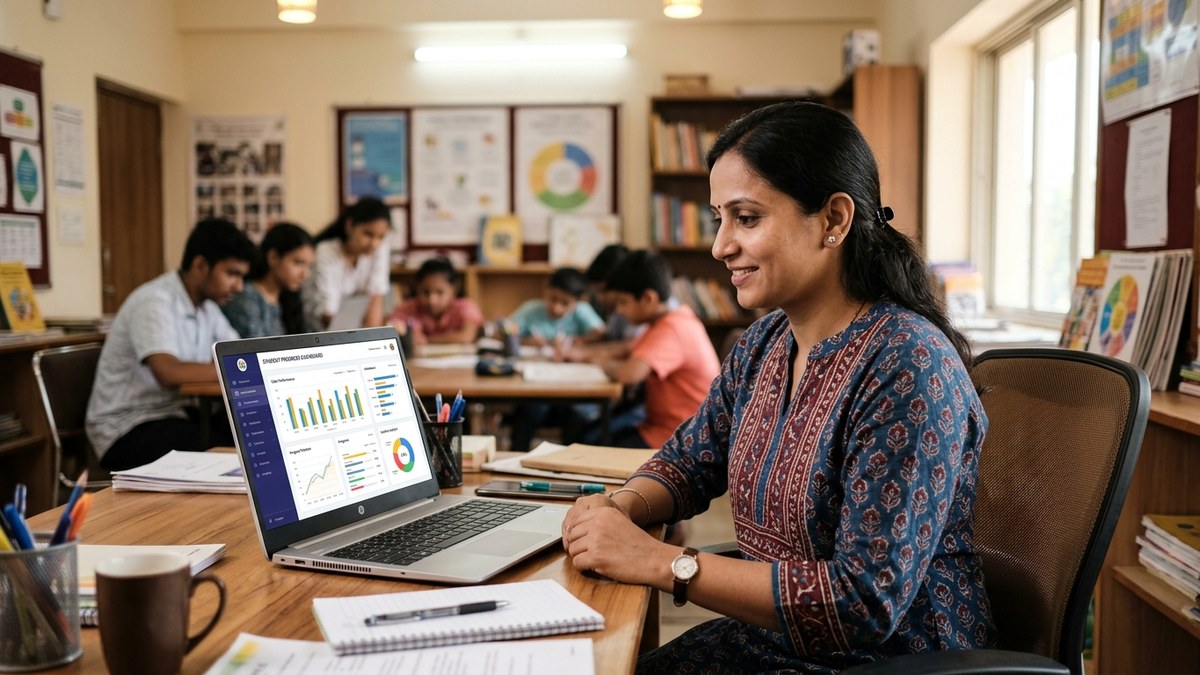
A microschool typically has 15-25 students per batch. A trained educator. And software that tracks every childs progress in real time. The software shows exactly where each student is struggling. Not guessing. Not hoping. Knowing.
This is personalised learning. The child moves at their own pace. If they master fractions in 3 weeks instead of 6, they move forward. If they need 8 weeks, they get 8 weeks. No shame. No rushing. No falling behind forever.
Most people dont realise how much time teachers waste in traditional classrooms managing mixed ability groups. With microschool technology, that problem disappears. Teachers spend time actually teaching and mentoring. Students spend time actually learning.
The technology does three things:
- Tracks individual progress with precision
- Suggests personalised learning paths based on each childs pace and style
- Frees the educator to focus on mentorship, doubt-clearing, and emotional support
That last point matters most. Technology handles the data. Teachers handle the human part. That is the partnership that works.
Why India Needs This Now
India has a tuition crisis. Parents spend lakhs on tuition teachers because schools do not personalise. Microschools solve this by making personalised learning affordable and scalable.
You can start a microschool or a Point of Digital Learning (POD) in your neighbourhood with minimal investment. A POD is a home or community learning centre run by a trained educator. It serves 10-20 students. It uses the same personalised learning approach as larger microschools.
Lets be honest: most tuition teachers work alone, without data, without systems, without a way to scale. They are trapped in the one-to-one model. Microschool technology lets them serve more students better, not by teaching bigger batches, but by teaching smarter.
The infrastructure already exists. MeitY Digital India has brought internet to millions of Indian homes. Devices are cheaper than ever. What was missing was the right bundle and the right support. That gap is closing.
Starting a microschool or POD no longer means buying expensive servers or complex software. You need a mini PC, education software, a webcam, and a trained educator. That is it. Starting a microschool with Rs.30,000 is now possible with the right bundle.
How APNA PC Makes This Real
APNA PC is a complete bundle designed for educators starting a POD or microschool. It includes a Mini PC (i3 7th Gen, 8GB RAM, 128GB SSD), education software, monitor, keyboard, mouse, webcam, headset, installation, and 3 years warranty. All for Rs.30,000.
This is not a toy. This is a complete learning setup. One educator can manage 15-20 students using this system. The software tracks progress. The hardware is reliable. The warranty covers you for three years.
You set it up in a small room. You invite 15 students. You use the software to personalise their learning paths. You spend your time mentoring, not managing chaos. The software handles the data.
This is how microschool technology actually works in India right now. Not in theory. In practice. In homes. In community centres. In small towns where parents have no access to good schools.
The Real Impact on Students
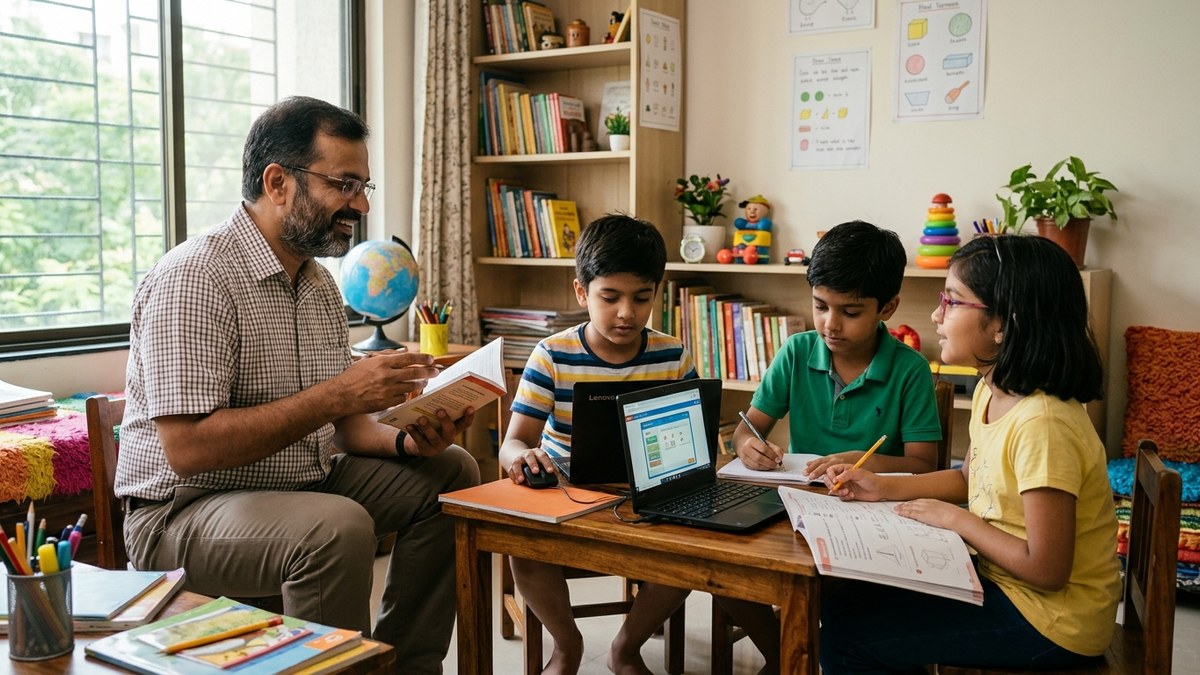
When a child learns at their own pace, something changes. They stop feeling stupid. They stop comparing themselves to faster kids. They start believing they can learn.
That is not soft skill talk. That is measurable. Students in personalised learning environments show higher retention, better problem-solving, and genuine confidence.
Parents see this. A child who hated math suddenly engages with it because they are not being rushed. A shy child speaks up in a small group. A fast learner is not bored waiting for the class to catch up.
Microschool technology makes this possible at scale. Not in elite schools with Rs.5 lakh fees. In neighbourhoods. In small towns. In homes.
Most people dont realise that Information technology in education has been around for decades. What changed is the cost. What changed is the simplicity. What changed is that a single trained educator can now do what used to require a school infrastructure.
Your Next Step
If you are a teacher tired of batch teaching, you can start a POD. If you are a parent frustrated with school, you can start a microschool. If you are an edupreneur, you have a real model that works.
Starting a learning pod in your neighbourhood takes one decision and one week of setup. The software does the heavy lifting. You do the teaching.
The microschool revolution in India is not coming. It is here. The technology exists. The bundle exists. The need is real. What is missing is you.
Start your learning pod today. Stop waiting for the system to change. Build the system that works.